Learning how to read crochet patterns can feel confusing when you first see abbreviations, numbers, symbols, brackets, and instructions packed into a few lines. However, once you understand what each part means, those strange-looking instructions become much easier to follow.
Instead of trying to memorize everything at once, start by breaking the pattern into smaller parts. First, learn the basic abbreviations. Then, understand how repeats work. After that, practice following one row or round at a time.
The good news is that you do not need to understand every crochet term before starting your first project. With a little practice, you will begin to recognize common instructions automatically. Before long, how to read crochet patterns will feel less like decoding a secret language and more like following a simple set of directions.
Learn about different crochet stitches and how to crochet them Textured Crochet Stitches to Give Your Projects More Depth and Dimension
How to Read Crochet Patterns for Beginners
1. Gather Your Supplies and Read the Pattern Before Starting
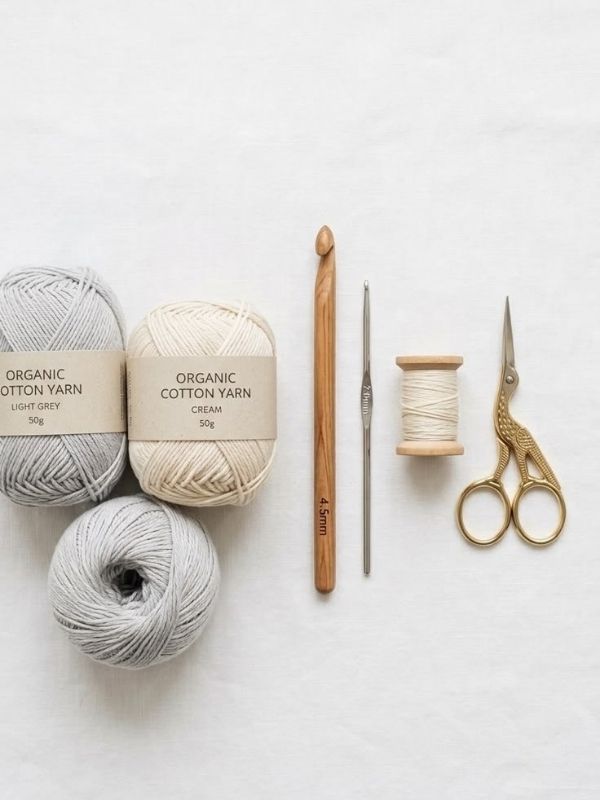
Before learning how to read crochet patterns, prepare everything you need. Having your supplies nearby makes it easier to concentrate on the instructions instead of stopping repeatedly to search for something.
Supplies You Need
Start with the crochet hook and yarn recommended by the pattern. You may also need scissors, a yarn needle, stitch markers, measuring tape, and a row counter.
If the pattern recommends a particular yarn weight, try to use something similar. Yarn thickness can affect the size and appearance of your finished project.
Keep your supplies together in one place. Consequently, you can work through the pattern without unnecessary interruptions.
Prepare Your Workspace
Choose a comfortable area with enough light. A clear workspace also makes it easier to see individual stitches.
Place your pattern where you can read it while crocheting. If you use a phone or tablet, keep the screen at a comfortable angle.
Most importantly, avoid rushing into the first row. Take a few minutes to scan the entire pattern.
Read Before You Crochet
Look for the materials, finished size, gauge, abbreviations, special instructions, and stitch count.
Also, check whether the designer uses US or UK crochet terminology. This small detail matters because some stitch names differ between the two systems.
By reading first, you can understand the project structure before your hook touches the yarn.
Bookmark this easy sweater crochet that are cosy and beginner-friendly 10 Easy Crochet Sweater Patterns Beginners Can Actually Finish, Not Just Start
2. Understanding the Main Parts of a Crochet Pattern
A crochet pattern usually contains several pieces of information. Understanding these sections makes how to read crochet patterns much easier because you know where to look whenever you become confused.
Materials and Finished Size
The materials section tells you what you need. It may include yarn type, yarn quantity, hook size, buttons, safety eyes, or other supplies.
The finished-size information tells you how large the completed item should be. For clothing, patterns may provide several sizes, so you need to identify the correct measurements before beginning.
Gauge and Abbreviations
Gauge tells you how many stitches and rows should fit within a specific measurement. Although beginners sometimes skip this section, it can make a major difference when size matters.
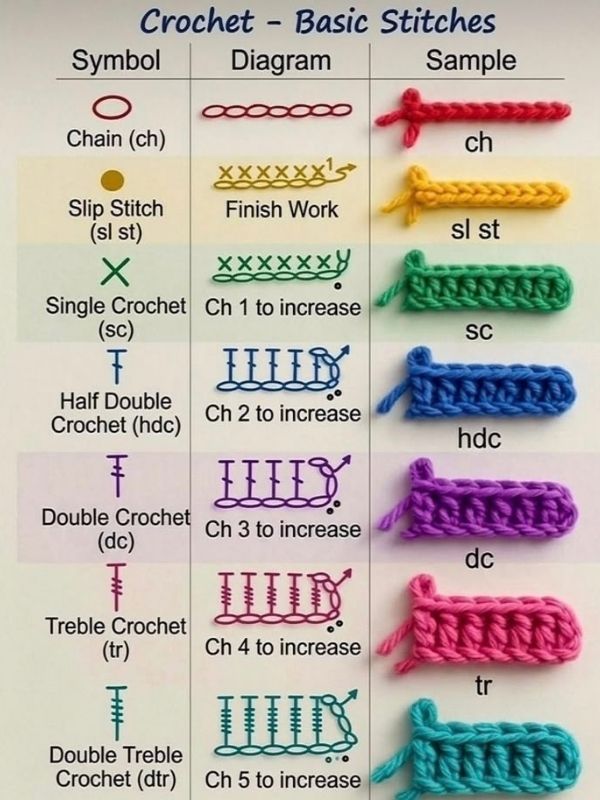
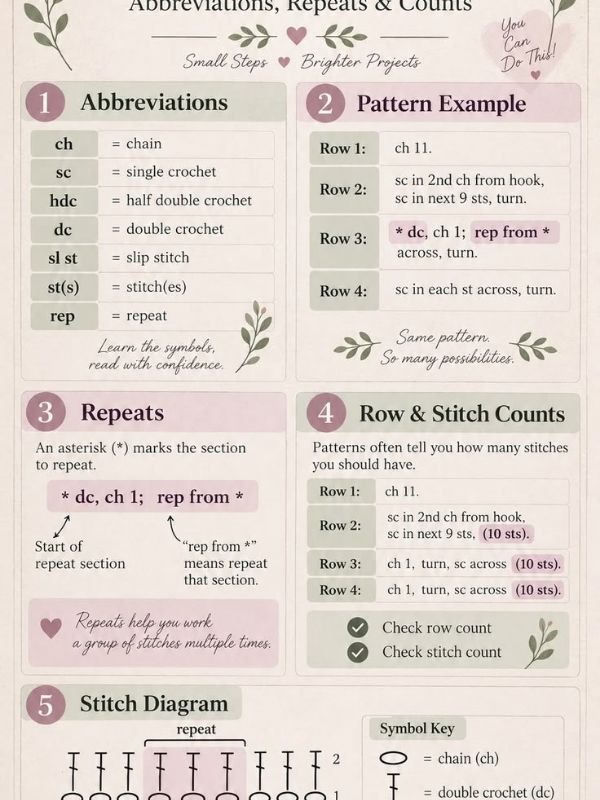
Abbreviations save space in crochet patterns. For example, common US terms include sc for single crochet, dc for double crochet, and ch for chain.
Keep the abbreviation list nearby while learning. Eventually, many of these terms will become familiar without requiring constant checking.
Ready to jump into how to crochet. Then read How to Crochet for Beginners: What You Need to Know Before Your First Stitch
3. The Difference Between Rows and Rounds
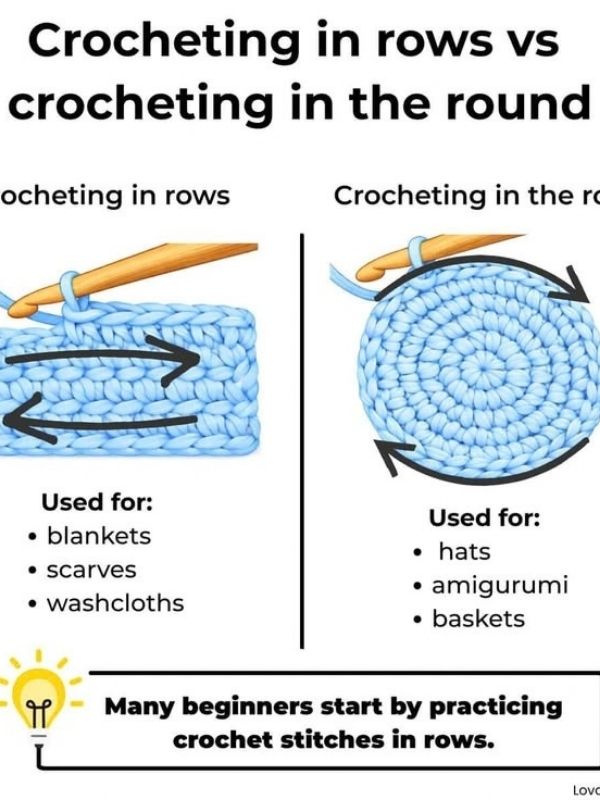
One important part of how to read crochet patterns involves understanding whether you are working in rows or rounds.
Working in Rows
When a pattern works in rows, you usually crochet across one direction and then turn your work.
For example, you might complete a row of stitches, chain to turn, and then work back across the previous row.
Pay attention to instructions about turning chains because they may or may not count as a stitch.
Working in Rounds
Round-based patterns work continuously around a shape or through joined rounds.
You may begin with a magic ring, chain circle, or another starting structure. After completing the round, the pattern may tell you to join with a slip stitch.
Therefore, always check whether the instructions say “row” or “round.” That word can completely change how you position your hook.
Words That Show the Structure
Terms such as “turn,” “join,” “around,” “across,” and “round” provide important clues.
Once you recognize them, you can understand the movement of the project much faster.
For seasonal crochet project. You will like this Christmas Crochet Projects You Can Actually Finish Before the Holidays for Gifts, Decor, and More
4. Crochet Abbreviations, Numbers, and Stitch Counts
Abbreviations form a large part of how to read crochet patterns. Fortunately, you only need to learn the most common ones first.
Start With Common Abbreviations
Some frequently used US crochet abbreviations include:
- ch — chain
- sc — single crochet
- hdc — half double crochet
- dc — double crochet
- tr — treble crochet
- sl st — slip stitch
- st — stitch
- sts — stitches
Your particular pattern may use additional abbreviations, so always check its abbreviation key.
Understand Numbers Before Stitches
Numbers often tell you how many times to perform an action.
For instance, an instruction such as “sc in next 3 sts” means you should make one single crochet in each of the next three stitches.
However, numbers can also describe repeats, stitch counts, rows, or rounds. Therefore, do not assume every number has the same purpose.
Watch the Stitch Count
Many patterns provide a stitch count at the end of a row or round.
Use that number as a checkpoint. If your pattern says you should have 24 stitches but you count 22, something went wrong earlier.
Catching the problem immediately is much easier than discovering it several rows later.
Incase you have been searching for How to Start with Polymer Clay As a Beginner: A Simple Guide
5. Understanding Repeats, Parentheses, Brackets, and Asterisks
Repeats can make a crochet pattern look complicated. Once you know the symbols, however, they become useful shortcuts.
Read Parentheses
Parentheses often group instructions together.
For example, a pattern might tell you to repeat everything inside the parentheses a certain number of times.
Instead of reading each stitch separately, treat the grouped instructions as one unit.
Follow Asterisks
An asterisk usually marks the beginning of a repeated section.
You may see an instruction such as “*sc in next stitch, dc in next stitch; repeat from *.”
In that situation, return to the asterisk whenever the pattern tells you to repeat from it.
Understand Brackets
Brackets can also group instructions. Some designers use brackets for larger repeats or nested instructions.
Because formatting varies between designers, always check the pattern’s notes if you are unsure.
Ready to experiment a total different craft? Wood Burning Craft Ideas: How to Make Beginner Friendly Projects You Can Display or Sell offers projects you can display or turn into products to sell
6. Follow a Pattern One Step at a Time
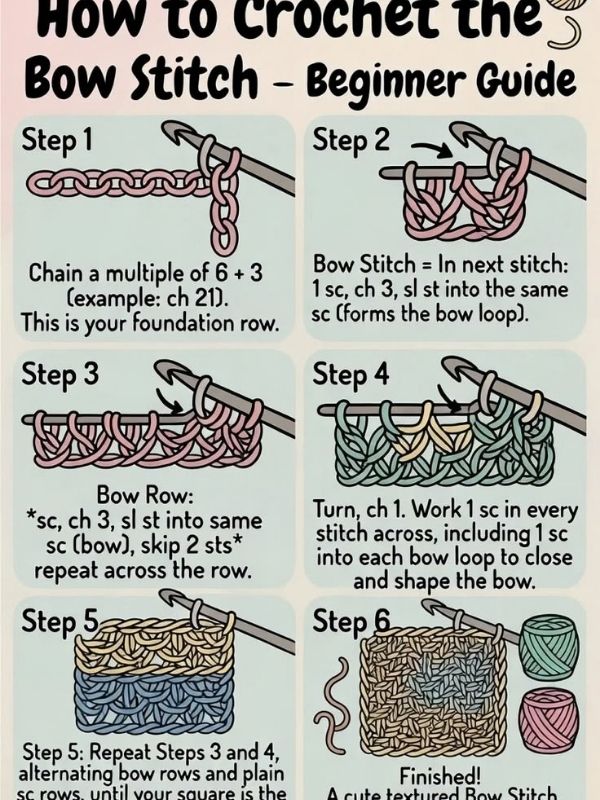
When learning how to read crochet patterns, avoid trying to memorize an entire page.
Read the Whole Row First
Before starting a row, read the complete instruction once.
This gives you a general idea of what will happen. Afterward, return to the beginning and work through it slowly.
That approach helps prevent surprises halfway through the row.
Complete One Action at a Time
Follow the instructions in the order provided.
If the pattern says chain, turn, and then work stitches across, complete those actions in sequence rather than jumping ahead.
Transition words such as “then,” “next,” “until,” and “repeat” can help you understand the order.
Mark Your Progress
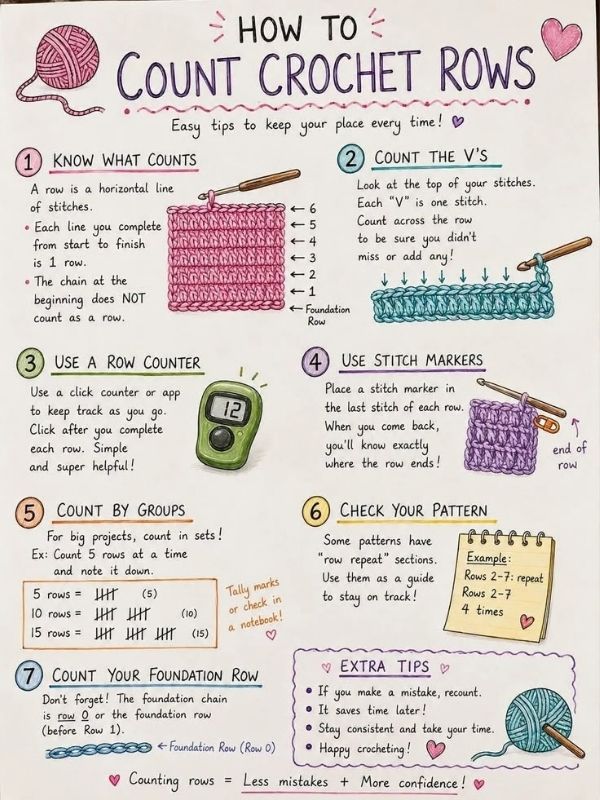
Use a pencil, digital highlight, stitch marker, or row counter to mark where you stopped.
For long patterns, this simple habit can save you from rereading the same paragraph repeatedly.
For a homemade beginner-friendly crafts for kids, this How to Make Rainbow Crafts at Home With Kids
7. Learn Where to Put Your Hook

Knowing the stitch name is only part of how to read crochet patterns. You also need to understand where the pattern wants your hook to go.
Work Into a Stitch
When a pattern says to work into the next stitch, insert your hook into the specified stitch according to the pattern’s instructions.
Usually, you will work under the top loops unless the designer states otherwise.
Work Into a Space
Some patterns tell you to work into a chain space rather than into an individual stitch.
A chain space can look different from a normal stitch, so identify the opening carefully before inserting your hook.
Watch Location Words
Pay attention to phrases such as:
- next stitch
- same stitch
- next space
- chain space
- previous row
- back loop only
- front loop only
These details determine exactly where the stitch belongs.
When crocheting is not quite what you feel like doing, Creative DIY Crafts for Adults: 20 Fun Crafts for Adults to Try When You’re Bored at Home gives you plenty of alternatives.
8. Understand Turning Chains and Joining
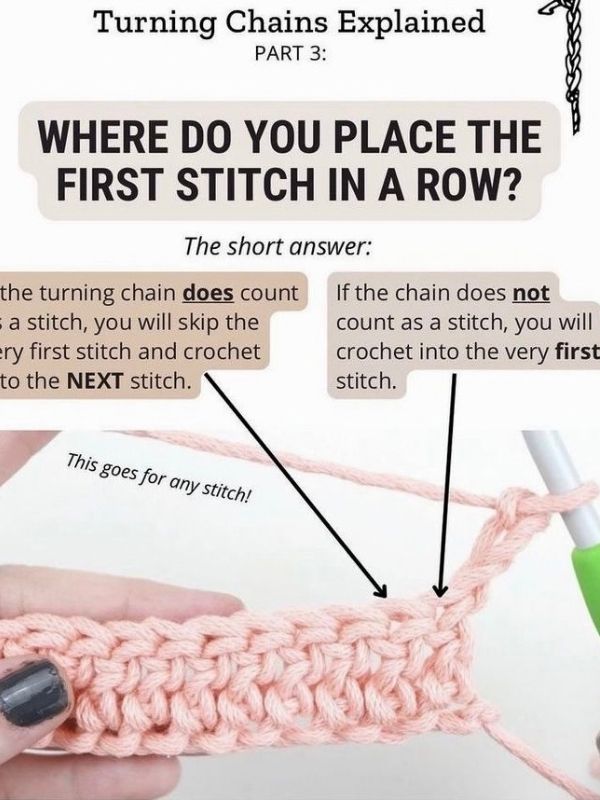
Turning and joining instructions can affect the shape of your project, so they deserve careful attention.
Follow Turning Instructions
When working rows, the pattern may tell you to chain one, two, or three before turning.
That chain may simply create height, or it may count as the first stitch. Do not assume which one applies.
Understand “Join”
When working in rounds, “join” usually means connecting the end of the round to the beginning.
A pattern may specify a slip stitch or another joining method.
Check Whether the Turning Chain Counts
Some patterns count a turning chain as a stitch, while others do not.
If the pattern tells you the stitch count, use that information to determine how the designer expects you to treat the chain.
For a smaller project that can double as decor, try Mini Terra Cotta Pots Crafts for Cute Budget-Friendly DIY Home Decor.
9. Count Stitches and Use Markers
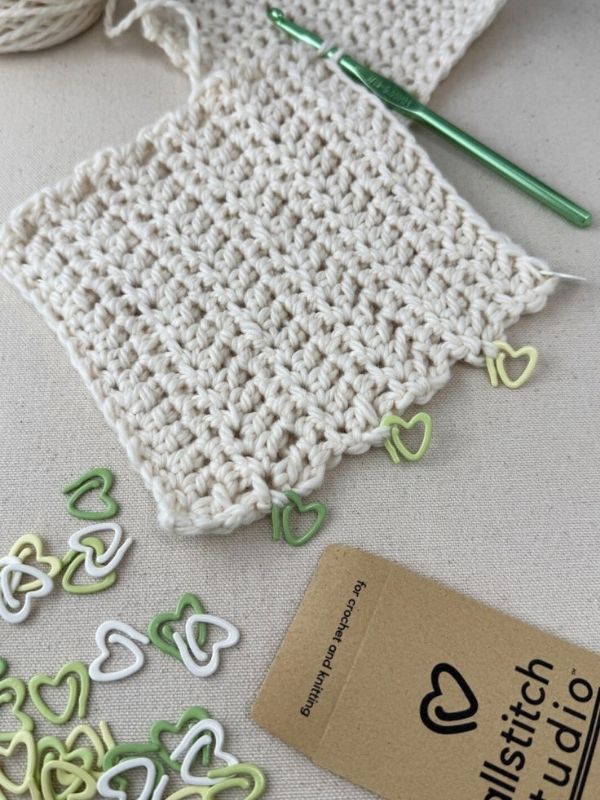
Accurate counting is one of the easiest ways to improve your understanding of how to read crochet patterns.
Count at the End of Each Row
When you finish a row, count your stitches.
Do not wait until the project looks obviously wrong. A small mistake can become much harder to correct after several rows.
Use Stitch Markers
Place a marker at the beginning or end of a round when necessary.
Markers can also identify special stitches, increase points, decrease points, or repeated sections.
Check After Important Changes
Count again after increases, decreases, color changes, and complicated repeats.
These are common places where stitch counts can change unexpectedly.
For a homemade squishy ideas, check out DIY Squishy: How to Make a Homemade Squishy You’ll Want to Squeeze
10. Understand Increases, Decreases, and Special Stitches
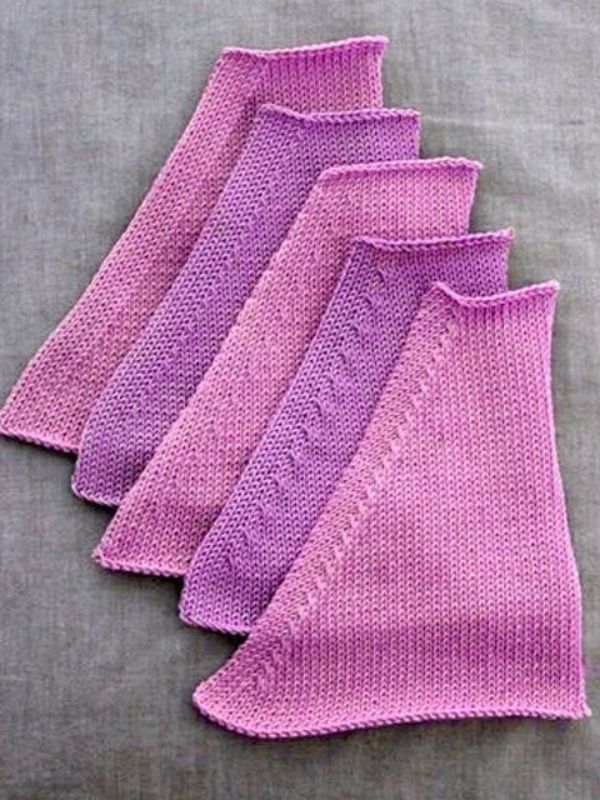
Patterns often change their shape through increases and decreases.
Understand Increases
An increase usually means creating more than one stitch from the same starting point.
For example, two single crochets worked into one stitch increase the total stitch count.
As a result, increases can make a project wider or help create rounded shapes.
Understand Decreases
A decrease combines stitches so that the total number becomes smaller.
You may see abbreviations such as sc2tog, which means working two single crochets together.
Read the complete instruction before attempting a decrease because different stitch types use different techniques.
Understand Special Stitches
Some patterns contain special stitches or combinations.
The designer may provide written instructions explaining how to create them. Read those directions carefully before reaching that part of the project.
11. Understand “Across,” “Around,” “Repeat,” and “Work Even”
Certain phrases appear repeatedly in crochet patterns. Learning them makes how to read crochet patterns far less intimidating.
“Across”
“Work sc across” generally means make the specified stitch across the row or section until you reach the indicated end.
“Around”
“Work dc around” usually means continue making the specified stitch around the entire round or shape.
“Repeat From *”
This tells you to return to the location marked by the asterisk and perform the same sequence again.
Read the entire repeated sequence before beginning it.
“Work Even”
“Work even” generally means continue using the established stitch pattern without adding or removing stitches.
Therefore, your stitch count usually stays the same.
Learn What Can I Make With an Egg Carton? Easy Ideas for Kids
12. How to Read Crochet Charts
Written instructions are not the only way to learn how to read crochet patterns. Some patterns also use visual charts.
Find the Chart Key
Before reading the chart, locate its symbol key.
The key explains what each symbol represents.
Never assume that a symbol has the same meaning in every chart because designers can use different conventions.
Find the Starting Point
Determine where the chart begins.
Some charts use arrows, numbers, or highlighted starting points to show the direction.
Follow One Symbol at a Time
Do not try to understand the entire chart instantly.
Start from the indicated point and follow the symbols in order. With practice, visual charts can become much quicker to understand.
13. Check US and UK Crochet Terminology
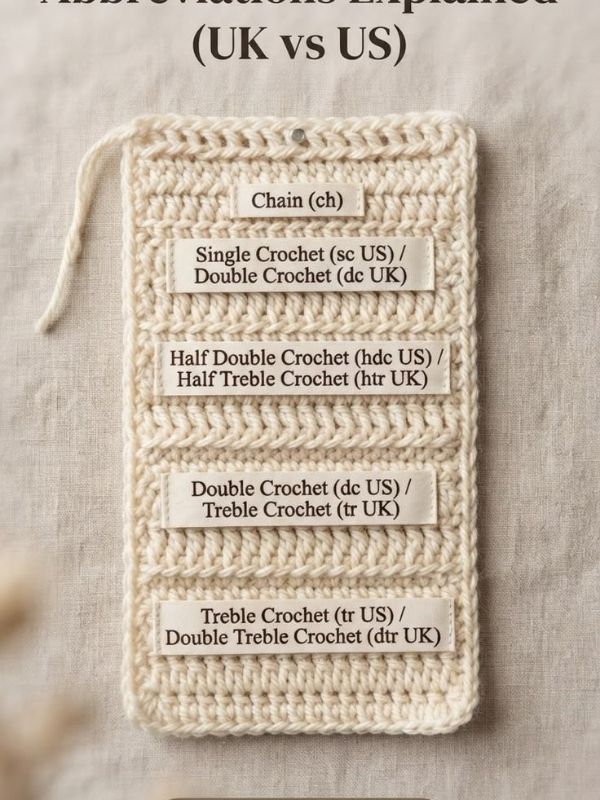
Terminology differences can cause confusion even when you already understand how to read crochet patterns.
Check the Pattern’s Terminology
Look for a note stating whether the designer uses US or UK crochet terms.
For example, a US single crochet corresponds to a UK double crochet.
Therefore, using the wrong terminology can completely change the stitches you make.
Why This Matters
If your finished piece looks different from the example, terminology may be one reason.
Always confirm the system before beginning, especially when using patterns from international designers.
Looking for crafts that the preschoolers can also made this post 20 Easy Flower Activities for Preschoolers to Make and Learn got you covered.
14. Understand Gauge and Pattern Sizes
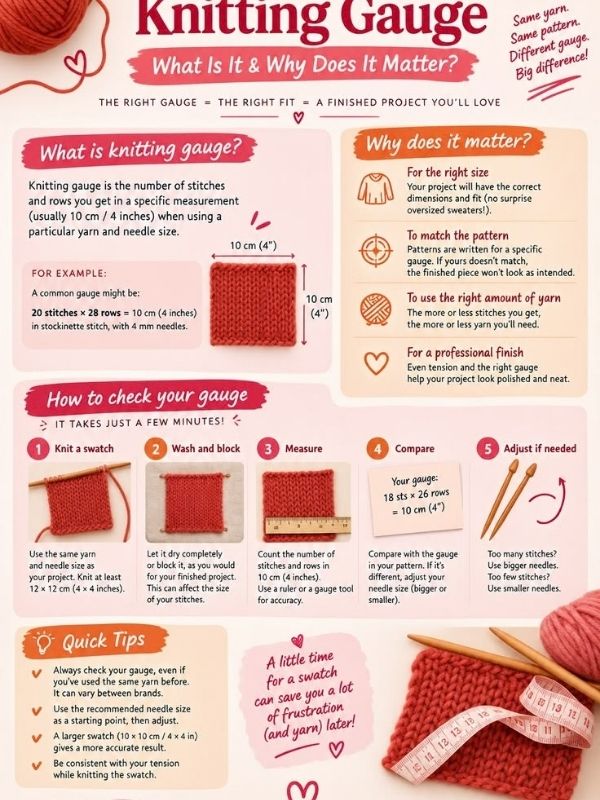
Gauge becomes especially important when making clothing, accessories, or anything that needs a specific finished measurement.
Make a Gauge Swatch
Follow the pattern’s gauge instructions and make the recommended swatch.
Measure the required number of stitches and rows.
Do not simply assume your gauge matches because you are using the same yarn and hook size.
Adjust Your Hook if Necessary
If your stitches are too large, you may need a smaller hook.
If they are too small, a larger hook may help.
However, follow the designer’s instructions and measure again after making adjustments.
Choose Your Pattern Size
When a pattern offers multiple sizes, identify your desired measurements first.
Then follow only the stitch numbers associated with that size. Marking your selected numbers can prevent you from accidentally switching sizes halfway through.
15. Handle Color Changes and Long Patterns
Color changes add another layer to how to read crochet patterns, particularly when several colors appear in one row.
Organize Your Colors
Label your yarn colors if they look similar.
You can also place the yarn in separate positions so that the strands do not become tangled.
Follow the Exact Change Instruction
Some patterns tell you to change color during the final step of a stitch.
Others may instruct you to carry unused yarn or cut it after each section.
Follow the exact method provided because the wrong approach can affect the appearance of the project.
Track Long Patterns
For lengthy patterns, mark each completed row or round.
You can also use a row counter or checklist.
Consequently, you will always know where you stopped.
16. Practice Breaking Down a Crochet Pattern Line
One of the best ways to understand how to read crochet patterns is to take a complicated-looking instruction and separate it into smaller actions.
Example Pattern
Imagine an instruction says:
“*Sc in next 2 sts, 2 dc in next st; repeat from * across.”
At first, the sentence may look complicated.
Break It Down
First, make one single crochet in the next stitch.
Then, make another single crochet in the following stitch.
After that, place two double crochets into the next stitch.
You have now completed one repeat.
Try the Repeat
Return to the asterisk and perform the same sequence again.
Continue until the pattern tells you to stop.
This method turns a long instruction into a predictable sequence.
17. Find and Fix Mistakes
Mistakes happen to every crocheter. Learning how to identify them is just as important as learning how to read crochet patterns.
Check the Stitch Count
If the stitch count does not match, stop before continuing.
Count your stitches again carefully.
Sometimes the problem comes from accidentally skipping a stitch. In other cases, you may have made an extra stitch.
Look for Common Problems
Check for missed stitches, accidental increases, misplaced decreases, incorrect turning chains, and skipped repeats.
Also compare your work with the pattern photograph when one is available.
Undo Only What You Need
You do not always need to unravel the entire project.
Locate the point where the mistake began, carefully undo the affected stitches, and then return to the correct instruction.
Working slowly can prevent another mistake while fixing the first one.
Bookmark these posts Rhinestone and Bedazzle Crafts You Can Make at Home for Stylish DIY Decor and Gifts and How to Make Easy Popsicle Stick Crafts for Kids: 15 Fun DIY Ideas
18. Use a Simple Pattern-Reading System
A consistent system makes how to read crochet patterns easier because you do not have to invent a new method for every project.
Follow This Checklist
Before starting:
- Read the materials list.
- Check the yarn and hook.
- Confirm the terminology.
- Read the abbreviations.
- Check the gauge.
- Identify the starting point.
- Read the first row or round.
- Check the stitch count.
- Mark your progress.
- Repeat the process for the next section.
This routine gives you a reliable starting point every time.
Keep a Crochet Notebook
Write down useful abbreviations, stitch counts, gauge measurements, and notes about projects.
If you frequently crochet, your notebook can become a personal reference guide.
19. Choose Beginner-Friendly Patterns and Practice Gradually
Beginners should not feel pressured to start with the most complicated design available.
Look for Simple Patterns
Choose projects that use familiar stitches and clear instructions.
Scarves, simple dishcloths, basic blankets, and straightforward accessories can provide useful practice.
Make a Practice Swatch
Before starting an important project, test unfamiliar stitches on scrap yarn.
This allows you to practice without worrying about ruining the final piece.
Increase the Difficulty Gradually
Once basic patterns become comfortable, introduce increases, decreases, color changes, charts, and textured stitches one at a time.
As your experience grows, how to read crochet patterns will become more automatic.
20. Read the Complete Pattern Before You Begin
Finally, one of the most useful habits for learning how to read crochet patterns is to read the entire pattern before picking up your hook.
First, Check the Project Information
Review the finished size, materials, gauge, terminology, abbreviations, and special notes.
Make sure you understand which size or variation you plan to make.
Next, Study the Instructions
Look through the rows or rounds.
Notice where increases, decreases, color changes, repeats, and special stitches appear.
This preview helps you understand the project’s structure.
Finally, Check the Finishing Instructions
Do not ignore the final section.
Look for sewing, weaving in ends, joining pieces, blocking, attaching buttons, or other finishing steps.
Knowing what comes later can also help you make better decisions while crocheting.
For a creative school craft, check out Garden Crafts for Preschool
Frequently Asked Questions
How long does it take to learn how to read crochet patterns?
The time varies from person to person. However, beginners can understand simple patterns fairly quickly when they practice regularly.
Start with basic stitches and short instructions. Then, gradually introduce repeats, increases, decreases, and charts.
What should I do if I do not understand an abbreviation?
Check the abbreviation key first. If the pattern does not explain it, look at the designer’s notes or instructions.
Avoid guessing when the abbreviation could change the entire project.
What does an asterisk mean in a crochet pattern?
An asterisk usually marks the beginning of a repeat.
When the pattern says “repeat from *,” return to the instruction marked by the asterisk and perform that sequence again.
Why does my stitch count not match?
A wrong stitch count can result from a skipped stitch, accidental increase, incorrect decrease, or misunderstood repeat.
Count your stitches carefully and compare your work with the previous instruction.
Do I need to know how to read crochet charts?
No. You can learn many projects using written instructions alone.
However, learning charts can give you another useful way to understand patterns, especially for detailed designs.
What does “sc across” mean?
It generally means to make single crochet stitches across the indicated row or section.
Follow the pattern’s complete instruction to determine exactly where you should begin and stop.
What does “work even” mean?
“Work even” generally means continue crocheting without increasing or decreasing.
You usually maintain the established stitch count and pattern.
Why does gauge matter?
Gauge helps you achieve the intended size and shape.
If your stitches are much larger or smaller than the pattern’s gauge, the finished project may not match the stated measurements.
How can I keep my place in a long crochet pattern?
Use a row counter, stitch marker, pencil, digital highlight, or checklist.
Mark each completed row or round immediately rather than trying to remember your position.
What should beginners look for in a crochet pattern?
Choose patterns with clear instructions, a materials list, an abbreviation key, simple stitches, and helpful photographs or diagrams.
A beginner-friendly pattern should explain unfamiliar techniques rather than assuming you already know them.
Conclusion
Learning how to read crochet patterns becomes much easier when you stop treating the pattern as one large block of confusing instructions. Instead, break it into materials, abbreviations, rows, rounds, repeats, stitch counts, and individual actions.
At first, you may need to check every abbreviation. You might also reread the same sentence several times. That is completely normal.
With practice, those instructions will start making sense almost automatically. Eventually, you will recognize common abbreviations, understand repeats, follow stitch counts, and move through rows or rounds with much more confidence.
Most importantly, do not rush the learning process. Choose simple projects, practice unfamiliar techniques on scrap yarn, and check your work as you go.
The more patterns you read and actually crochet, the more naturally how to read crochet patterns will become part of your everyday crochet skills.