

Christmas has a way of making ordinary days feel a little more exciting, especially when there are young children around who want to touch, explore, decorate, sing, and help with everything happening around them. That is exactly why Christmas activities for nursery kids can make the holiday season more enjoyable while giving little learners plenty of opportunities to create, move, talk, count, and discover.
You do not need a complicated classroom setup or expensive craft supplies to make the season special. A few sheets of paper, some crayons, washable paint, cardboard, cotton balls, stickers, and plenty of imagination can provide hours of festive fun.
Nursery children learn through play.
They learn when they squeeze glue, tear paper, sort colours, listen to songs, copy movements, tell stories, and make choices. Christmas provides a wonderful theme for all of these experiences because children already see familiar decorations, colours, songs, gifts, and family traditions during the holiday season.
The activities in this guide are designed to be simple enough for young children while still giving adults plenty of opportunities to introduce early learning. Some involve painting and crafting. Others involve movement, sensory exploration, storytelling, sorting, pretend play, and memory-making.
The key is not to make every project perfect. Children are still developing their coordination, attention, language, and independence. A crooked Christmas tree can still be a beautiful achievement. A card covered in scribbles can still become a treasured gift. A handprint that does not look exactly like the example can still preserve a precious moment in childhood.
For more hands-on ideas that use simple materials, explore ChiomaCreates’ Easy Summer Crafts for Toddlers That Keep Little Hands Busy All Day. The post focuses on simple setups, short attention spans, sensory play, fine-motor activities, and everyday craft supplies that can easily inspire holiday projects too.
So, whether you are planning a festive nursery classroom, a family craft afternoon, a Sunday school activity, or a quiet holiday morning at home, these ideas give you plenty of ways to keep little hands busy and little minds curious.
10 Christmas Activities for Nursery Kids That Make Holiday Learning Creative, Playful, and Easy to Enjoy
1. Make a Colourful Paper Christmas Tree Craft That Lets Nursery Children Decorate, Count, and Create Freely
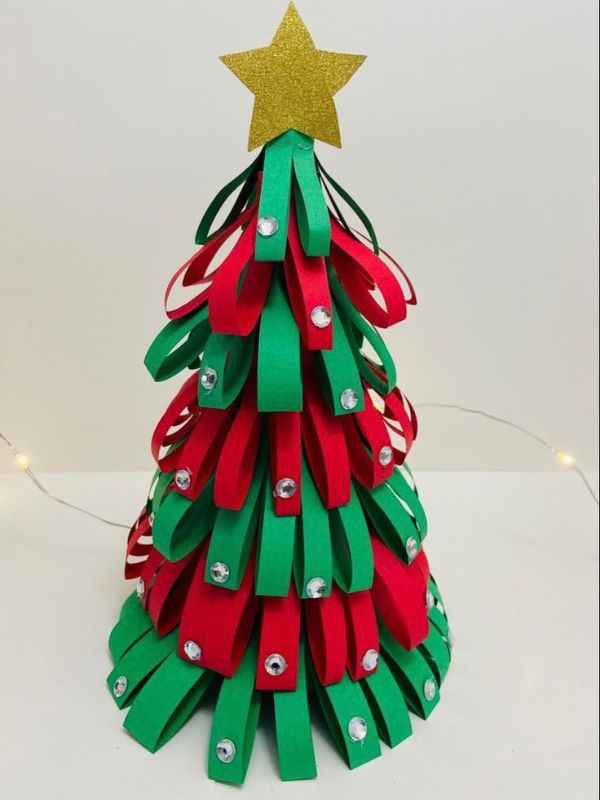
What you need for this simple Christmas tree craft
For the first of these Christmas activities for nursery kids, you only need a few basic supplies. Gather green construction paper, brown paper, white cardstock, crayons, washable markers, glue, large stickers, and coloured paper.
You can also add star stickers, large pom-poms, tissue paper, or pre-cut circles if you have them.
For very young children, prepare the tree shapes before the activity begins. Cut a large triangle from green paper and a small rectangle from brown paper for the trunk.
Older nursery children can help with some of the preparation if they are developmentally ready to use child-safe scissors under close supervision.
The goal is to keep the setup simple. Children should spend most of their time creating rather than waiting for adults to finish cutting supplies.
How to create and decorate the paper Christmas tree
Give each child a large piece of cardstock with a green tree shape.
Start by asking children to glue the brown rectangle underneath the triangle to create the trunk.
Next, let them decorate their trees.
They can add paper circles as ornaments, stickers as decorations, crayons as lights, or cotton balls as snow.
Do not worry if the decorations are not evenly spaced.
Young children are still developing hand control, so the process matters much more than the finished appearance.
You can also place a large star at the top of each tree.
As children work, talk about what they are doing.
Say things such as, “You chose a red ornament,” or “Your star is at the top.”
This naturally builds vocabulary while keeping the activity relaxed.
Turn the tree craft into an early maths activity
A Christmas tree gives you an easy opportunity to introduce counting.
Ask children to put three ornaments on their trees.
Then count them together.
For older nursery children, ask them to add two more and count again.
You can also introduce simple patterns.
Place a red circle beside a green circle.
Then ask the child what should come next.
Try patterns such as red-green-red-green or star-circle-star-circle.
Keep the numbers and patterns simple.
The goal is not to test children.
Instead, you are helping them notice relationships between colours, shapes, and quantities while they enjoy making their decorations.
Make the finished tree part of the holiday decoration
Once the trees are dry, display them somewhere children can see them.
You could create a classroom Christmas forest by placing all the children’s trees together.
At home, tape the finished artwork to a bedroom wall, refrigerator, playroom door, or family noticeboard.
Write each child’s name and the year on the back.
This makes the activity more meaningful because children can see that their work has a place in the holiday decorations.
For another preschool-friendly creative project, explore Garden Crafts for Preschool: Fun and Easy Nature Projects for Kids. The post also focuses on hands-on activities, simple materials, outdoor discovery, and letting children explore without worrying about perfect results.
2. Create a Fluffy Cotton Ball Santa Craft That Encourages Sensory Exploration and Simple Holiday Vocabulary
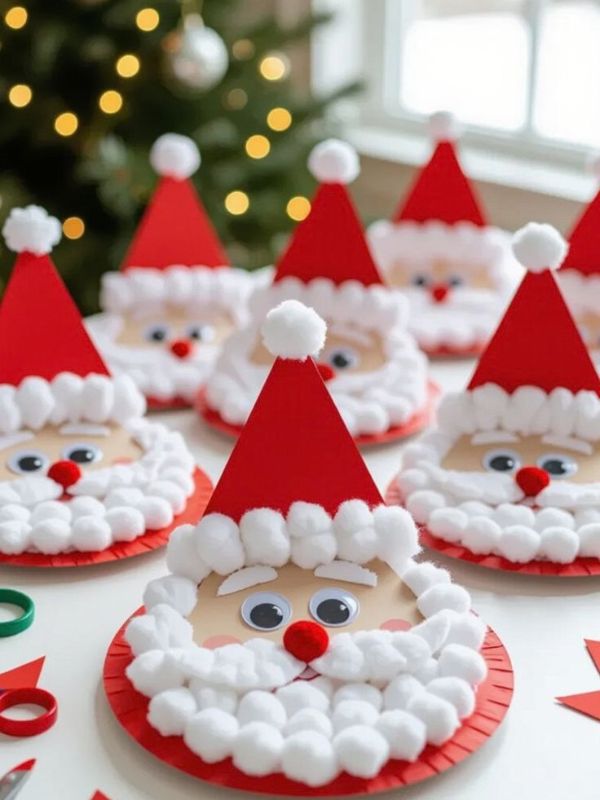
Gather soft and simple supplies before beginning
The second of these Christmas activities for nursery kids combines crafting with sensory exploration.
You will need white cardstock, red construction paper, cotton balls, child-safe glue, crayons, and a black marker.
Prepare a simple Santa face before the children begin.
You can draw a large face with a hat outline, eyes, nose, and beard area.
For younger children, adults should handle most of the cutting.
The cotton balls will become Santa’s fluffy beard, so you do not need to create a complicated template.
You can also prepare a red paper hat and let children glue it onto the top of their Santa face.
Keep the materials in small groups so children are not overwhelmed by too many choices.
Let children build Santa’s beard one cotton ball at a time
Spread a small amount of child-safe glue across the beard area.
Give children several cotton balls.
Show them how to pick up one cotton ball and gently press it onto the glue.
Then let them continue.
Some children may place the cotton balls close together.
Others may leave spaces.
Both approaches are completely fine.
While they work, encourage them to describe what they feel.
Ask whether the cotton is soft, fluffy, light, smooth, or squishy.
This creates an easy sensory conversation.
Children are not simply sticking cotton onto paper.
They are also learning to describe a texture and listen to new words.
You can also continue exploring seasonal creativity through Christmas Crochet Projects, Easy Personalized Embroidery Ideas for Every Occasion, and How to Make Crafts: 20 Easy Crafts to Sell and Make Profits From Home
Add a small vocabulary game
Once the craft is underway, introduce simple Christmas words.
Repeat words such as Santa, beard, hat, red, white, soft, fluffy, face, eyes, and nose.
You can point to each feature as you say its name.
Ask simple questions.
- “What colour is Santa’s hat?”
- “What colour is his beard?”
- “What feels soft?”
Avoid asking too many questions at once.
A few natural conversations are enough.
Young children often learn vocabulary best when the words appear naturally during an activity they already enjoy.
Turn the Santa craft into a keepsake
Once the Santa faces are completely dry, write the child’s name and age on the back.
You can also write the date.
If you want to make the memory even more personal, ask the child what they think Santa might be doing on Christmas Eve.
Write their answer underneath the craft.
For example, a child might say that Santa is “going to give everybody presents.”
That sentence may seem ordinary today, but it can become a lovely childhood memory later.
For another seasonal keepsake approach, explore How to Make Easy Fall Handprint Crafts for Kids That Turn Into Meaningful Keepsakes. The project demonstrates how simple children’s artwork can become something worth preserving long after the season ends.
3. Make a Christmas Handprint Tree That Turns a Simple Painting Session Into a Meaningful Childhood Keepsake

Prepare washable paint and sturdy paper
Handprint crafts work especially well with young children because the activity itself is exciting.
For this idea, gather washable green paint, sturdy white cardstock, brown paper, glue, a star sticker, and optional colourful stickers.
Before beginning, protect the table with newspaper or an old tablecloth.
Keep wipes, water, and a towel nearby.
Apply only a thin layer of washable paint to the child’s palm and fingers.
Too much paint can create a blurry print.
If you are working with several children, prepare one sheet of paper for each child before starting.
That way, you can move quickly while the children are interested.
Turn the handprint into a Christmas tree
Ask the child to spread their fingers gently.
Press the painted hand onto the cardstock with the fingers pointing upward.
Lift the hand carefully.
The palm becomes the middle of the tree while the fingers create the branches.
Allow the print to dry.
Then add a small brown trunk beneath it.
Place a star sticker above the heel of the handprint.
Children can add colourful dots, stickers, or tiny paper circles as ornaments.
Do not worry if some prints look different.
That is part of the charm.
Every child’s handprint will have its own shape, spacing, and little imperfections.
Talk about growth while making the craft
This activity can become a simple conversation about growing.
Tell children that their hands will become bigger as they grow.
Ask them to look at their fingers.
You can count the fingers together.
You can also compare the size of the handprint to an adult’s hand.
Keep the conversation positive and factual.
The main idea is that the handprint captures a moment in time.
If you repeat the craft each Christmas, you can compare the artwork from different years and notice how much the child’s hand has grown.
Store the finished handprint carefully
Write the child’s name, age, and year on the artwork.
Take a photograph of the child holding it.
Then store it somewhere safe.
A memory box is ideal for this type of keepsake.
ChiomaCreates’ DIY Memory Box for Kids That Preserves Their Favourite Childhood Moments specifically discusses keeping children’s handprints, artwork, photographs, seasonal crafts, and other childhood memories together.
For another footprint-based keepsake idea, see How to Make Pumpkin Footprint Art with Kids for an Easy Fall Keepsake They’ll Treasure. The same basic idea can inspire other seasonal footprint projects.
4. Set Up a Christmas Colour and Shape Sorting Game That Builds Early Maths Skills Through Play
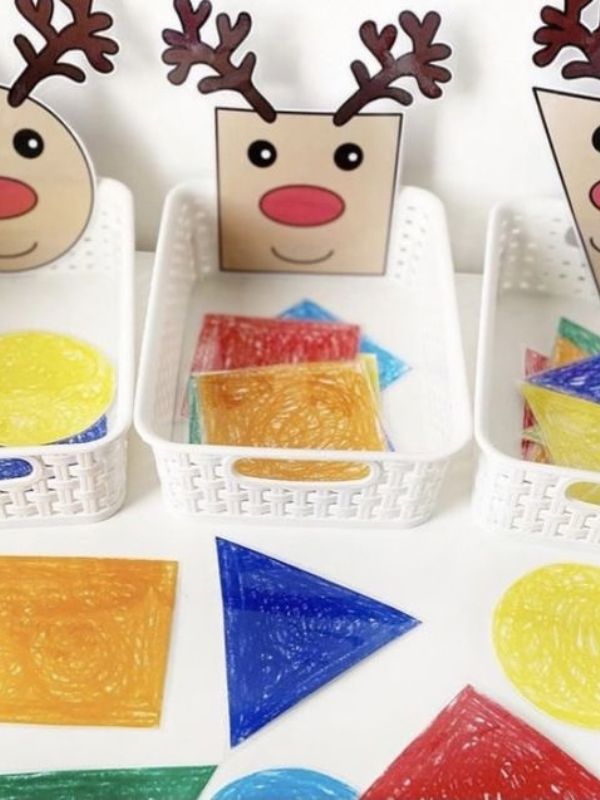
Prepare large and safe Christmas-themed objects
Not every activity needs paint, glue, or scissors.
A sorting game can be just as engaging.
For this activity, gather large red, green, white, yellow, or gold objects.
You might use large paper shapes, fabric pieces, chunky plastic decorations, large pom-poms, or cardboard shapes.
Choose materials that are appropriate for the children’s ages.
Avoid tiny objects that could create a choking risk.
Place two or three bowls or trays on the table.
For younger children, begin with only two colours.
Older nursery children can handle more choices when they are ready.
Start with simple colour sorting
Mix the objects together.
Pick up one red object.
Say, “This is red.”
Place it into the red container.
Then choose a green object.
Say, “This is green.”
Place it into the green container.
Invite the children to continue.
If a child puts an object in the wrong container, gently guide them.
There is no need to say they are wrong in a harsh way.
Simply ask, “Let’s look at this one. What colour do you see?”
Then let them try again.
Repetition helps children understand the concept.
Add shape recognition when children are comfortable
Once children understand colour sorting, introduce shapes.
Use large stars, circles, triangles, and squares.
Ask children to find all the stars.
Then ask them to find all the circles.
For older children, combine colour and shape.
Ask them to find a red star.
Then find a green circle.
This gives the activity another level without making it complicated.
Add counting and comparison
Count the objects after sorting.
Ask how many red objects are in the bowl.
Then count the green ones.
Ask which group has more.
Ask which has fewer.
Keep the numbers manageable.
The purpose is to help children connect quantities with objects.
This is one reason Christmas activities for nursery kids can be so useful in the classroom. A festive theme gives children a natural reason to practise early skills without making the experience feel like a formal lesson.
For more hands-on toddler activities using sorting, matching, sensory materials, and simple household objects, visit Easy Summer Crafts for Toddlers That Keep Little Hands Busy All Day.
5. Plan a Christmas Music and Movement Session That Lets Nursery Children Dance, Listen, Freeze, and Pretend
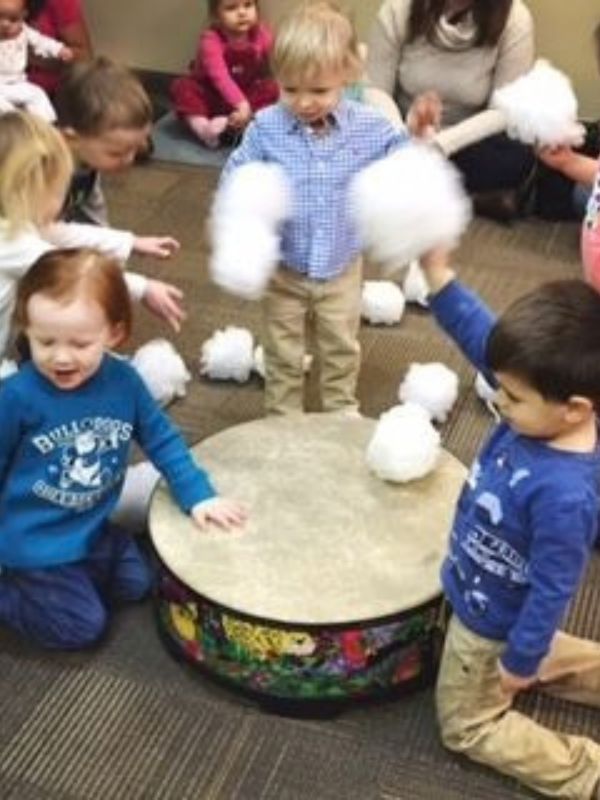
Create a safe space for movement
Some of the most enjoyable Christmas activities for nursery kids do not involve sitting at a table.
Children need opportunities to move.
Clear a safe area where children can dance without bumping into furniture.
Play cheerful, child-friendly Christmas music.
You can also use simple instruments such as child-safe shakers or drums.
Keep the volume comfortable.
Start by allowing children to move freely.
Some will dance immediately.
Others may watch before joining.
That is perfectly normal.
The goal is to make movement feel inviting rather than forced.
Introduce simple Christmas movements
Once children are comfortable, add easy instructions.
Ask them to pretend to decorate a Christmas tree.
Then ask them to reach up like a star.
Next, they can march as if they are delivering presents.
They can clap their hands like Christmas bells.
They can pretend to wrap a gift.
They can walk slowly like a sleepy reindeer.
Keep each movement short.
Children can copy you, but they do not need to perform a specific dance.
This makes the session accessible to different confidence levels.
Play a Christmas freeze dance game
Start the music.
Children dance.
Stop the music.
Everyone freezes.
Start it again.
Repeat several times.
This simple game encourages listening and self-control.
You can also change the instruction.
When the music stops, children can freeze like a Christmas tree.
Next time, they can freeze like a star.
The game becomes even more enjoyable when children begin suggesting their own poses.
Use the activity to build listening and language skills
Movement games can also support language development.
Use simple action words such as jump, clap, stop, turn, walk, freeze, reach, and dance.
Say the word before demonstrating it.
Children can then connect the word with the movement.
You can also introduce directional words.
Move up.
Move down.
Move forward.
Move backward.
Keep everything simple and playful.
For another hands-on activity that encourages children to explore movement and outdoor play, you can browse DIY Water Table for Kids That Creates the Cutest Backyard Playtime. While the activity is designed for warmer weather, its emphasis on movement, sensory exploration, and imaginative play fits naturally with an active holiday activity plan.
6. Create a Christmas Sensory Tray That Gives Little Hands a Safe Way to Touch, Sort, Scoop, and Explore
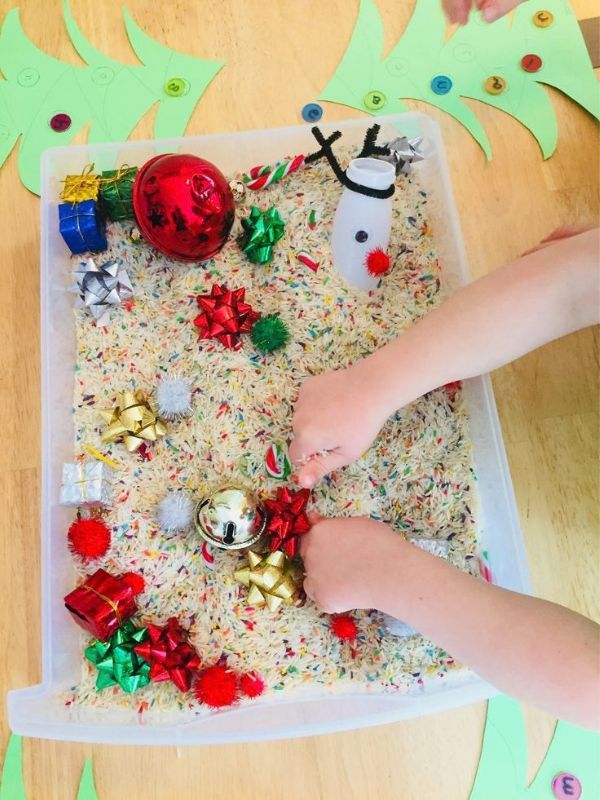
Choose simple sensory materials
A sensory tray can become one of the most flexible Christmas activities for nursery kids because children can explore it in different ways.
Start with a shallow tray.
Add a few large, age-appropriate Christmas-themed materials.
You might include red and green fabric pieces, large cardboard stars, chunky plastic decorations, large pom-poms, wooden shapes, measuring cups, and large spoons.
Do not fill the tray with too many objects.
A small selection is often easier for young children to explore.
Always choose materials based on the children’s ages and developmental needs.
If a child is likely to mouth objects, avoid loose pieces that could create a choking hazard.
For more ideas to preserve childhood moments, visit DIY Memory Box for Kids.
Let children explore without giving too many instructions
Place the tray where children can reach it comfortably.
Let them touch the materials.
- They can move objects from one container to another.
- They can sort by colour.
- They can group similar shapes.
- They can scoop and pour using large cups.
You do not need to control every action.
Open-ended exploration is part of the experience.
Instead of saying, “Do this,” try describing what the child is doing.
- “You picked up the red star.”
- “You put the green pieces together.”
- “You are filling the cup.”
This gives children language while allowing them to lead.
Add texture words to the conversation
Sensory play is a natural time to introduce descriptive vocabulary.
Ask children how different materials feel.
- Is something soft?
- Is it smooth?
- Is it rough?
- Is it hard?
- Is it fluffy?
You can compare two materials.
“Which one feels softer?”
“What happens when you squeeze it?”
“What does the fabric feel like?”
Do not expect every child to answer verbally.
Some children may point or demonstrate instead.
That is still communication.
Keep the sensory activity safe and manageable
Adult supervision remains important throughout sensory play.
Check the tray before children begin.
Remove broken materials immediately.
Avoid objects with sharp edges.
Keep water, food ingredients, and other potentially messy materials separate unless the activity has been designed specifically for them.
Sensory content also focuses on everyday materials, exploration, sorting, scooping, pouring, and age-appropriate supervision, making it a useful related resource.
For another outdoor sensory idea to save for warmer months, see DIY Water Table for Kids That Creates the Cutest Backyard Playtime.
7. Make a Christmas Card Station Where Nursery Children Can Create Thoughtful Gifts for Family and Friends
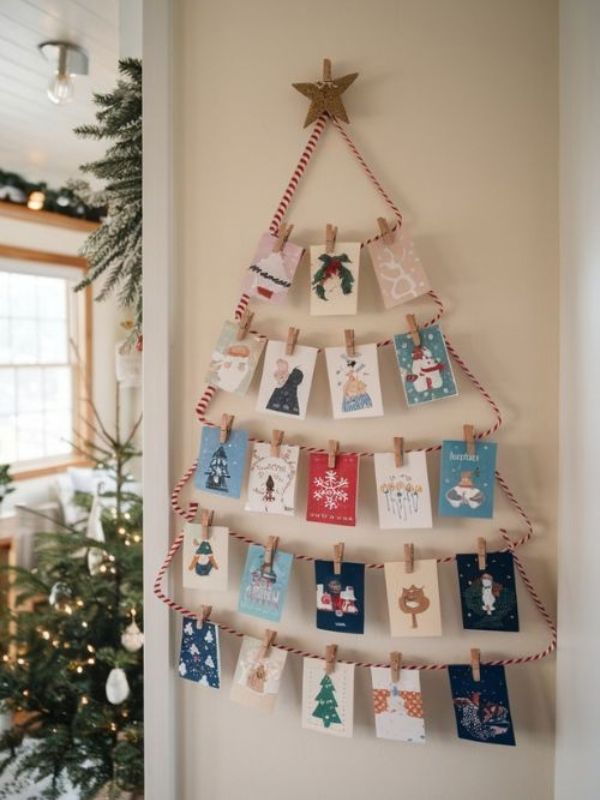
Set up a simple card-making table
Handmade cards are among the easiest Christmas activities for nursery kids because children can participate regardless of their drawing or writing ability.
Prepare folded cardstock before the activity.
Place crayons, large stickers, washable paint, paper shapes, glue, and cotton balls on the table.
Keep the selection manageable.
Too many supplies can quickly become distracting.
You can also prepare a few simple Christmas shapes.
Stars, trees, circles, hearts, and gift boxes are easy choices.
Let children decide what they want to put on their cards.
Give children freedom to decorate
Some children will draw.
Others will use stickers.
Some may cover the entire card in colour.
Another child might make only a few marks.
Let each child work differently.
The purpose is not to produce identical cards.
Instead, children are creating something for another person.
That gives the activity emotional meaning.
You can talk about who might receive the card.
- Grandma.
- Grandpa.
- Mum.
- Dad.
- A sibling.
- A teacher.
- A friend.
This also gives children a reason to think about people they care about.
Help children create a personal message
Nursery children may not be able to write independently.
That does not mean they cannot have their own message.
Ask the child who the card is for.
Then ask what they would like to say.
Write down their words.
If the child says, “I love Grandma,” use those words.
Do not feel the need to make the sentence sound formal.
The child’s own language is what makes the card special.
For older nursery children, you can let them copy a short greeting such as “Merry Christmas.”
Turn card-making into a kindness lesson
Talk about how handmade cards can make people feel remembered.
Explain that kindness does not always require buying something.
A drawing, a hug, a kind word, or a handmade card can also show care.
You can ask children how they feel when someone makes something for them.
Keep the conversation short and natural.
The card itself becomes a small lesson about generosity.
For more personalised handmade inspiration, ChiomaCreates has Easy Personalized Embroidery Ideas for Every Occasion, which includes personalised Christmas stockings, nursery gifts, and keepsake ideas.
8. Set Up a Christmas Pretend-Play Gift Station That Encourages Imagination, Conversation, and Social Skills
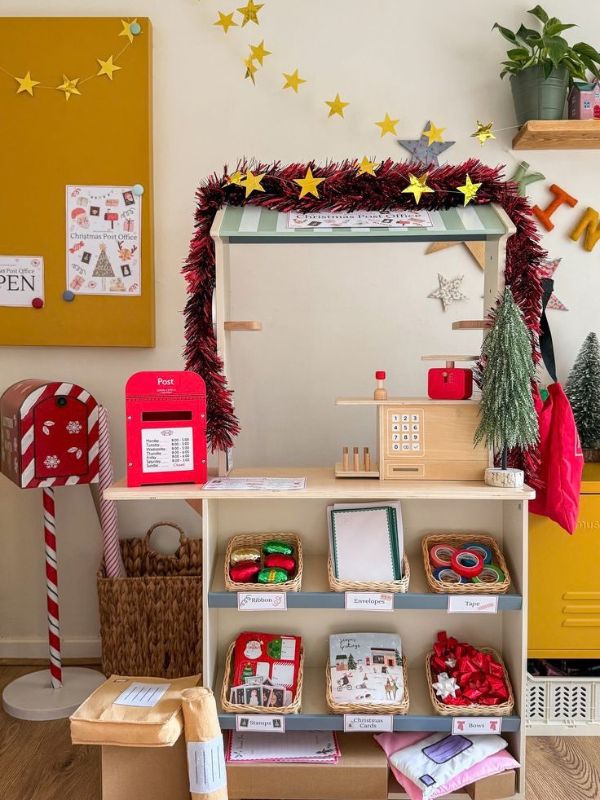
Gather empty boxes and safe wrapping materials
Pretend play can turn ordinary household materials into a full Christmas adventure.
Collect empty cardboard boxes, clean scraps of wrapping paper, paper tape, ribbon, large bows, and crayons.
Make sure there are no sharp tools within children’s reach.
Adults can prepare any difficult cutting beforehand.
Place the empty boxes on a table.
Children can pretend that they are wrapping Christmas gifts.
- They can decorate boxes with drawings and stickers.
- They can add ribbons.
- They can carry presents around the room.
The activity does not need to result in perfectly wrapped boxes.
The pretend experience is the main attraction.
Create different pretend-play roles
Give children different roles.
One child can be the shopkeeper.
Another can pretend to buy a gift.
Another can wrap it.
Someone else can receive it.
These roles can change throughout the activity.
Children learn to communicate with one another as they decide what is happening.
They also practise turn-taking.
If a child wants the same role as another child, help them find a way to take turns.
You can use a simple timer or agree that each child gets a turn after one gift has been wrapped.
Add storytelling to the gift station
Ask children what is inside the boxes.
A box might contain a toy.
Another might contain a teddy bear.
Another might contain a pretend cake.
There are no wrong answers.
You can also start a simple story.
“Today, a little girl went to the Christmas shop to find a present for her friend.”
Then ask the children what happens next.
Their answers can guide the story.
This makes pretend play more engaging.
Connect the game to real-life experiences
Children often copy what they see adults doing.
If they have watched someone wrap gifts, shop for presents, decorate the house, or prepare for visitors, they may recreate those experiences through pretend play.
This helps them process familiar routines.
It also gives them a safe space to experiment with social roles.
For families looking for more craft inspiration that can be adapted for different ages, ChiomaCreates’ How to Make Crafts: 20 Easy Crafts to Sell and Make Profits From Home includes a wide range of handmade project ideas and discusses seasonal collections and personalised crafts.
9. Make a Simple Christmas Nativity Scene Craft That Helps Children Explore the Christmas Story Through Art and Storytelling

Prepare simple characters and a stable background
For families, nurseries, and Sunday school settings that celebrate the Christian meaning of Christmas, a nativity craft can combine storytelling with creative play.
Prepare simple figures representing Mary, Joseph, baby Jesus, shepherds, and animals.
You can draw the figures yourself or create large paper shapes.
Use cardstock rather than thin paper if you want the finished project to last longer.
For the stable, use brown construction paper or a piece of clean cardboard.
Let children colour the characters.
You can also provide simple stickers or paper shapes for decoration.
Keep the figures large enough for children to handle comfortably.
Tell the story while children create
The craft gives you a natural opportunity to talk about the Christmas story.
Introduce the characters one at a time.
Ask children who they see.
Point to Mary.
Point to Joseph.
Talk about baby Jesus.
Talk about the shepherds and animals.
Keep the explanation suitable for the children’s age.
You do not need a long lesson.
A few simple sentences can be enough.
Children can also help place the characters inside the scene.
This turns storytelling into something they can see and touch.
Let children retell the story in their own way
Once the scene is finished, ask children to tell you what happened.
They may remember only a small part.
That is okay.
One child might say, “Baby Jesus is here.”
Another might talk about the shepherds.
Another may simply point to the animals.
Encourage their attempts.
You can gently add details without taking over.
This helps children practise memory, vocabulary, sequencing, and storytelling.
For another hands-on Bible craft, ChiomaCreates has Daniel and the Lion’s Den Craft: An Easy Bible Activity That Helps Kids Remember the Story, which also combines a familiar Bible story with a simple creative project.
Display the nativity scene after the activity
Place the finished scenes somewhere visible.
If you are working with a group, create a small display using all the children’s projects.
Write each child’s name on the back.
You can also photograph the finished scene.
This allows children to see that their work has contributed to the classroom or family Christmas environment.
The display can become a conversation starter throughout the holiday season.
It also shows children that their creative efforts are valued.
10. Create a Christmas Memory Page or Keepsake Ornament That Helps Families Preserve the Holiday Season

Choose one simple keepsake project
The final idea brings together creativity and memory-making.
You can create a Christmas memory page, paper ornament, decorated cardboard ornament, or another simple keepsake.
For a memory page, use cardstock.
Write “My Christmas” at the top.
For an ornament, cut a large circle, star, tree, or bell from sturdy cardboard.
Let children decorate it with crayons, paint, stickers, paper, or fingerprints.
Keep the project simple.
The goal is to capture the child’s experience of Christmas at that particular age.
For more budget-conscious craft inspiration, see ChiomaCreates’ 12 Christmas Dollar Tree Crafts You’ll Be Proud to Display in Your Living Room. The article focuses on creating seasonal decorations from affordable supplies.
Ask children about their favourite Christmas moment
While children decorate, talk about the holiday.
Ask what they enjoyed.
- Maybe they loved singing.
- Maybe they enjoyed seeing the Christmas tree.
- Maybe they liked making cards.
- Maybe they enjoyed visiting family.
- Maybe they loved a particular Christmas food.
Listen carefully to their answers.
Then write down what they say.
This can become one of the most valuable parts of the keepsake.
A child’s exact words can capture their personality in a way that a polished adult-written message cannot.
Add the child’s name, age, and year
Write the child’s name on the finished piece.
Add their age and the year.
You can also include one short sentence about their favourite Christmas memory.
If you make the same type of ornament each year, you can compare them later.
The collection can show changes in drawing skills, interests, handwriting, and ideas.
It also creates a simple family tradition.
Store the keepsake with other childhood memories
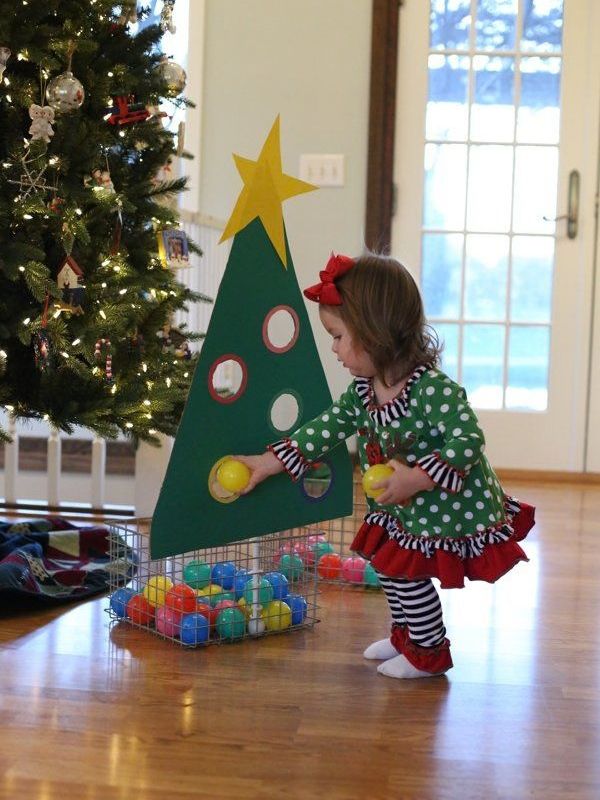
A Christmas craft can easily become part of a larger childhood memory collection.
Place the finished piece inside a memory box.
Add photographs, cards, drawings, or a short note from the child.
ChiomaCreates’ DIY Memory Box for Kids That Preserves Their Favourite Childhood Moments specifically recommends keeping meaningful artwork, handprints, seasonal items, photographs, and other childhood keepsakes together.
For additional seasonal handmade inspiration, Christmas Crochet Projects You Can Actually Finish Before the Holidays for Gifts, Decor, and More offers Christmas project ideas for adults that can complement a child’s handmade keepsake tradition.
Frequently Asked Questions About Christmas Activities for Nursery Kids
1. What are the easiest Christmas activities for nursery kids to prepare at home or in a classroom?
The easiest options usually involve materials that children already know how to use.
Paper Christmas trees, sticker ornaments, Christmas cards, cotton ball crafts, colouring, handprint art, simple sorting games, music and movement, and storytelling are all easy places to begin.
The best Christmas activities for nursery kids should not require children to complete complicated instructions.
If an activity has several steps, prepare some of the work beforehand.
For example, adults can cut paper shapes before the children arrive.
Then children can focus on colouring, gluing, sticking, and decorating.
This reduces frustration.
It also gives children more time to enjoy the creative part of the activity.
2. How long should Christmas activities last for nursery children?
There is no perfect length for every activity.
Some children may stay interested for 20 minutes.
Others may want to move on after five or ten minutes.
That is completely normal.
Young children often have short attention spans, so it is better to keep activities flexible.
You can prepare two or three short projects instead of expecting children to stay at one table for a long time.
For example, start with a Christmas tree craft.
Then move to music.
Later, offer sensory play.
This gives children different ways to participate.
ChiomaCreates’ toddler craft guide similarly recommends activities that fit short attention spans and encourages flexible, low-pressure participation rather than forcing children to remain with one project.
3. What supplies are useful for Christmas crafts with nursery children?
You can create many Christmas activities for nursery kids with basic supplies.
Useful materials include cardstock, construction paper, crayons, washable markers, child-safe glue, washable paint, cotton balls, stickers, tissue paper, cardboard, paper plates, ribbon, and clean recycled containers.
You do not need to purchase every Christmas-themed craft kit.
In fact, everyday materials can be more useful because children can experiment with them in different ways.
Keep a craft box containing clean paper scraps, cardboard, fabric pieces, ribbons, old cards, and other reusable supplies.
Then you can create activities whenever the children need something to do.
4. How can Christmas crafts support early learning?
Christmas crafts can support several early learning areas without turning play into a formal lesson.
Children can practise counting by counting ornaments.
They can practise colours by sorting red and green objects.
They can practise shapes by identifying stars, circles, triangles, and squares.
They can practise language by describing what they are making.
They can develop fine motor skills by tearing paper, placing stickers, squeezing glue, and using crayons.
Movement games can also support listening and coordination.
The key is to keep learning connected to play.
5. How can I keep nursery Christmas activities safe?
Choose materials according to the children’s ages.
Avoid small pieces for children who still put objects in their mouths.
Use child-safe and non-toxic craft materials.
Supervise sensory play closely.
Adults should handle hot glue guns, candles, sharp tools, and hot cooking equipment.
If children use scissors, choose suitable child-safe scissors and supervise their use.
Also check craft areas for spills, loose materials, and sharp edges.
Safety should be part of the setup rather than something you think about only after an accident happens.
Conclusion
The most memorable Christmas activities for nursery kids are not always the most complicated ones.
Sometimes, the simplest project creates the biggest smile.
A piece of green paper becomes a Christmas tree.
A handful of cotton balls becomes Santa’s beard.
A handprint becomes a keepsake.
A cardboard box becomes a pretend present.
A few red and green objects become a sorting game.
A Christmas song turns the living room into a dance floor.
That simplicity is exactly what makes activities for nursery children so enjoyable.
Young children do not need elaborate craft rooms.
They need safe materials, simple instructions, encouragement, and enough freedom to explore.
The holiday season also gives adults a wonderful opportunity to slow down and participate.
Instead of worrying about whether a craft looks perfect, focus on what the child is learning.
- Are they trying something new?
- Are they practising using their hands?
- Are they talking about colours?
- Are they counting?
- Are they listening?
- Are they sharing materials?
- Are they telling a story?
Those moments matter.
You can also create traditions around these activities.
Make a handprint Christmas tree every year.
Create one Christmas card for a grandparent.
Make a new memory page each December.
Decorate one homemade ornament.
Take one photograph of the child holding their finished craft.
Years later, these little traditions can become some of the most meaningful parts of your family’s holiday memories.
Most importantly, remember that children will not remember whether their Christmas tree had perfectly placed ornaments.
They are much more likely to remember the feeling of sitting beside someone they love, choosing their favourite colour, laughing when the glue became messy, dancing to a Christmas song, and proudly holding up something they made themselves.
That is the real value of Christmas activities for nursery kids.
They are not simply crafts to fill an afternoon.
They are small opportunities to learn, connect, imagine, create, and make memories.
So gather your supplies, choose a few activities, and let the children take the lead.
The results may be colourful, messy, uneven, and wonderfully imperfect.
That is exactly how childhood should look.