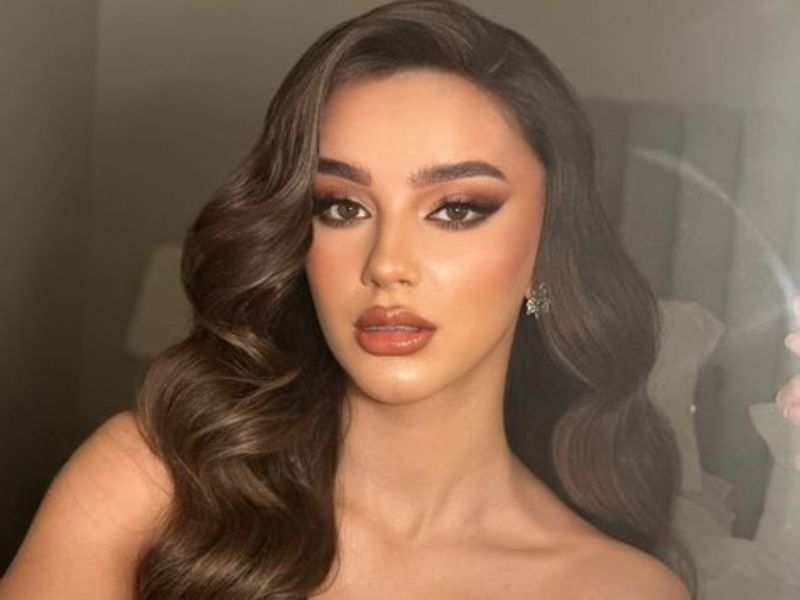
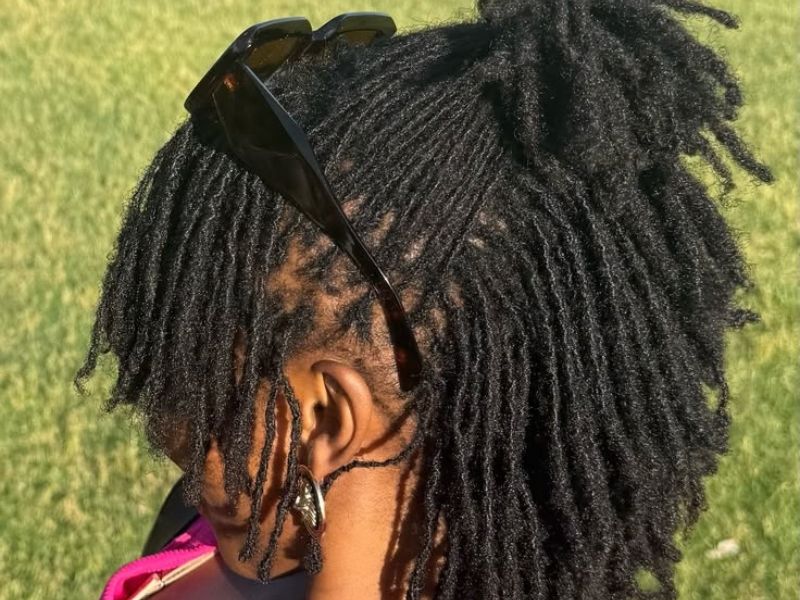
Choosing Sisterlocks styles for medium hair becomes much easier when you understand how to work with your locs instead of forcing them into hairstyles that create unnecessary tension. Sisterlocks styles for medium hair offer plenty of styling possibilities, from simple side parts and half-up hairstyles to elegant updos, soft curls, and beautiful looks for special occasions. However, the way you gather, secure, and arrange your locs matters just as much as the final appearance.
One of the most appealing things about Sisterlocks is their versatility. You can wear them loose on a relaxed day, arrange them into a neat style for work, or create an elegant look for a wedding without changing your natural hairstyle completely. Medium length also gives you more room to experiment than very short locs, although the amount of styling you can comfortably achieve depends on your hair’s length, density, condition, and stage of maturity.
Still, not every hairstyle you see online will suit your locs.
A beautiful high bun might require too much pulling around your temples. A tightly gathered ponytail could leave your scalp uncomfortable. Even a simple hairstyle can become stressful when you repeatedly pull the same sections into position.
The good news is that you do not need tight styling to create a polished appearance. The secret is to choose hairstyles that work with your natural length, distribute the weight of your locs comfortably, and allow your roots to move without excessive pulling.
This guide explores practical Sisterlocks styles for medium hair, including everyday hairstyles, elegant updos, occasion-ready looks, and simple ways to accessorize your locs. You will also learn how to recognize tension, choose suitable accessories, care for your scalp, and adjust each hairstyle to suit your hair.
Even if your Sisterlocks are newly established or fully mature, the goal in this Sisterlocks styles for medium hair is the same: enjoy your styling options while treating your hair gently.
How to Keep Your Locs Looking Neat All the Time—Even Between Retwists with tips for maintaining a neat appearance.
Sisterlocks Styles for Medium Hair: How to Style Them Without Causing Tension
1. Understanding Medium-Length Sisterlocks Before Choosing a Hairstyle
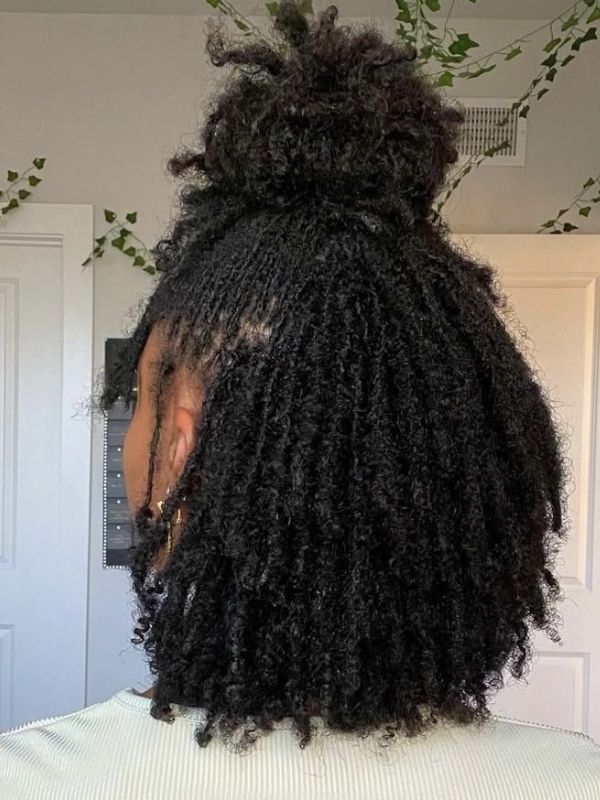
Medium-length Sisterlocks occupy a useful stage between shorter locs and longer styles that can easily reach a bun or ponytail. At this length, you may have enough hair to create several updos, yet some sections might still be too short to reach the same gathering point comfortably.
There is no single measurement that defines medium-length Sisterlocks for everyone. Hair texture, shrinkage, installation technique, and individual growth patterns can affect how long your locs appear. For this reason, it is more helpful to consider what your hair can comfortably do than to rely on a specific measurement.
For example, your front locs may be shorter than those at the back. You might be able to create a low ponytail but find that a high bun pulls around your temples. Alternatively, your locs may have enough length for a half-up style but not enough to form a secure full updo.
These differences are normal. You do not need every section to behave identically to enjoy attractive hairstyles.
What makes medium Sisterlocks versatile?
Medium-length locs offer several practical advantages.
- More styling options: You may be able to create side-swept looks, partial updos, low ponytails, and simple buns.
- Flexible parting: A middle part, side part, or off-centre part can change the overall appearance without requiring extensive manipulation.
- Room for accessories: Depending on their length and maturity, your locs may accommodate lightweight clips, decorative pins, and comfortable headbands.
- Everyday convenience: You can alternate between wearing your locs loose and gathering selected sections when you want a different look.
- Occasion-ready styling: A simple updo can be adapted for work, celebrations, family gatherings, or formal events.
However, versatility should not be confused with unlimited styling freedom. Some hairstyles require more tension than others, especially when they depend on gathering every loc into a small section.
When exploring Sisterlocks styles for medium hair, pay attention to how the hairstyle feels while you create it. Your roots should not need to be pulled tightly for the style to hold.
If your locs are still developing, follow the guidance of your trained Sisterlocks Consultant before attempting elaborate styles. Newly established locs may need a more cautious approach than mature ones.
For more inspiration, explore How to Style Sisterlocks for Short Hair. Although that guide focuses on shorter lengths, its emphasis on working with your current hair length is equally useful for medium Sisterlocks.
2. Why Tension Matters When Styling Sisterlocks
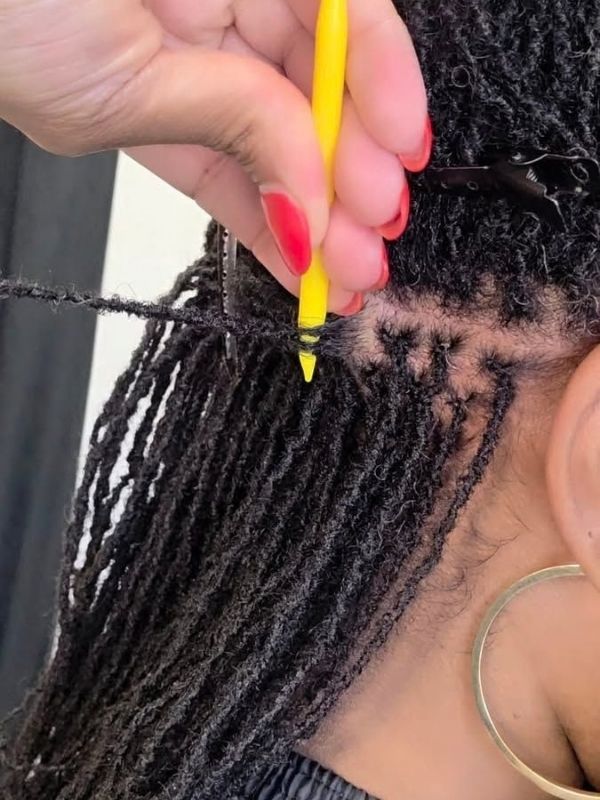
A hairstyle can look neat while placing unnecessary stress on your roots. That is why comfort deserves as much attention as appearance when selecting Sisterlocks styles for medium hair.
Tension occurs when your hair is pulled firmly away from its natural resting position. This can happen when you gather the locs into a tight ponytail, secure a bun too firmly, or repeatedly pull short sections toward a central point.
The problem is not that every updo is harmful. Rather, the amount of pulling, the placement of the style, the duration of wear, and the condition of your hair all influence how comfortable a hairstyle will be.
How can you recognize excessive tension?
Pay attention to your scalp while styling and after you finish.
Possible warning signs include:
- A tight or uncomfortable feeling around the roots.
- Tenderness around the temples, forehead, or crown.
- A headache that begins after securing your hair.
- Redness or irritation around areas under pressure.
- Small sections that appear to be under constant pulling.
- Discomfort that becomes more noticeable the longer you wear the style.
These signs are reasons to loosen or remove the hairstyle rather than waiting for your scalp to adjust.
Persistent discomfort, visible thinning, or changes around the hairline deserve attention. Stop using the hairstyle that causes the problem and consider speaking with a qualified healthcare professional or dermatologist if symptoms continue.
Why does repeated tension matter?
Hair and scalp can be affected by repeated pulling over time. Hairstyles that continually place stress on the same areas may contribute to traction-related hair loss in some people.
This is particularly important around the hairline and temples, where tightly secured styles can concentrate pressure.
A relaxed hairstyle is not automatically tension-free, either. A low bun can still pull if every loc is stretched tightly toward the nape. Meanwhile, a carefully arranged updo may feel comfortable when it uses a suitable amount of hair and does not force the roots into an unnatural position.
The aim is not to avoid all styling. Instead, choose hairstyles that hold their shape without depending on tightness.
For additional guidance on common loc concerns, read How to Fix Common Loc Problems and Keep Your Locs Healthy. Understanding potential problems can help you recognize when your routine needs adjusting.
3. How to Prepare Your Sisterlocks Before Styling
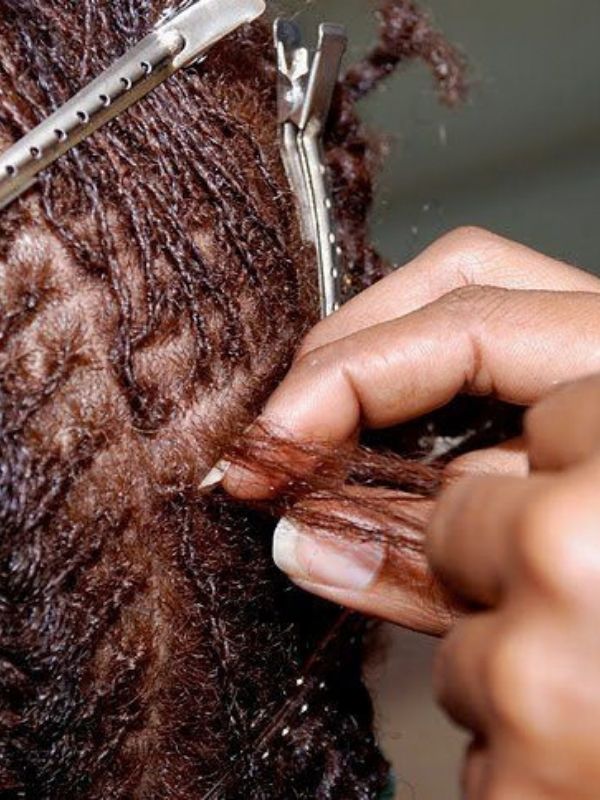
Preparation makes styling easier because you can work with clean, comfortable locs instead of trying to force them into place. A few simple steps can also reduce unnecessary handling.
Before choosing among different Sisterlocks styles for medium hair, consider your locs’ condition, your scalp’s comfort, and the type of hairstyle you want to create.
Step 1: Check your scalp and roots
Begin by checking whether your scalp feels comfortable. If you already have tenderness or irritation, avoid a hairstyle that gathers the affected sections tightly.
Look at your hairline, temples, and crown. These areas often experience pressure when hair is pulled backward or upward.
If your locs are newly installed, loose, or experiencing unusual changes, consult your Sisterlocks professional before attempting complicated styling.
Step 2: Make sure your locs are ready
Cleanliness matters, but you do not need to wash your hair immediately before every styling session.
Follow the washing and maintenance routine recommended for your Sisterlocks. Some styling methods are better suited to mature locs, while newer locs may require special care to reduce slipping or unraveling.
Avoid adding heavy products simply because you want your hairstyle to look smoother. Excessive product can accumulate within small locs and make maintenance more difficult.
Step 3: Detangle nothing that is meant to remain locked
Sisterlocks are intentionally formed into individual locks, so do not treat them like loose hair that needs conventional detangling.
Instead, separate locs gently when they have become tangled together, following your Consultant’s recommendations. Avoid pulling individual locs apart forcefully or manipulating their roots unnecessarily.
Step 4: Choose the hairstyle before gathering your hair
Decide whether you want a loose style, a partial updo, or a full updo. Then determine which sections actually need to move.
For instance, a side-swept hairstyle does not require you to gather the locs at the back. Similarly, a half-up style leaves the lower sections free instead of pulling every loc toward the crown.
Using only the sections needed for the hairstyle can make the process more comfortable.
Step 5: Select suitable accessories
Choose accessories that are smooth, lightweight, and easy to remove. Avoid clips with sharp edges or bands that snag your locs.
A comfortable accessory should hold the hairstyle without requiring you to tighten it repeatedly.
For a more detailed maintenance routine, read How to Care for Your Locs the Right Way. It covers the importance of cleansing, protecting, and maintaining locs between styling sessions.
Before you move over this 15 Sisterlocks styles for medium hair ideas check out
- 15 Middle Part Hairstyles Ideas That Look Gorgeous for different middle-part looks.
- 20 Ponytails for Curly Hair with more ponytail inspiration.
- 15 Pin-Up Hairstyles That Look Chic for ideas for a more structured look.
4. Fifteen Beautiful Sisterlocks Styles for Medium Hair to Try
Medium-length Sisterlocks provide several ways to change your appearance without relying on tight pulling. Some styles keep your hair completely loose, while others gather a small section or create a more structured silhouette.
The best option depends on your length, loc maturity, and personal preference. You can also adapt these ideas instead of copying every detail exactly.
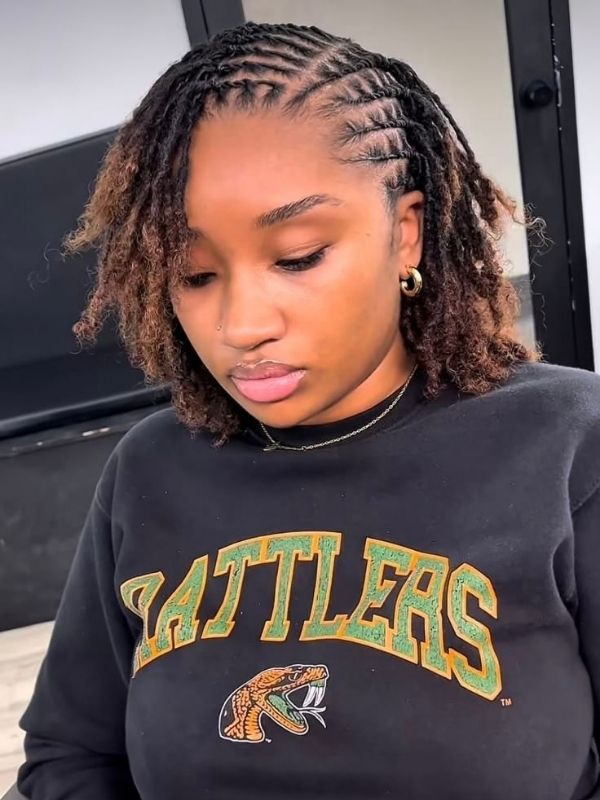
1. The Classic Middle Part
A middle part is a simple way to make medium Sisterlocks look organized without gathering them into a restrictive style.
The part creates visual balance, while the remaining locs fall naturally on either side of your face. You can wear this look with casual clothing, work outfits, or more formal pieces.
To create it, identify where your locs naturally separate along the centre of your head. Use your fingers to arrange them gently rather than pulling individual roots into a perfectly straight line.
Allow the locs to fall where they are most comfortable. If the centre part does not sit naturally, an off-centre version can create a similar effect.
Why it works: The style requires very little manipulation and does not depend on tying or pinning the hair.
Tension tip: Do not pull the front locs firmly backward to create a sharper part. A comfortable, natural-looking part is more useful than forcing every loc into position.
This is one of the easiest Sisterlocks styles for medium hair to wear regularly because you can change your outfit or accessories without restyling your hair.
How to Choose Wedding Locs Styles That Make You Look Elegant and Put Together — formal hairstyle ideas.
2. The Soft Side Part
A side part changes the direction of your locs and creates a different silhouette with minimal effort.
This option works well when you want a little more volume on one side or prefer the way your locs frame your face when they fall unevenly.
Begin by creating a part slightly to the left or right of the centre. Arrange the larger section so it falls naturally across the side of your head.
You can tuck a few locs behind one ear if they reach comfortably. However, leave shorter sections loose instead of stretching them until they stay in place.
Why it works: You can achieve a noticeably different appearance without gathering your hair into a ponytail or bun.
Tension tip: Keep the roots relaxed around the temples. If the side part makes one area feel tight, move the part slightly or allow the locs to settle in their natural direction.
You can also alternate between a middle part and a side part throughout the week. This simple change gives you variety without requiring a new hairstyle every morning.
3. The Half-Up, Half-Down Style
The half-up hairstyle is a practical choice when you want your face to feel more open while keeping the length of your Sisterlocks visible.
Rather than gathering every loc, you secure only the upper section. The remaining hair stays loose, which reduces the amount of hair you need to pull toward one point.
Start by separating a manageable section from the crown and upper sides. Gather it toward a comfortable point at the back of your head.
Secure the section with a soft, suitable accessory. Make sure it holds the hair without compressing the roots.
Allow the lower locs to hang naturally. If a few shorter locs fall outside the gathered section, leave them loose instead of repeatedly pulling them into the holder.
Why it works: You get the structure of an updo while retaining the movement of loose hair.
Tension tip: Avoid gathering too much hair into a small elastic. If the section feels heavy or tight, reduce the amount of hair or choose a looser arrangement.
For a slightly different look, position the gathered section higher or lower, provided both placements feel comfortable.
4. The Relaxed Low Ponytail
A low ponytail is useful when you need your locs away from your face or neck.
It can work for errands, study sessions, office days, and casual outings. It is also easy to create without elaborate tools.
Begin by guiding your locs toward the nape of your neck. Gather them loosely with your hands, allowing the roots to remain in a comfortable position.
Use a soft hair tie designed to avoid snagging. Secure the ponytail only enough to keep the locs together.
If you notice tension around your forehead or temples, release the ponytail and gather the hair again with less pulling.
Why it works: The lower placement may allow the hair to rest closer to its natural direction instead of being stretched upward.
Tension tip: Low does not automatically mean gentle. Avoid pulling the front and sides tightly toward the nape, and remove the tie if your scalp becomes uncomfortable.
You can make the style look more polished by arranging the front with a natural middle or side part.
If your locs are not long enough to gather comfortably, try a partial ponytail instead.
How to Elevate Your Look with Fashionable Headbands Hairstyles for accessory inspiration.
5. The Loose High Ponytail
A high ponytail creates a more energetic look and allows the length of your Sisterlocks to become the main feature.
However, this style needs particular care because the upward direction can place tension on the hairline and crown.
Before attempting it, make sure your locs are long enough to reach the intended position without being stretched firmly. Gather a manageable section rather than forcing every loc into the ponytail.
Use a gentle accessory and avoid repeatedly tightening the base to make the hairstyle appear smaller or neater.
Why it works: The raised placement creates a clear silhouette and works well with casual outfits, sports-inspired clothing, and simple accessories.
Tension tip: If the style causes pulling around the temples or forehead, lower the ponytail or choose another look. Never keep a high ponytail in place simply because it looks attractive.
You can also create a half-up high ponytail, which gathers only the upper section while leaving the rest loose.
For more ideas involving different hair lengths and styling approaches, explore How to Style Short Locs: 13 Beautiful Looks for Women.
6. The Gentle Low Bun
A low bun can create a neat appearance for work, family events, and formal occasions.
The important part is to form the bun without twisting the locs excessively or pulling every root tightly toward the centre.
Start by gathering your hair at the nape of your neck. Arrange the locs into a loose circular shape, allowing the ends to rest comfortably.
Use suitable pins or a gentle accessory to hold the shape. Place the pins carefully so they do not snag individual locs.
If your locs are too short to form a complete bun, create a partial tuck instead. The finished hairstyle can still look intentional without requiring every section to reach the same point.
Why it works: The bun creates a structured silhouette and keeps much of the hair away from the face.
Tension tip: Avoid making the base too tight. A bun that causes pressure around the scalp or pulls heavily at the nape should be loosened or removed.
You can also leave a few naturally loose locs around the face if they fall comfortably.
How to Transition from Relaxed Hair to Locs Without Damaging Your Hair for more information of people beginning a loc journey.
7. The Side-Swept Sisterlocks Style
A side-swept look creates movement by directing some of your locs toward one side.
It is suitable for everyday wear and can also complement an evening outfit. The hairstyle looks especially polished when you allow the locs to retain their natural texture.
Choose the side where you want the locs to fall. Gently guide the front section in that direction, allowing the remaining hair to hang naturally.
If the section stays in place without assistance, you may not need any pins. Otherwise, use a smooth accessory that secures only the section you intend to move.
Why it works: The hairstyle changes the direction of the hair without requiring a complete updo.
Tension tip: Avoid flattening the side of your head by pulling the locs tightly backward. If the section does not stay in place comfortably, adjust the part or leave it loose.
You can combine this style with a soft headband for a more defined appearance.
Crochet Hairstyles for Black Women for black women who wants to look good.
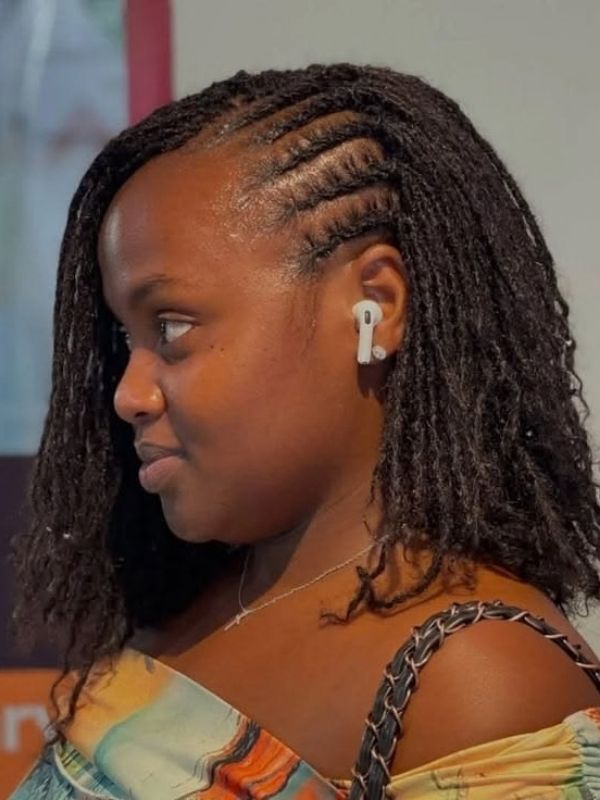
8. The Two-Sided Front Twist
Two small front twists can create a more detailed hairstyle without requiring you to manipulate the entire head.
This look works best when your front locs have enough length to move backward comfortably. It may not suit very short or newly established locs.
Begin by creating a middle or slightly off-centre part. Take a small section from one side and gently direct it backward, allowing the locs to sit together naturally.
Repeat on the other side. You can secure the sections separately or bring them together at the back if your length allows.
Keep the remaining locs loose.
Why it works: The two front sections create a focal point while the rest of the hair maintains its natural movement.
Tension tip: Do not twist the roots tightly or force both sections to meet. If your locs are too short, secure each side independently or choose a simple side sweep instead.
The style can be adapted for a casual day or a special occasion by changing your accessories.
These 12 Sleek Ponytails That Look Expensive for people who loves ponytail but don’t have inspiration style.
9. The Half-Up Twisted Crown
The twisted crown combines the simplicity of a half-up style with the detail of a small twist.
It is an option for medium Sisterlocks that can reach the crown comfortably without pulling at the sides.
Separate a small section from the front and upper sides. Direct it toward the back of your head, using a gentle twisting motion only where appropriate for your established locs.
Secure the section loosely, leaving the rest of your locs down.
You do not need to create a perfectly symmetrical crown. A relaxed arrangement can look just as polished.
Why it works: The style creates a little height and structure without requiring a full bun.
Tension tip: Keep the gathered section manageable. If the crown feels heavy or tight, release some locs and leave them loose.
For newer Sisterlocks, ask your Consultant whether twisting or pinning the sections is appropriate before trying this look.
10. The Side-Pinned Updo
A side-pinned updo is a useful option when you want a more formal hairstyle without gathering all your locs at the crown.
Start by deciding which side you want to emphasize. Direct a small section toward that side, then arrange selected locs into a loose shape near the back or side of your head.
Use suitable pins to hold the arrangement. Keep the pins secure without pressing them against your scalp.
Leave the remaining locs loose or tuck only the ends that reach comfortably.
Why it works: The asymmetrical placement creates interest while allowing some sections to remain free.
Tension tip: Do not use pins to force short locs into a position they cannot naturally reach. If the section keeps slipping, change the placement instead of adding more pressure.
This hairstyle works well with simple earrings or a clean neckline because the side arrangement becomes the main feature.
11. The Loose Curled Sisterlocks Look
Soft curls can give medium Sisterlocks a different texture for a celebration, photoshoot, or day when you want a change.
The safest approach depends on the maturity and condition of your locs. Use a curling method recommended for your Sisterlocks rather than assuming every technique is suitable.
Some people use suitable rollers or other gentle, low-heat methods. However, the method should be appropriate for your loc structure, and the locs must be allowed to dry properly before the style is taken down.
Avoid tight wrapping that pulls at the roots or creates pressure around the scalp.
Why it works: Curling changes the overall shape and movement of the locs without requiring a tight ponytail or bun.
Tension tip: The process should not involve pulling the locs forcefully around small tools. If your locks are newly installed or prone to slipping, ask your Consultant before trying a curling technique.
After styling, allow the locs to settle naturally. Avoid repeatedly reshaping the curls throughout the day.
For more ideas, you can explore the curly hairstyle inspiration in ChiomaCreates’ Sisterlocks for Older Women guide.
12. The Accessorized Loose Style
Sometimes, the easiest way to refresh your hairstyle is to keep your locs loose and introduce one simple accessory.
A smooth headband, a decorative pin, or a lightweight clip can add interest without requiring an elaborate updo.
Start with your natural part, then position the accessory where it can hold a small section comfortably.
For example, you might place a headband behind the hairline or use a clip to hold a few locs to one side. Keep the remaining hair loose.
Why it works: The accessory changes the overall appearance while reducing the amount of manipulation required.
Tension tip: Avoid tight headbands and clips that grip too firmly. If an accessory leaves a mark, causes discomfort, or catches your locs when removed, choose a different option.
You can also change the accessory to complement different outfits without changing your basic hairstyle.
For more inspiration, read How to Elevate Your Look with Fashionable Headbands Hairstyles.
13. The Low Rolled-Up Style
A low rolled-up style creates the appearance of an updo by arranging selected locs near the back of your head.
Unlike a tightly formed bun, this look can be adapted to use only the sections that comfortably reach the intended position.
Begin by gathering the locs at the back loosely. Fold the ends inward where the length allows, then secure the arrangement with smooth pins or another suitable accessory.
Do not force the ends to meet or pull shorter locs from the sides into the roll.
Why it works: The tucked arrangement creates a clean outline while allowing some sections to remain loose.
Tension tip: Use fewer locs if the arrangement feels heavy. A smaller, comfortable roll is preferable to a larger one that pulls at your roots.
This style can work for professional settings and celebrations, especially when paired with simple accessories.
How to Style Short Locs: 13 Beautiful Looks for Women more styling inspiration.
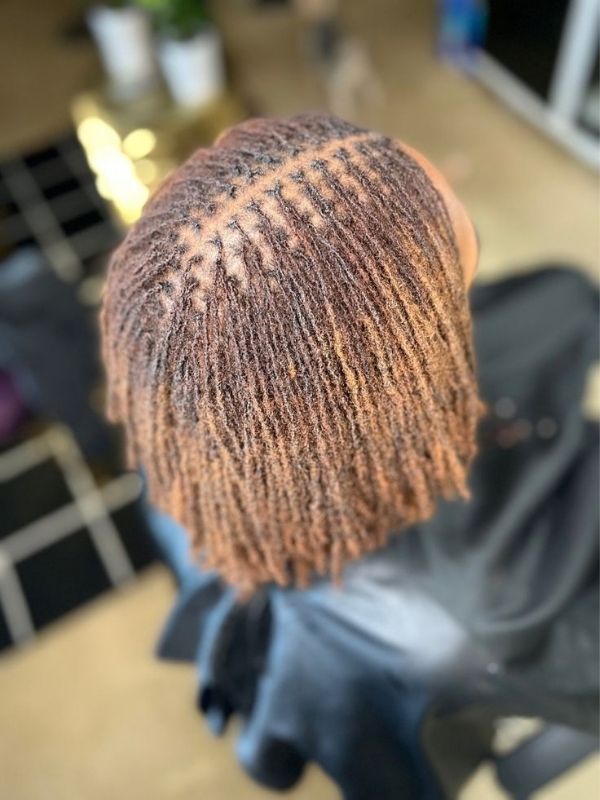
14. The Natural Volume Style
Medium Sisterlocks do not always need to be gathered or pinned to look styled.
A natural-volume look allows your locs to fall freely while making the most of their shape and texture.
Start with your preferred part. Gently arrange any locs that are sitting together unevenly, then allow the hair to settle naturally.
Avoid repeatedly pulling the roots upward to create volume. Instead, use the natural spacing and movement of your locs to shape the final appearance.
Why it works: You can create a full, relaxed hairstyle without placing the hair under constant tension.
Tension tip: Do not tug individual locs to make one side look fuller. If the volume is uneven, try adjusting your part or allowing the locs to fall in a different direction.
This style is particularly useful on days when your scalp needs a break from accessories and updos.
How to Care for Your Locs the Right Way: A Step-by-Step Guide: a guide to regular loc care.
15. The Formal Pinned-Up Sisterlocks Style
For weddings, dinners, celebrations, and other formal occasions, a pinned-up hairstyle can create a polished appearance while keeping your locs visible.
The key is to design the updo around your actual length instead of trying to recreate a complicated style that requires longer hair.
Start with a comfortable part and decide where you want the main arrangement to sit. Gather selected locs toward the back or side, then secure them in a loose shape using appropriate pins.
Allow shorter sections to remain free when necessary. You can use a decorative pin to finish the look without adding heavy accessories.
Why it works: The hairstyle offers a formal silhouette while allowing the natural texture of your Sisterlocks to remain visible.
Tension tip: Avoid tightly pulling the hairline backward. A formal hairstyle should remain comfortable throughout the event, not just during the first few minutes.
If you plan to wear the style for several hours, test it beforehand. This gives you time to adjust any section that feels uncomfortable.
For additional occasion styling ideas, explore How to Choose Wedding Locs Styles That Make You Look Elegant and Put Together.
5. How to Choose the Right Sisterlocks Style for Different Occasions
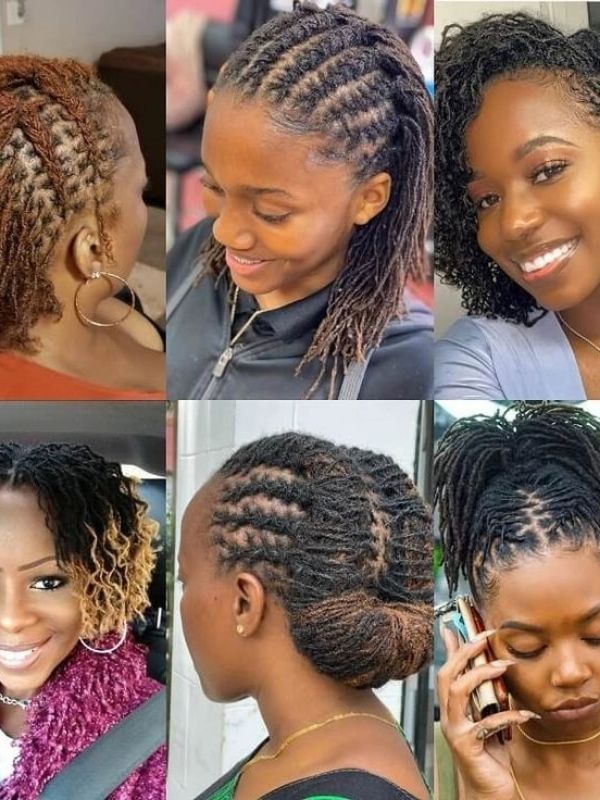
The best hairstyle depends on more than length. Your daily activities, outfit, comfort, and the amount of time you want to spend styling your hair also matter.
When choosing Sisterlocks styles for medium hair, think about how long you will wear the hairstyle and whether you will need to adjust it during the day.
For everyday activities
Choose styles that require little preparation and remain comfortable while you move.
A middle part, side part, loose locs, or a gentle half-up style can work well. These options are especially useful when you do not want to spend a long time arranging your hair.
You can change the appearance by moving your part or adding a lightweight accessory.
Click to find Why Some Locs Grow Faster Than Others and How to Fix Slow Growth and also learn about differences in apparent loc growth.
For work or school
A low ponytail, half-up style, or simple side-swept arrangement can keep some locs away from your face.
However, avoid assuming that a neat hairstyle must be tightly secured. A relaxed style can still look organized and appropriate.
Choose a style you can wear comfortably for several hours without repeatedly tightening it.
For weddings and formal events
Consider a low bun, side-pinned updo, or formal pinned arrangement.
These styles can look polished without requiring you to pull every loc into one small section. If you are working with a stylist, explain that comfort and low tension are priorities.
A stylist familiar with Sisterlocks can help you choose a design that respects the size, maturity, and condition of your locs.
For hot weather
Loose styles and comfortable half-up arrangements can help you keep some hair away from your face and neck.
A low ponytail may also work if it does not pull tightly at the roots.
Choose accessories that feel comfortable against your scalp, and avoid keeping your hair gathered tightly simply to make it appear neater.
For days when you want minimal manipulation
Wear your locs loose, use a comfortable headband, or try a simple side part.
You do not need to create a new updo every day. Allowing your locs to rest in their natural position can reduce unnecessary handling.
6. Accessories That Work Well With Medium Sisterlocks
Accessories can make a simple hairstyle look different without requiring you to manipulate every loc. However, the size, weight, shape, and fit of an accessory matter.
Soft hair ties
Choose ties that hold your hair without snagging or compressing the locs excessively. Avoid repeatedly wrapping a band until the ponytail feels rigid.
When removing it, take your time. Do not pull the band forcefully through the locs.
How to Transition from Relaxed Hair to Locs on further reading on starting locs.
Smooth hairpins
Pins can hold small sections in place for half-up styles and formal arrangements.
Choose pins that do not have sharp edges or exposed parts that might catch individual locs. Insert and remove them carefully.
If a pin keeps slipping, reconsider the placement rather than adding several pins that press against your scalp.
Comfortable headbands
Headbands can change the appearance of loose locs or help hold a front section in place.
Choose a design that sits comfortably behind the hairline. If it creates pressure around the temples or forehead, loosen it or remove it.
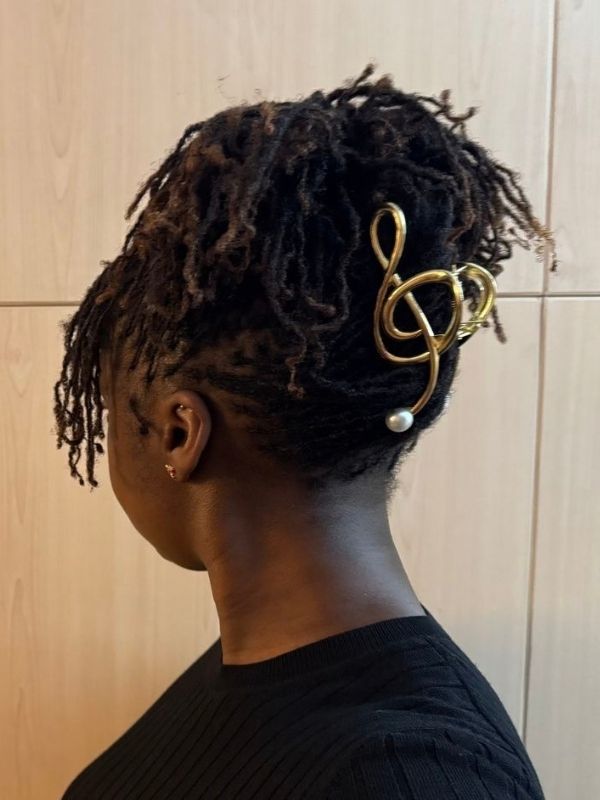
Decorative clips
A lightweight clip can add a small detail to a side part or half-up style.
Avoid clips that are too small for the section you want to hold. A clip that grips too tightly may pull on individual locs.
Scarves and headwraps
A scarf or headwrap can create a different look without requiring a complex hairstyle.
Use a comfortable fabric and tie it securely without pulling tightly around the hairline. Avoid arrangements that place constant pressure on the same area.
The aim is to complement your locs, not compress them.
For more inspiration, explore the related fashionable headband hairstyle ideas on different headbands to style your hair with.
7. Common Mistakes to Avoid When Styling Medium Sisterlocks
A hairstyle may look attractive in a photograph but still be unsuitable for your hair. Understanding common mistakes can help you make adjustments before discomfort becomes a recurring problem.
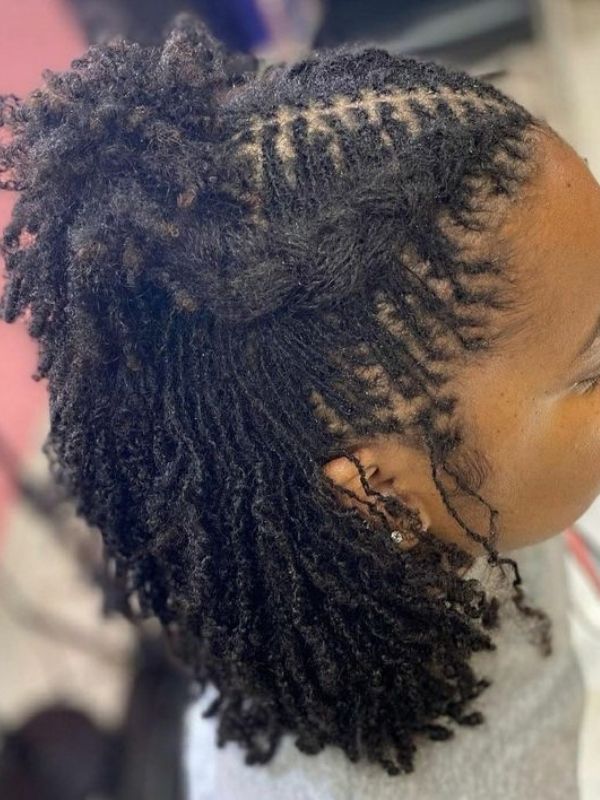
Pulling every loc into one section
You may be tempted to gather every loc into a high ponytail or bun because it creates a uniform shape. However, some sections may not reach the chosen point comfortably.
Instead, gather only the sections that can reach without excessive pulling. Leave shorter locs loose or choose a partial updo.
Keeping a style in place through tightness
If a hairstyle only works when the roots are pulled firmly, it may not be the right choice for your current length.
Loosen the arrangement or select another style. Comfort should not be sacrificed to achieve a particular shape.
Repeating the same tight hairstyle every day
Repeatedly gathering your locs in the same direction may concentrate stress on the same areas.
Try alternating between loose styles, side parts, partial updos, and comfortable low ponytails. You do not need to change your hairstyle constantly, but avoid relying on one restrictive style every day.
Using heavy products to force a neat appearance
Heavy waxes, gels, and other products can accumulate within locs. They may also make cleansing more difficult.
Use products that suit your Sisterlocks care routine, and avoid applying extra product simply to flatten every loose hair.
Copying hairstyles without considering loc maturity
A hairstyle suitable for mature Sisterlocks may not be appropriate for newly installed locs.
If your locks are still developing, follow your Consultant’s recommendations about manipulation, accessories, and styling techniques.
Ignoring discomfort
Do not treat scalp pain as a normal part of wearing an updo.
If your hair feels tight, loosen or remove the style. Persistent tenderness, irritation, or thinning should not be ignored.
For more advice about maintenance concerns, read How to Keep Your Locs Looking Neat All the Time—Even Between Retwists. It explains why you do not need to keep manipulating your roots simply to maintain a neat appearance.
8. A Simple Low-Tension Styling Routine You Can Follow
You do not need an elaborate routine to enjoy different hairstyles. A simple process can help you make styling decisions more consistently.
Before styling
First, check your scalp and locs. If you notice irritation or unusual tenderness, avoid gathering the affected sections.
Next, decide what you want the hairstyle to achieve. Perhaps you want your hair away from your face, a more formal appearance, or a simple change from your usual part.
Choose a style that matches your loc length and condition.
While styling
Work gently and use only the sections necessary for the look.
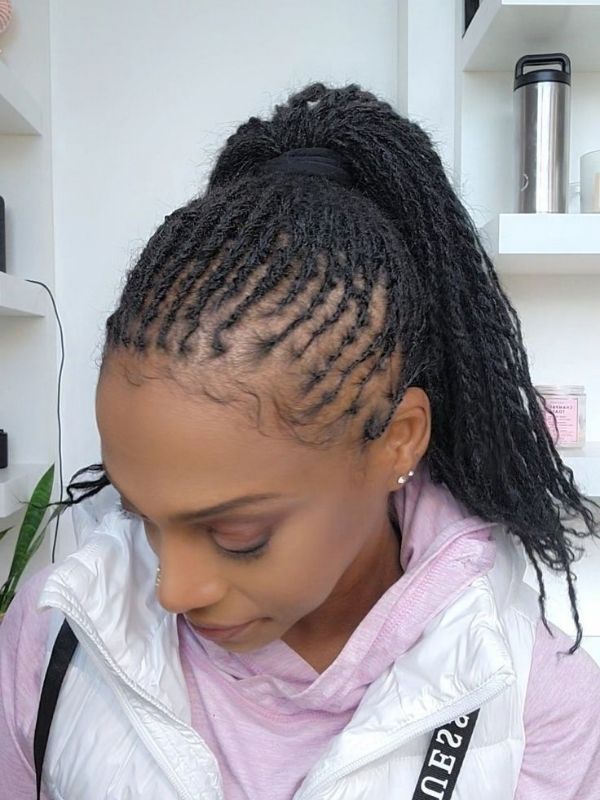
If you are creating a ponytail, gather the locs without pulling the roots tightly. For a bun, use a loose arrangement rather than twisting the hair firmly into a compact shape.
Secure the style with a suitable accessory. Avoid repeatedly tightening it when a few locs fall out of place.
After styling
Check how your scalp feels. Look for signs that the hairline or temples are under pressure.
If the style feels uncomfortable, make an adjustment immediately. Do not wait for discomfort to disappear on its own.
Also, consider how long you plan to wear the hairstyle. A style that feels manageable for a short outing may become uncomfortable when worn for many hours.
At the end of the day
Remove accessories carefully and allow your locs to return to a comfortable position.
Check for any snagged locs or areas that feel sore. If you notice a recurring problem, choose a different style next time.
This routine can help you enjoy Sisterlocks styles for medium hair without making every styling session complicated.
9. How to Maintain Your Sisterlocks Between Hairstyles
Good styling begins with consistent care. Although Sisterlocks can offer flexibility, they still need attention to cleanliness, scalp comfort, and appropriate maintenance.
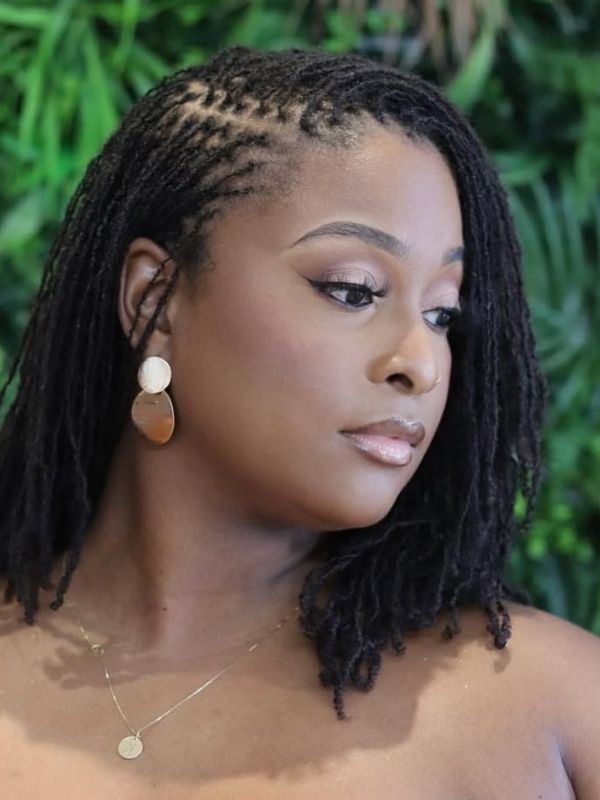
Follow your recommended cleansing routine
Keep your scalp and locs clean according to the routine recommended for your Sisterlocks. Avoid washing excessively or skipping cleansing because you are worried about disturbing the hairstyle.
Your Consultant can advise you on washing methods that suit your loc maturity and maintenance needs.
How to Choose Sisterlocks for Older Women: Low-Maintenance Styles You’ll Love — styling and maintenance inspiration.
Avoid unnecessary product buildup
Heavy products can accumulate within small locs and may be difficult to remove completely.
Choose suitable products carefully, and use them only when they serve a clear purpose in your routine.
Protect your locs while sleeping
Friction from bedding can affect the appearance of your locs. A suitable satin or silk covering may help reduce friction, provided it fits comfortably and does not pull on your hair.
Keep the covering clean and avoid tying it so tightly that it creates pressure around your hairline.
Follow your maintenance schedule
Sisterlocks require appropriate maintenance to keep their structure and condition in good order.
Do not use styling as a substitute for professional maintenance. If you notice unusual slippage, thinning, or changes in your locs, consult a trained professional.
Pay attention to changes in your hair
Your styling preferences may change as your locs grow. A hairstyle that was uncomfortable several months ago may become easier when the locs gain length.
Similarly, a style that once worked well may need adjusting if your scalp becomes sensitive or your hair condition changes.
For more detailed guidance, visit How to Care for Your Locs the Right Way and How to Fix Common Loc Problems and Keep Your Locs Healthy.
How to Make Your Sisterlocks Styles Last Without Pulling Them Tighter
It can be frustrating when a hairstyle begins to loosen before the day ends. However, repeatedly tightening it is not always the best solution.
Instead, think about the design and the way you secure it.
Choose a style that suits your natural length
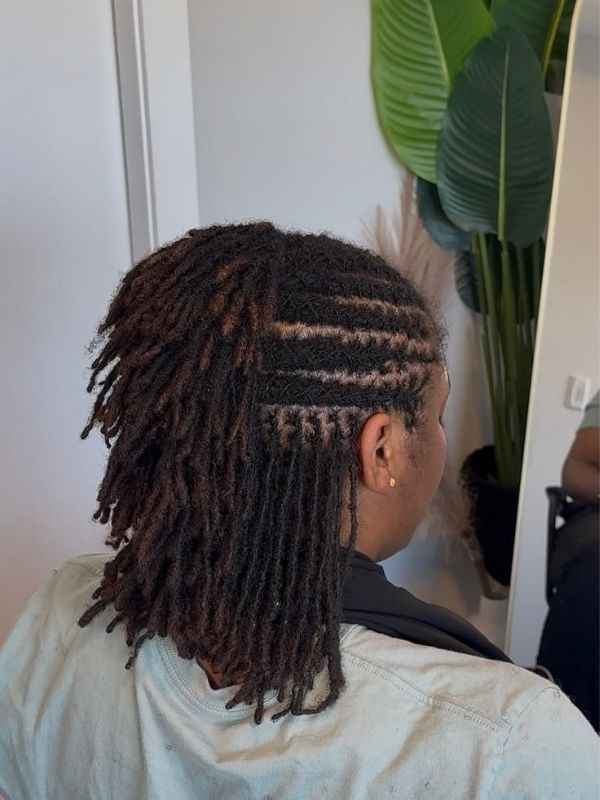
If your locs barely reach a particular gathering point, the hairstyle may be difficult to maintain comfortably.
Choose a lower position or reduce the number of locs you gather. You can also use a partial style that does not depend on every section reaching the same point.
How to Steam Your Locs: Everything You Need to Know for guidance on steaming and avoiding product buildup and How to Fix Common Loc Problems and Keep Your Locs Healthy for more information about common loc concerns.
Use appropriate accessories
A suitable accessory should support the hairstyle without gripping too tightly.
If a band slips, try a different size or design rather than wrapping it repeatedly around the hair.
Avoid excessive manipulation
Repeatedly twisting, pinning, and rearranging your locs can make styling more time-consuming and place unnecessary stress on certain sections.
Arrange the hairstyle gently, secure it once, and make only the adjustments you actually need.
Accept natural movement
Your locs do not have to remain perfectly fixed in place throughout the day.
A few locs shifting naturally does not mean your hairstyle has failed. Allowing some movement can make the style more comfortable and natural-looking.
Frequently Asked Questions About Sisterlocks Styles for Medium Hair
1. What are the best Sisterlocks styles for medium hair?
Some practical options include a middle part, side part, half-up hairstyle, low ponytail, loose bun, side-swept look, and pinned-up style.
The best choice depends on your loc length, maturity, condition, and personal preference. Select a hairstyle that holds comfortably without pulling your roots tightly.
2. Can medium Sisterlocks be styled into a bun?
Yes, medium Sisterlocks may be long enough for certain buns, depending on their length and density.
A loose low bun or partial tuck may be easier to create than a tightly gathered high bun. If your locs cannot reach the intended position comfortably, choose another style rather than forcing them into place.
3. How can I style Sisterlocks without causing tension?
Choose hairstyles that work with your natural length. Gather only the sections needed, use comfortable accessories, and avoid pulling the roots firmly toward one point.
If your scalp feels sore, tight, or uncomfortable, loosen or remove the hairstyle. Do not treat pain as a normal part of styling.
4. Are ponytails suitable for medium Sisterlocks?
Ponytails can work well when your locs have enough length to reach the chosen position without excessive pulling.
A relaxed low ponytail may be more comfortable for some people than a high ponytail. However, the placement alone does not determine whether a style is gentle. Pay attention to how your scalp feels.
5. Can I curl my medium Sisterlocks?
Some mature Sisterlocks can be styled into curls using appropriate methods. The best approach depends on the locs’ condition, maturity, and the tools or products involved.
Avoid techniques that pull the locs tightly or expose them to unsuitable heat. If your locks are newly established, ask your Consultant before trying a curling method.
6. Which accessories are suitable for Sisterlocks?
Smooth hairpins, comfortable hair ties, lightweight clips, and soft headbands can work well when chosen carefully.
Avoid accessories that snag your locs, grip too tightly, or create pressure around your scalp. Remove them gently rather than pulling them through the hair.
Conclusion
These Sisterlocks styles for medium hair offer plenty of ways to express your personal style. You can wear them loose, create a middle or side part, gather the upper section, form a relaxed low bun, or arrange them into a more formal updo.
The most important consideration is not how tightly a hairstyle holds. Instead, pay attention to how comfortably your locs sit and whether the style works with their natural length.
When choosing Sisterlocks styles for medium hair, start with simple options and introduce more detailed arrangements only when your locs are ready for them. Use suitable accessories, avoid repeatedly pulling the same sections, and remove any hairstyle that causes discomfort.
You do not need to create an elaborate look every day to enjoy the versatility of Sisterlocks. Sometimes, a simple part or a relaxed half-up style is all you need.
Let your hairstyle complement your locs rather than forcing your locs to fit the hairstyle. With thoughtful choices and consistent care, you can enjoy different looks while keeping comfort at the centre of your routine.
Remember: Beautiful styling and gentle hair care can work together. Choose styles that make you feel comfortable, confident, and free to enjoy your natural hair.