
Still pinning your short Sisterlocks into styles that won’t hold? Learn how to style Sisterlocks for short hair with 10 clever looks worth trying.
Short Sisterlocks can be beautiful and still leave you wondering what you can actually do with them.
You see elaborate loc buns, ponytails, and pinned styles online, only to try recreating them and realize your locks simply aren’t long enough to cooperate.
Trying to force them into a style that needs more length can leave you with loose ends, uncomfortable tension, or a hairstyle that doesn’t look anything like the picture.
The thing is that short Sisterlocks don’t need to behave like long locs to look polished.
The trick is choosing styles that work with the length, direction, and shape of your locks right now.
Some rely on a simple side sweep or front twist. Others use a partial tuck, headband, or strategic gathering rather than trying to pull every lock into one bundle.
Below, you’ll find 10 stunning ways to style Sisterlocks for short hair, with practical ideas for making each look work without forcing your locs into something they’re not ready to do.
Still deciding whether locs are right for your hair journey? Read How to Transition from Relaxed Hair to Locs Without Damaging Your Hair before making the change.
What Exactly Are Sisterlocks?
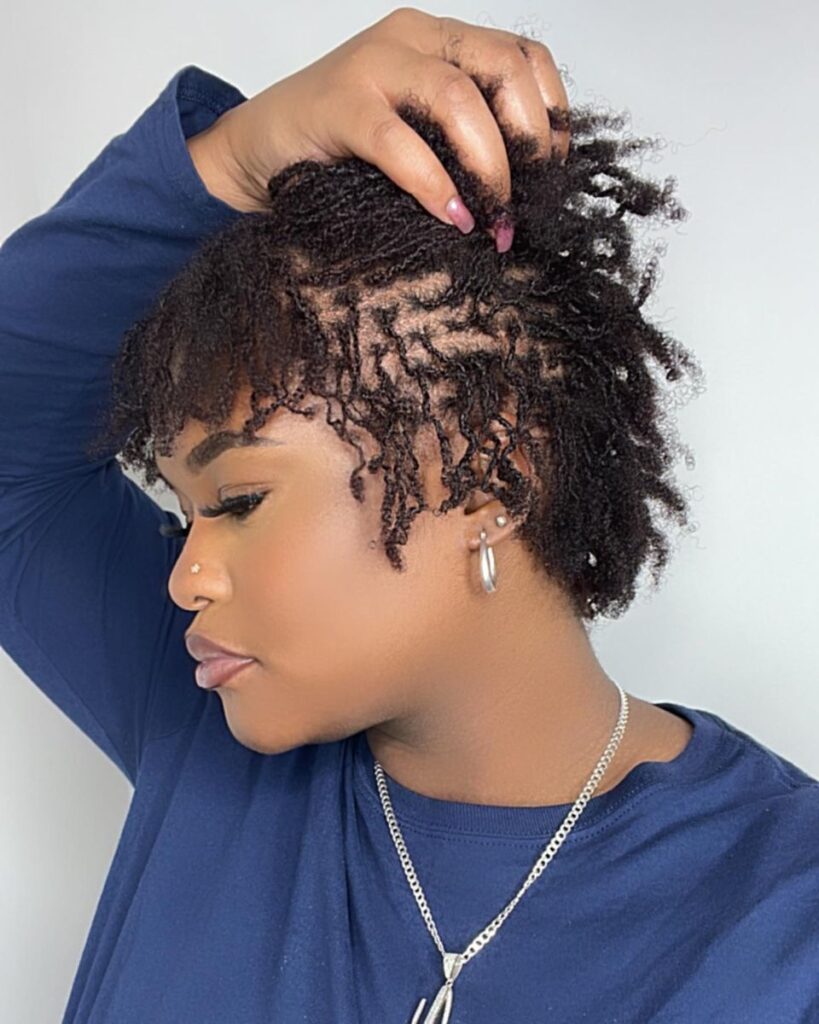
Sisterlocks® are a specific natural hair locking system created by Dr. JoAnne Cornwell in 1993 in San Diego, California. They aren’t simply small traditional locs; the system uses a specialized interlocking technique to create very small, uniform locks without relying on traditional twisting or palm-rolling.
The name Sisterlocks belongs to the trademarked system developed by Cornwell, who designed it as a way for women with textured hair to wear their natural hair in small, versatile locks.
The official Sisterlocks organization describes the system as more than a hairstyle, emphasizing natural hair care, education, and cultural self-expression.
That distinction matters here. Short Sisterlocks don’t behave exactly like every other type of loc, so styling advice should take their small size, structure, length, and stage of development into account.
That’s why the styles below focus on what short Sisterlocks can realistically do rather than forcing them into hairstyles designed for longer locs.
Keep your short locs healthy with How to Care for Your Locs the Right Way: A Step-by-Step Guide, especially when you’re styling them regularly.
Before the 10 Styles: Know What Short Sisterlocks Can Actually Do

Before learning how to style Sisterlocks for short hair, it helps to understand what your length can realistically achieve.
Short Sisterlocks may not form large buns or full ponytails yet, but they can still create different looks through direction, placement, and simple shaping.
- Work with direction, not just length. Sweeping the front to one side or directing sections toward the crown can change the entire appearance without needing extra length.
- Use the front section strategically. A small twist, tuck, or sweep around the face can make short Sisterlocks look styled even when the rest remains loose.
- Think about placement. Where you gather or pin the locks often matters more than how much hair you can collect. A small section at the crown can create a different effect from one gathered near the side.
- Keep accessories gentle. Very short locks may need small pins, soft bands, or a headband to hold certain shapes. These shouldn’t pull tightly on the roots.
- Consider how settled your Sisterlocks are. Newly installed or slipping locks shouldn’t automatically be manipulated like mature locks. Sisterlocks guidance emphasizes allowing the locks to settle before certain maintenance practices, so their stage of development matters when choosing styles.
Know that: Short Sisterlocks aren’t limited to one look. The idea should be choosing a style that works with the length and stability you have now rather than forcing your locks into a style designed for longer hair.
1. The Clean Side Sweep

This style uses the Sisterlocks around the forehead and temple area and directs them toward one side of the face, while the rest of the short locks are left loose.
It works because you’re changing the direction of the hair rather than needing enough length to gather the entire head.
How to create it:
- Make a clean side part beginning near the front hairline and extending backward through the top of the head.
- Take the Sisterlocks on the smaller side of the part and gently direct them backward or toward the opposite side, depending on the look you want.
- Allow the locks around the other temple and the back of the head to remain loose. This keeps the style suited to short hair instead of forcing everything into one bundle.
- Use a small, smooth hairpin only where necessary to hold the swept section. Don’t pull the locks tightly against the scalp.
- Check the side and back before finishing. The goal is for the locks to follow the new direction naturally, not to create a tightly pulled section.
Best for: Short Sisterlocks with enough length around the front and temples to change direction without significant pulling.
Keep in mind: If the locks spring straight back or the style only stays in place when pulled tightly, don’t force it.
Short Sisterlocks vary in length, density, and stage of development, so the same side sweep won’t work identically on every head.
2. The Front Tuck-Back
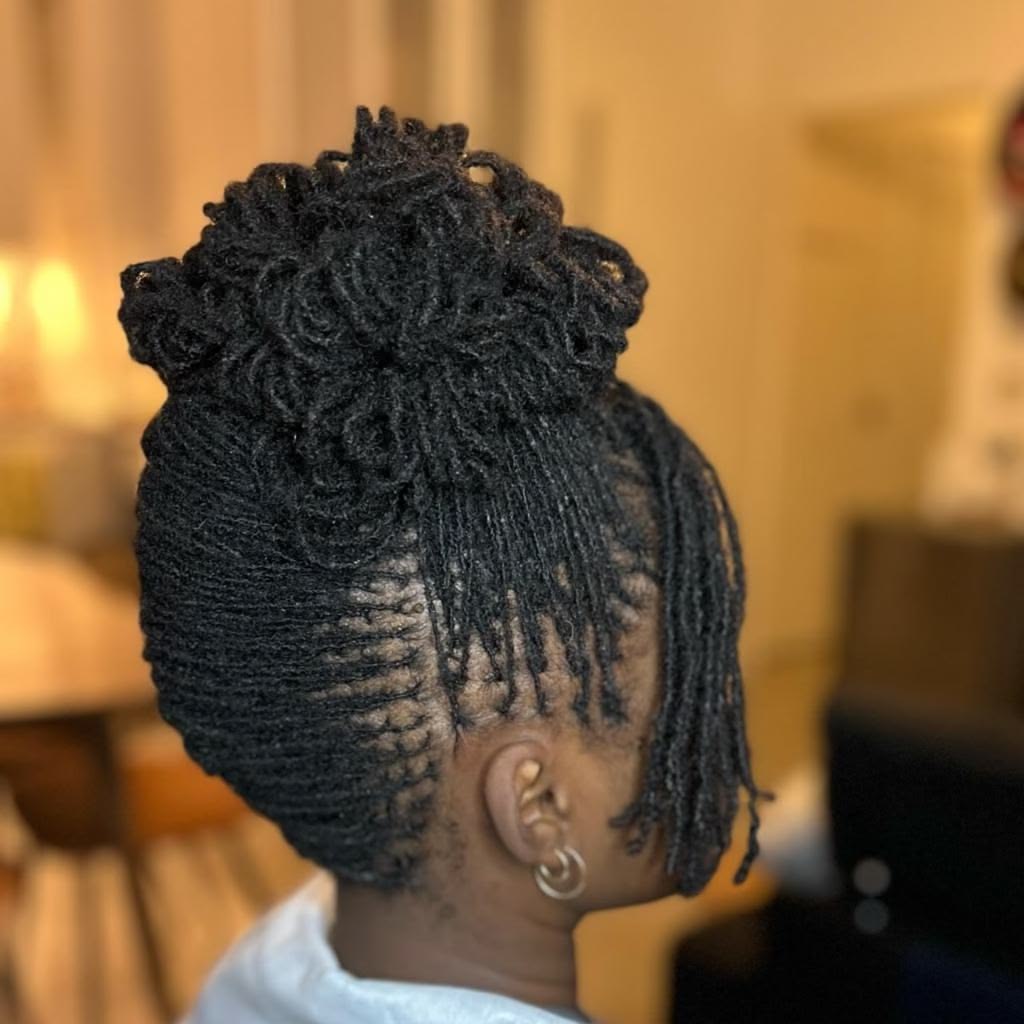
This style uses the Sisterlocks around the forehead and temples as the feature rather than trying to gather all the hair. It gives short locks a cleaner shape while leaving the back loose.
How to create it:
- Make a natural part from the front hairline toward the crown.
- Take a section of locks from the forehead area and direct them backward toward the crown.
- Gently tuck the ends underneath the neighboring locks.
- If the ends won’t stay tucked, use a small, smooth pin to secure the section rather than pulling it tightly.
- Leave the remaining locks around the sides and back loose.
Why it works: The tucked section creates a change in direction and gives the hairstyle some structure without requiring enough length for a full updo.
Best for: Short Sisterlocks that can reach backward from the front without putting tension on the hairline.
When learning how to style Sisterlocks for short hair, this is useful because it creates a visibly different hairstyle without asking short locks to behave like long ones.
Planning a special occasion? How to Choose Wedding Locs Styles That Make You Look Elegant and Put Together can help you think through a polished style that works with your overall look.
3. The Half-Up Crown
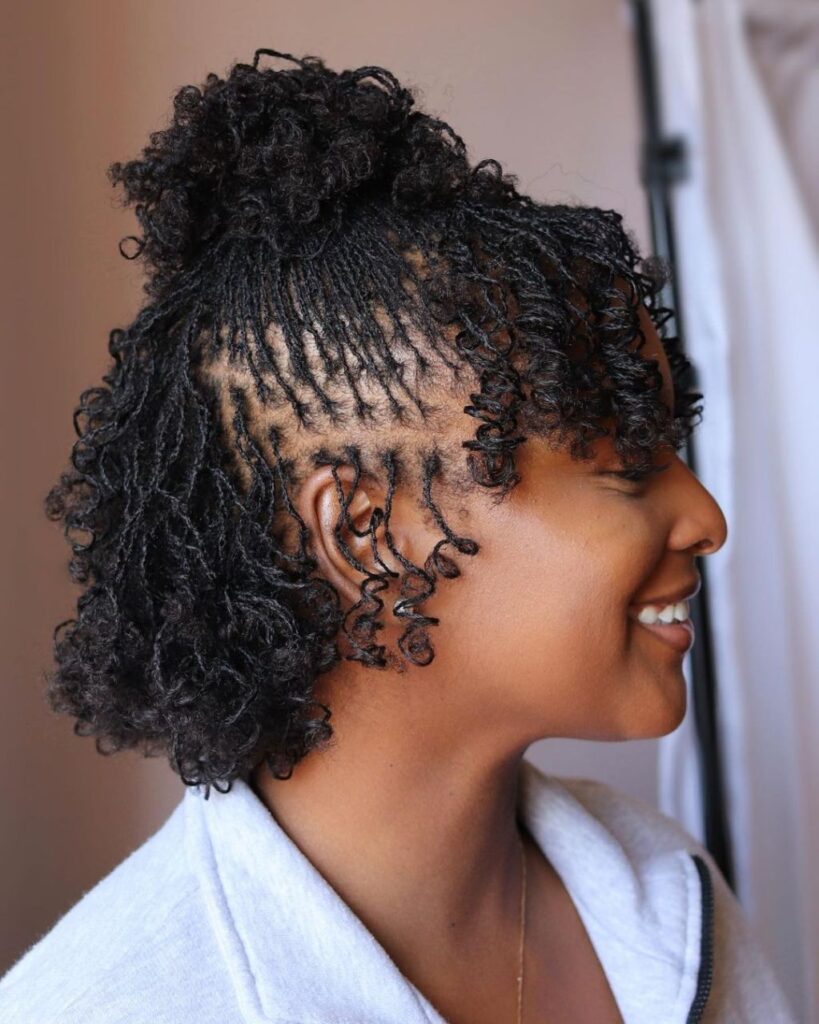
A half-up style can work on short Sisterlocks, but the important part is how much hair you gather. Trying to pull every lock from the sides into one small bundle can create unnecessary tension.
How to create it:
- Start at the temples and separate the locks that sit across the upper sides and crown.
- Gather only the upper portion toward the back of the head.
- Secure the gathered section loosely at the crown or slightly behind it.
- Leave the Sisterlocks underneath completely loose.
- If some shorter locks fall out around the sides, let them remain rather than repeatedly pulling them into the holder.
Why it works: You get the visual effect of an updo while keeping enough of the short length free to create movement around the lower half of the head.
Best for: Short Sisterlocks with enough length on the crown and upper sides to reach a comfortable gathering point.
4. The One-Sided Tuck

You don’t need to style both sides of your hair equally. This look deliberately leaves one side loose while the other side is tucked closer to the head.
How to create it:
- Choose the side you want to tuck behind the ear or toward the back.
- Separate a section beginning around the temple and work backward.
- Smooth the section gently in that direction without pulling the roots flat.
- Tuck the ends behind the ear or underneath neighboring locks.
- Leave the opposite side loose so it frames the face.
Why it works: The contrast between the tucked and loose sides creates the hairstyle. You aren’t depending on length to create a large shape.
Best for: Short Sisterlocks that can comfortably reach behind the ear or toward the back of the head.
Keep in mind: If the locks are too short to stay tucked, don’t keep tightening the section. A small pin can provide support, but the style shouldn’t depend on strong tension.
5. The Double Front Twist
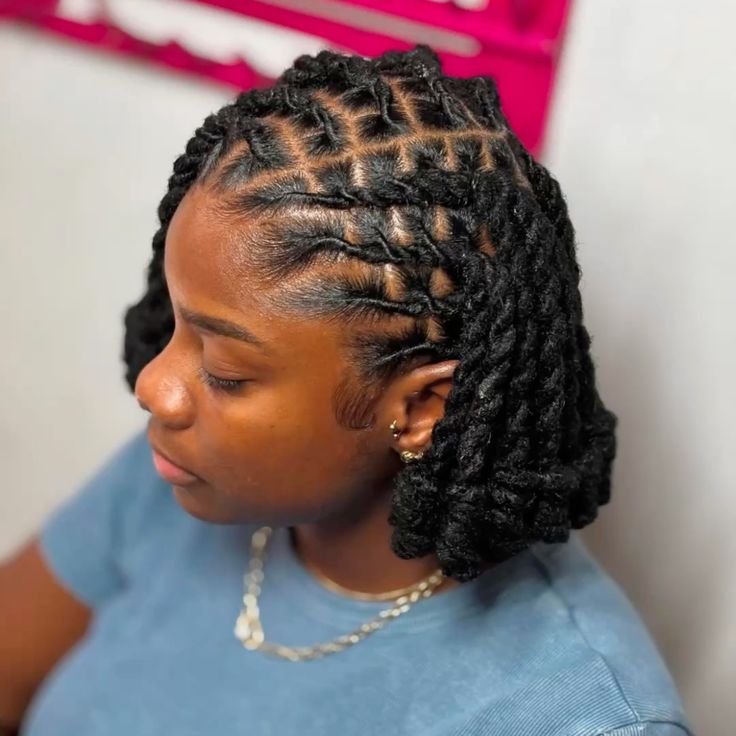
Here, the styling comes from two small sections near the front of the head, rather than manipulating the entire set of Sisterlocks.
How to create it:
- Create a middle or slightly off-center part at the front.
- Take a small group of locks from one side of the part and twist them backward toward the temple or crown.
- Repeat on the other side.
- Bring the two twisted sections together at the back of the crown if your length allows.
- Secure them gently, leaving the rest of the locks loose.
Why it works: Two defined twists create a focal point at the front while the loose locks provide fullness around the rest of the head.
Best for: Short Sisterlocks with enough length around the front and crown to twist backward without pulling on the hairline.
A useful adjustment: If your locks aren’t long enough for the two twists to meet, don’t force them together.
Keep each twist separate and secure them individually. The hairstyle still works, the two sides simply become two independent details rather than one connected style.
If you love soft curls and shorter styles, these 20 Perms for Short Hair With Soft Curls offer plenty of inspiration.
6. The Short Loc Bob
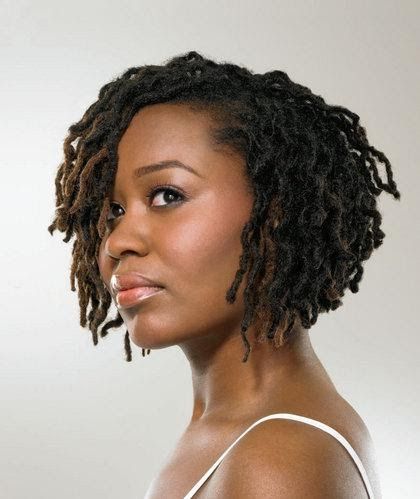
Short Sisterlocks can already create a bob-like shape without being cut into a traditional bob. The key is arranging the locks so their natural length forms a balanced outline around the head.
How to style it:
- Start with a clean middle or side part, depending on where your locks naturally fall.
- Allow the locks around the sides and back to hang at their natural length.
- Gently separate any sections that have become compressed together.
- Check that the ends are distributed fairly evenly around the face and sides rather than deliberately pulling them into position.
- Use a small amount of gentle manipulation only where needed to improve the shape.
Why it works: The hairstyle relies on the natural outline created by short locks rather than trying to manufacture volume or length.
Best for: Short Sisterlocks that fall around the jaw, cheekbone, or neck area.
If you’re learning how to style Sisterlocks for short hair, this is a good reminder that leaving the locks loose can still produce a deliberate hairstyle.
7. Headband With a Defined Front

A headband can do more than simply cover the hairline. On short Sisterlocks, it can help organize the front of the hairstyle while leaving the small locks themselves visible.
How to style it:
- Choose a comfortable, non-slip headband that isn’t excessively tight.
- Position it behind the hairline rather than pressing it firmly against the scalp.
- Let some of the Sisterlocks at the front remain visible instead of pushing everything underneath the band.
- Arrange the exposed locks so they fall naturally around the forehead and temples.
- Keep the remaining locks loose.
Why it works: The headband provides structure without requiring the locks to be long enough for an updo.
Best for: Days when you want your hair to look organized without manipulating every section.
Watch the fit: If the headband leaves your scalp sore or creates noticeable pressure around the hairline, it is too tight for extended wear.
8. The Tucked Crown

This style creates the appearance of a compact updo by gathering selected locks toward the crown and securing their ends close to the head.
It is different from a conventional bun because you’re not trying to wrap a large amount of hair around itself.
How to style it:
- Separate the locks from the upper back and sides of the head.
- Direct them upward toward the crown.
- Fold or tuck the ends inward where the length allows.
- Secure the tucked section with suitable pins or a gentle accessory.
- Leave the front and lower sides loose if they aren’t long enough to reach the crown comfortably.
Why it works: The tucked ends create height and shape without requiring a full-length bun.
Best for: Short Sisterlocks that have enough length at the crown and upper back to reach a central gathering point.
When considering how to style Sisterlocks for short hair, don’t judge this style by whether every lock can reach the crown. A partial tuck can look intentional too.
Looking for more ways to work with your natural texture? Try these 10 Easy Hairstyles for Naturally Curly Hair.
9. Naturally Framed Sisterlocks

Sometimes the best styling choice is to leave the locks down and simply improve their arrangement.
How to create it:
- Start with a clean, comfortable part.
- Separate any locs that are sitting together unevenly.
- Direct the locks around the forehead and temples so they frame the face naturally.
- Allow the back and sides to fall according to their existing length.
- Avoid repeatedly rearranging them once they have settled into place.
Why it works: The hairstyle uses the natural shape of the Sisterlocks instead of adding unnecessary manipulation.
Best for: Very short locks that aren’t yet long enough for reliable gathering or intricate styling.
The result should look intentional, not overworked.
10. Beanie or Headwrap With the Front Left Visible
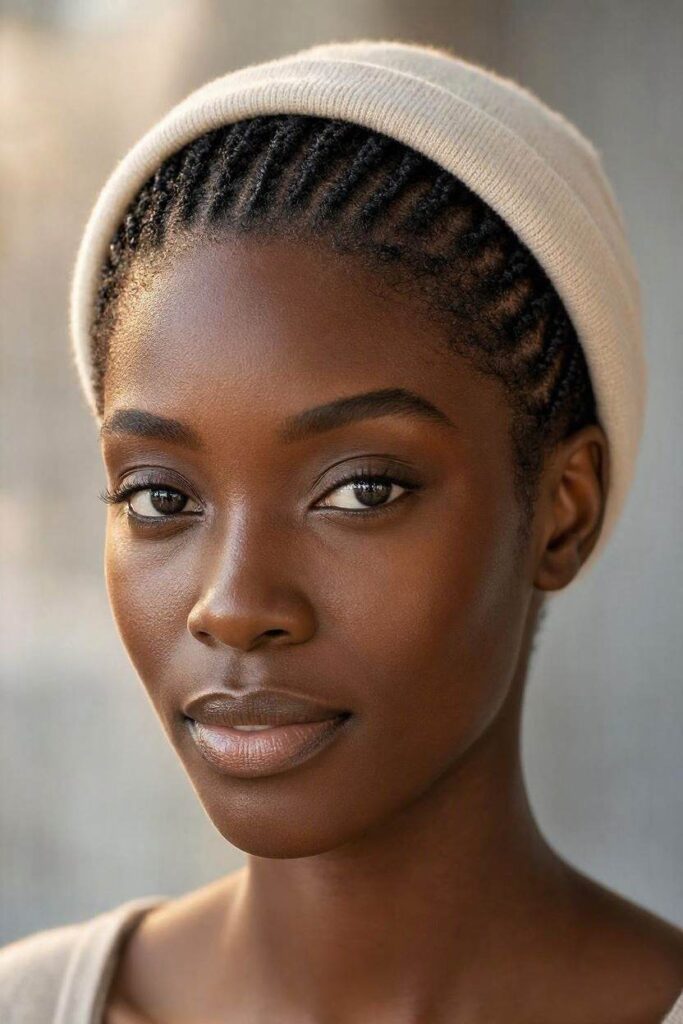
A beanie or headwrap gives short Sisterlocks a completely different styling option without requiring repeated twisting, pinning, or gathering.
How to Style It
- Position the beanie or headwrap slightly behind the hairline.
- Leave a small section of Sisterlocks visible across the forehead or around the temples.
- Let the exposed locks fall naturally rather than forcing them into a shape.
- Make sure the accessory feels secure without pressing tightly against the scalp.
- Choose a smooth fabric that won’t catch or snag the tiny locks.
Why It Works
The accessory controls most of the hairstyle while the visible Sisterlocks keep the look from appearing completely covered.
Best For Bad-hair days, cooler weather, low-manipulation days, or times when you want to change your look without repeatedly handling your locs.
Keep in Mind A headwrap or beanie should complement the locs, not compress them tightly for hours. If it leaves pressure or discomfort around the hairline, loosen or remove it.
For simple styles that don’t require a complicated routine, browse Easy Hairstyles That Are Stress Free: 15 Simple Styles You’ll Actually Wear.
What to Avoid When Styling Short Sisterlocks
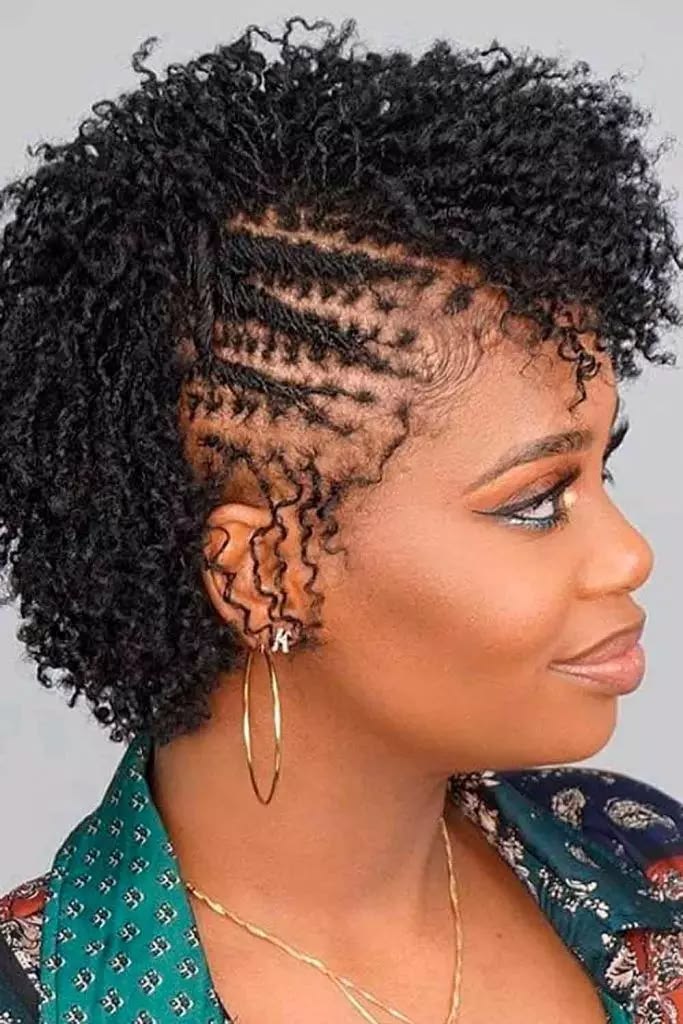
Styling short Sisterlocks should change how your hair looks without creating unnecessary stress on the locks or scalp. A style that only works when you pull, coat, or repeatedly manipulate the hair isn’t a good trade-off.
✔️ Don’t Force a Style That Needs More Length
If a bun, ponytail, or tuck requires you to stretch the locks beyond where they naturally reach, choose another style. Shorter locks may not have enough length yet, and forcing them can put unnecessary tension on the roots.
✔️ Don’t Keep Pulling the Same Sections
Repeatedly gathering the locks around the same temple, hairline, or crown can place ongoing stress on those areas. Rotate your styles instead of constantly pulling the same section.
✔️ Don’t Use Excessive Tension
A hairstyle shouldn’t cause scalp pain, tenderness, pulling, or a tight sensation. If you have to pull firmly to make the style stay, it isn’t a good fit for your current length.
✔️ Try Not Depend on Heavy Gel or Wax
Heavy styling products can leave residue that is difficult to remove from very small locks. Use the least amount of product necessary to achieve the look, and don’t use buildup as a substitute for proper styling.
✔️ Don’t Ignore Discomfort
Looking neat isn’t a reason to tolerate pain. Remove or loosen a style if your scalp feels sore, tight, or irritated, particularly around the hairline.
Be More Careful With Newly Installed Sisterlocks
Newly installed locks are still settling, so they shouldn’t automatically be manipulated like mature, established locks. Follow your consultant’s guidance about when your locks are ready for different styling techniques.
For another classic styling option, see these 15 Middle Part Hairstyles Ideas That Look Gorgeous.
How to Choose Among the 10 Styles

The best option depends less on what’s trending and more on what your short Sisterlocks can comfortably do. Use your current length and the amount of manipulation you’re comfortable with as your guide.
For a Mostly Loose Look
✔️Side sweep, loose shaped look, or short loc bob.
These styles let your Sisterlocks remain down while using parting and direction to create a finished shape.
When You Want Your Face More Open
Try: Front tuck-and-roll or one-sided tuck.
Moving the locks away from the forehead and one side of the face gives you a cleaner, more defined appearance without gathering the whole head.
When You Need More Structure
Try: Tucked crown or double front twist.
Both introduce more shape by directing selected sections toward the crown, while the remaining locks can stay loose.
On Days When You Prefer Minimal Manipulation
Try: Headband or soft headwrap.
The accessory changes the overall silhouette without requiring you to repeatedly twist, gather, or pin the locks.
When You Want Some Hair Up
Try: Half-up crown.
Gathering only the upper section gives you some of the structure of an updo while allowing the shorter lower locks to remain free.
When Length Is the Main Limitation
Start with the style that asks the least from your hair. If a look requires pulling several inches farther than your locks naturally reach, it is better suited to a later stage of growth.
Prefer a cut that works with your natural texture and less styling? Check out 10 Layered Cuts For Air Drying Without Frizz.
Conclusion
Short Sisterlocks don’t need elaborate updos to look beautiful. The most successful styles work with the length you have instead of forcing your locks into shapes they cannot comfortably hold.
When learning how to style Sisterlocks for short hair, pay attention to where your locks naturally fall, how much length each section has, and whether a style can stay in place without excessive pulling or manipulation. That’s what turns a pretty idea into a style you can actually wear.
Save this guide for your next styling day, and explore more loc-care guides for pr your hair as it grows.