Not sure what your locs actually need? Learn how to care for your locs without buildup, over-manipulation, dryness, or confusing hair advice.
One of the biggest misconceptions about locs is that they’re “low maintenance.” While locs may require less daily styling than loose natural hair, they still need consistent care to stay healthy.
Ignoring your scalp, overwashing, using heavy products, or following advice that doesn’t suit your hair can all affect the health and appearance of your locs over time.
What you should know is that caring for your locs doesn’t have to be complicated. It’s not about buying dozens of products or following a strict routine, but understanding what your locs actually need at each stage and building habits that support healthy growth.
In this step-by-step guide on how to care for your locs, you’ll learn the purpose behind each part of a healthy loc care routine, from cleansing your scalp properly to moisturizing, protecting your locs while you sleep, and recognizing early signs that something needs attention.
By the end, you’ll have a practical approach that helps keep your locs clean, strong, and healthy for the long term.
Thinking about starting locs after years of relaxed hair? How to Transition from Relaxed Hair to Locs Without Damaging Your Hair explains what to consider during the transition.
Step 1: Understand That You’re Caring for Two Things—Your Scalp and Your Locs

Healthy locs don’t start with products, they start with understanding that your scalp and your locs have different jobs, so they need different care.
Treating them as if they have the same needs often leads to dryness, buildup, or an unhealthy scalp.
✔️ Your scalp needs regular cleansing. Sweat, excess oil, dead skin cells, and product residue naturally collect on the scalp. Keeping it clean helps maintain a healthy environment for hair growth and can reduce itching, flakes, and irritation.
✔️ Locs need to stay clean, not coated. Because locs are made of tightly woven hair, they can trap residue more easily than loose hair. Heavy products may remain inside the loc instead of washing out completely, leading to buildup over time.
✔️ Moisture and oil are not the same thing. Water provides moisture, while oils mainly help slow moisture loss by creating a barrier. Applying oil to dry locs without adding moisture first won’t truly hydrate the hair.
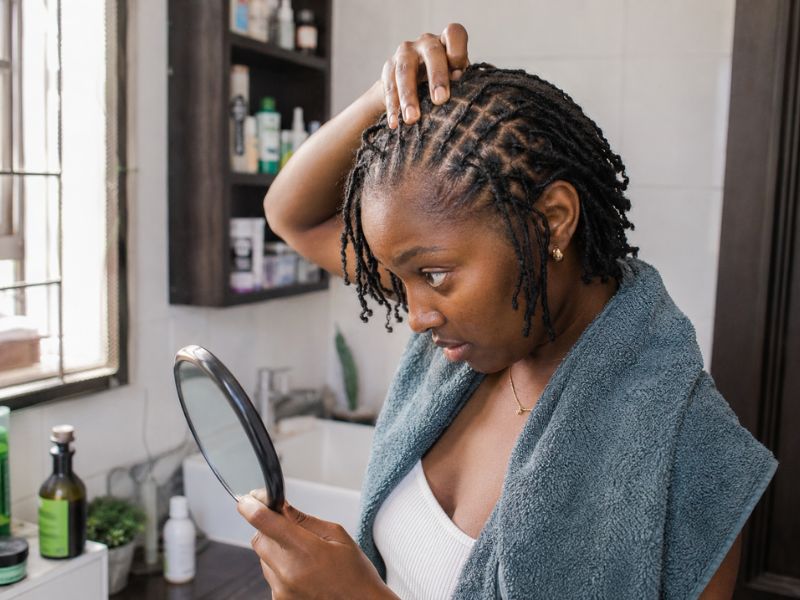
✔️ Your scalp may need attention even when your locs look fine. Clean-looking locs don’t always mean your scalp is healthy. Persistent itching, irritation, or flakes often indicate that the scalp needs care rather than simply more oil.
✔️ Locs need gentle handling to stay strong. Constant pulling, twisting, or rough handling can weaken the hair over time. The less unnecessary manipulation your locs experience, the better they can mature naturally.
✔️ No single product can solve every loc care problem. A shampoo cleanses, a moisturizer hydrates, and an oil helps reduce moisture loss. Understanding what each product is designed to do makes it easier to build a routine that actually supports healthy locs.
Remember: Healthy locs are built from the scalp outward. Once you understand the different needs of your scalp and your locs, every other step in your routine becomes much easier to get right.
If you’re preparing your locs for a special day, How to Choose Wedding Locs Styles That Make You Look Elegant and Put Together can help you choose a style that works with your dress and overall look.
Step 2: Build a Wash Routine That Matches Your Lifestyle—Not Someone Else’s

One of the biggest mistakes people make when learning how to care for your locs is following someone else’s wash schedule.
There isn’t one “correct” number of times to wash your locs because your routine should reflect your lifestyle, scalp, and environment, not someone else’s.
✔️ Wash your locs based on your scalp’s needs. If your scalp feels itchy, oily, or has noticeable buildup, it’s usually a sign that it’s time to cleanse rather than waiting for a specific date on the calendar.
✔️ Consider how active you are. If you exercise regularly or sweat heavily, your scalp may need washing more often than someone with a less active lifestyle. Sweat left on the scalp for long periods can contribute to odor and buildup.
✔️ Your climate matters. Hot, humid weather often leads to more sweating and oil production, while colder or drier climates may require a different routine to keep your scalp comfortable.
✔️ Product use affects how often you should wash. Heavy creams, waxes, gels, and oils can build up inside locs over time. If you use multiple styling products, you may need to cleanse more regularly to prevent residue from accumulating.
✔️ Starter locs and mature locs may have different needs. Newly installed locs require gentle washing techniques to avoid excessive unraveling, while mature locs can usually tolerate a more regular cleansing routine because they’ve become more compact.
✔️ Don’t avoid washing because you’re afraid of frizz. A little frizz after washing is completely normal, especially with starter locs. Clean locs are healthier than locs that hold onto sweat, dirt, and product buildup just to stay neat.
✔️ Always dry your locs thoroughly after washing. Because locs are dense, they can retain water much longer than loose hair. Leaving them damp for extended periods may create an environment where mildew and unpleasant odors can develop.
Key takeaway: An important part of how to care for your locs is learning to listen to your own hair and scalp. A routine that responds to your lifestyle will always be more effective than copying someone else’s schedule.
Prefer a classic parting style? These 15 Middle Part Hairstyles Ideas That Look Gorgeous offer inspiration beyond loc styles.
Step 3: Learn the Difference Between Dry Hair and Product Buildup
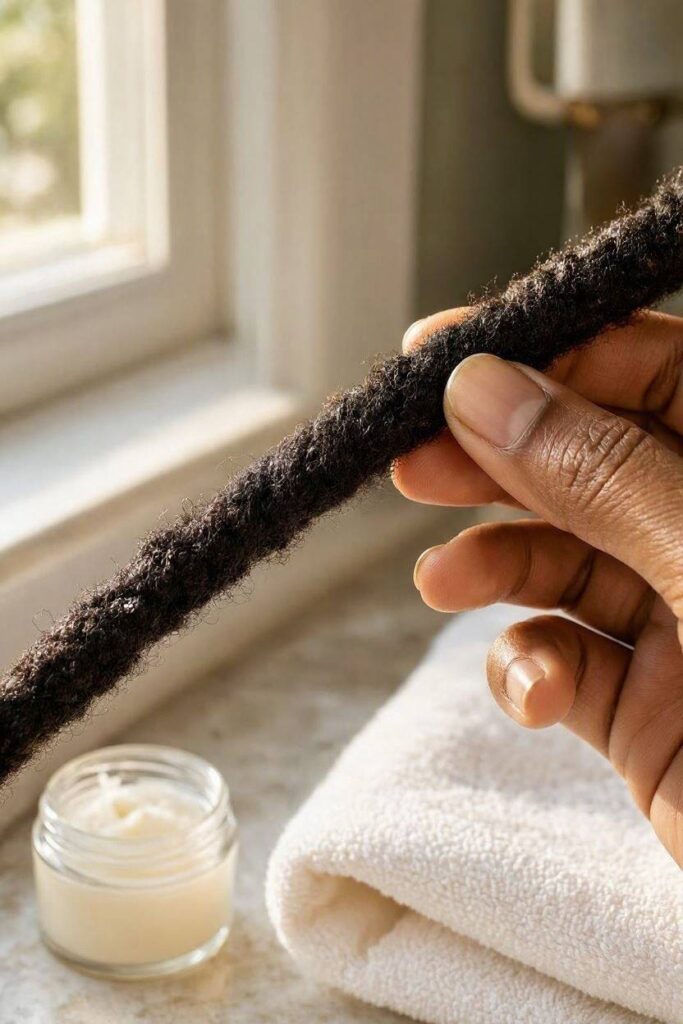
Dry locs and product buildup are often confused because both can leave your hair looking dull.
However, they’re two different issues, and knowing which one you’re dealing with helps you choose the right solution instead of making the problem worse.
✔️ Dry locs feel rough rather than coated. They may lack flexibility, feel brittle, and have a dull appearance because the hair isn’t retaining enough moisture.
✔️ Product buildup leaves a visible or noticeable residue. Your locs may feel heavy, sticky, or waxy, and you might notice white, gray, or cloudy residue that doesn’t brush away easily.
✔️ Look at how your locs feel—not just how they look. Hair that feels lightweight but rough is often dry. Hair that feels coated or unusually heavy is more likely dealing with buildup.
✔️ An oily scalp and dry locs can happen at the same time. The scalp naturally produces sebum, but that oil doesn’t easily travel down the length of locs. That’s why your scalp can feel oily while your locs still feel dry.
✔️ Adding more oil won’t remove buildup. If residue is already trapped inside your locs, applying more oil can make cleansing more difficult. The better solution is to wash your locs thoroughly before adding moisture back.
✔️ Pay attention after wash day. If your locs feel lighter, cleaner, and move more freely after washing, buildup was likely affecting them. If they still feel rough after they’re completely dry, they may need additional moisture.
✔️ Use your senses. Persistent odor, sticky sections, or visible residue usually point to buildup, while locs that simply feel dry, stiff, or coarse are more likely lacking moisture.
In simple terms: Healthy loc care starts with identifying the actual problem. Dryness calls for moisture, while buildup calls for proper cleansing. Knowing the difference helps you care for your locs more effectively.
Want a cut that works with less daily styling? See 10 Layered Cuts For Air Drying Without Frizz for ideas designed around air-drying.
Step 4: Moisturize With Purpose, Not Habit
 A healthy moisture routine isn’t about spraying your locs every time they feel dry, it’s about understanding when they need moisture and how to help them retain it.
This is one of the most important parts of how to care for your locs, yet it’s often misunderstood.
✔️ Remember that water is the primary source of moisture. Hair becomes moisturized through water, not oil. If your locs feel dry, adding moisture should come before sealing it in.
✔️ Moisturize when your locs need it, not because the calendar says so. Factors such as the weather, indoor heating, air conditioning, and your daily activities can all affect how quickly your locs lose moisture.
✔️ Use lightweight products that won’t leave heavy residue. Locs can hold onto products longer than loose hair, so choosing lighter formulations helps reduce buildup while still supporting healthy moisture levels.
✔️ Pay attention to how your locs feel. If they remain soft and flexible, your routine is likely working. If they regularly feel stiff or brittle, it may be time to reassess how you’re moisturizing them.
✔️ Don’t mistake shine for moisture. Oily-looking locs aren’t necessarily hydrated. Healthy locs should feel supple and flexible, not greasy or heavily coated.
✔️ Give your locs time to absorb moisture. Applying several products one after another doesn’t always improve hydration. In many cases, using fewer products correctly is more effective than layering multiple products.
✔️ Adjust your routine as the seasons change. Dry winter air, hot summers, or frequent exposure to sun and wind can all change your locs’ moisture needs. A routine that works year-round for someone else may not work for you.
Worth remembering: Learning how to care for your locs means understanding that effective moisturizing isn’t about using more products, it’s about giving your locs the moisture they need while avoiding unnecessary buildup.
Step 5: Protect Your Locs While You Sleep

Nighttime care is simple, but it can make a difference over time. While you sleep, your locs repeatedly rub against your pillow and bedding. That friction can contribute to frizz, lint collection, and dryness, especially when your hair is left uncovered night after night.
✔️ Use a satin or silk bonnet, scarf, or pillowcase. These smoother fabrics create less friction than cotton and can help reduce moisture loss and lint transfer.
✔️ Choose protection that actually stays on. A bonnet that slips off within an hour won’t do much. If scarves or bonnets don’t work for you, a satin or silk pillowcase is a practical backup.
✔️ Don’t sleep with wet locs. Locs are dense and can take much longer to dry than loose hair. Allow them to dry completely before going to bed to avoid keeping the interior of the locs damp for extended periods.
✔️ Keep your bedding clean. Your locs come into contact with your pillowcase every night, so regularly changing and washing your bedding helps reduce the transfer of sweat, oils, and lint back onto your hair.
✔️ Be especially careful with loose lint. Cotton bedding, towels, and clothing can shed fibers that become trapped in locs. A satin or silk covering can reduce that contact.
✔️ Don’t tie your locs tightly for sleep. Pulling them into a tight bun or ponytail every night can place repeated tension on the roots and hairline. If you need to gather them, keep the style loose and comfortable.
The essential point: Good nighttime protection doesn’t require a complicated routine. In how to care for your locs, the goal is simply to reduce unnecessary friction, lint, moisture problems, and tension while you sleep.
Considering curls instead of locs? These 20 Perms for Short Hair With Soft Curls offer another way to add texture and shape.
Step 6: Know When Your Locs Need a Retwist—and When They Don’t

A retwist is mainly a maintenance and styling service. It gathers new growth and helps define the roots, but it isn’t what makes locs healthy or causes them to grow.
✔️ Look at the new growth, not just the calendar. Some people can go several weeks between retwists, while others prefer a different schedule. Growth rate, hair density, loc maturity, and the way you wear your hair all affect how often maintenance is useful.
✔️ Don’t retwist simply because your roots look fuzzy. New growth is a normal part of the loc process. Constantly tightening the roots to keep them looking freshly groomed can place unnecessary tension on the hair.
✔️ Watch for thinning around the roots. If a loc looks noticeably narrower where it meets the scalp, or the root feels weak, repeated retwisting may be contributing to the problem. Give the area a break and have it assessed by an experienced loctician if you’re concerned.
✔️ Avoid tight retwists. Pain, tenderness, bumps, or a pulling sensation after maintenance are signs that the style may be putting too much tension on your scalp and hair.
✔️ Your hairstyle matters too. A retwist followed by a tight updo or another style that pulls on the same areas can increase the total tension placed on your roots.
✔️ Starter locs need particular care. Early-stage locs may unravel during washing and may not need frequent manipulation simply to keep every root looking neat. Your loctician can recommend maintenance based on how your locs are forming.
What to focus on: Retwisting should maintain your locs without repeatedly stressing the roots. Neater roots aren’t worth sacrificing the strength of the hair growing from them.
Step 7: Pay Attention to the Ends—Not Just the Roots

The roots often get most of the attention, but the ends are the oldest part of your locs. They’ve also experienced the most washing, friction, styling, and environmental exposure, so they deserve regular attention.
✔️ Check for unusually thin sections. A loc that becomes significantly narrower toward the end may need closer attention, particularly if the thinning continues upward.
✔️ Don’t automatically cut loose ends. Some locs naturally have wispy or tapered ends, especially during different stages of maturation. Their appearance alone doesn’t mean they’re unhealthy.
✔️ Watch for repeated breakage. If the same section keeps snapping or losing hair, look for what is causing the stress rather than repeatedly trimming the visible damage.
✔️ Be gentle with unraveling ends. Pulling or aggressively palm-rolling a weak end can cause more breakage. A loctician can determine whether it needs repair, reinforcement, or simply more time to mature.
✔️ Limit unnecessary manipulation. Constantly twisting, picking, or pulling at the ends can weaken them over time, particularly when the hair is already dry or fragile.
✔️ Check your ends after washing. Once your locs are completely dry, gently examine any sections that feel unusually weak, rough, or significantly thinner than the rest.
The key point: Your ends don’t need to look perfectly uniform to be healthy. What matters is whether they’re maintaining their strength and thickness without ongoing breakage or deterioration.
For days when you want to work with your natural texture, try these 10 Easy Hairstyles for Naturally Curly Hair.
Step 8: Watch the Everyday Habits That Can Work Against Your Locs

Good loc care isn’t only about wash days and retwists. What you do between appointments also affects the condition of your scalp, roots, and locs.
✔️ Stop repeatedly touching and twisting your locs. Constant manipulation can create friction and unnecessary stress, particularly around the roots.
✔️ Don’t leave sweat sitting on your scalp for long periods. After heavy exercise, allow your scalp to dry and cleanse it according to your normal washing routine rather than continually adding products to cover sweat or odor.
✔️ Avoid wearing tight styles repeatedly. A ponytail, bun, or updo can be fine occasionally, but repeated tension in the same area can contribute to thinning around the hairline or roots.
✔️ Don’t make heavy products part of your daily routine. Waxes, thick creams, and layers of oil can accumulate inside locs and make proper cleansing more difficult.
✔️ Keep your locs away from unnecessary friction. Constant rubbing against rough clothing, towels, bags, or bedding can contribute to lint and frizz.
✔️ Don’t leave your locs damp for extended periods. After washing or swimming, give them enough time to dry completely, paying particular attention to the interior of thicker locs.
What this means: Healthy locs are influenced by what happens between wash days too. Small habits repeated regularly can either support your routine or quietly work against it.
Step 9: Learn to Recognize Normal Changes and Warning Signs

Not every change in your locs means something is wrong. Locs naturally change as they mature, but certain symptoms deserve more attention. Knowing the difference helps you avoid both unnecessary worry and unnecessary neglect.
✔️ Frizz can be normal. Loose hairs and a less-defined surface are common, particularly during the early stages of loc formation.
✔️ Budding is part of maturation. Locs can develop thicker, less uniform sections as the hair begins to compact and lock together.
✔️ Some shrinkage is expected. Locs can appear shorter after washing because hair contracts when wet and as the loc structure develops.
✔️ Persistent scalp irritation isn’t something to ignore. Ongoing itching, redness, soreness, or unusual flaking deserves attention rather than simply being covered with more oil.
✔️ Unusual odor can have several causes. Damp locs, accumulated residue, or inadequate drying can contribute to persistent smells. If the problem continues despite proper cleansing and drying, seek professional advice.
✔️ Sudden or progressive thinning needs attention. A loc that continues becoming thinner at the root or breaks repeatedly may need assessment by an experienced loctician or a qualified healthcare professional, depending on the symptoms.
Remember this: Understanding what’s normal allows you to give your locs room to mature while recognizing changes that shouldn’t simply be dismissed as “part of the process.”
Step 10: Let Your Routine Change as Your Locs Mature
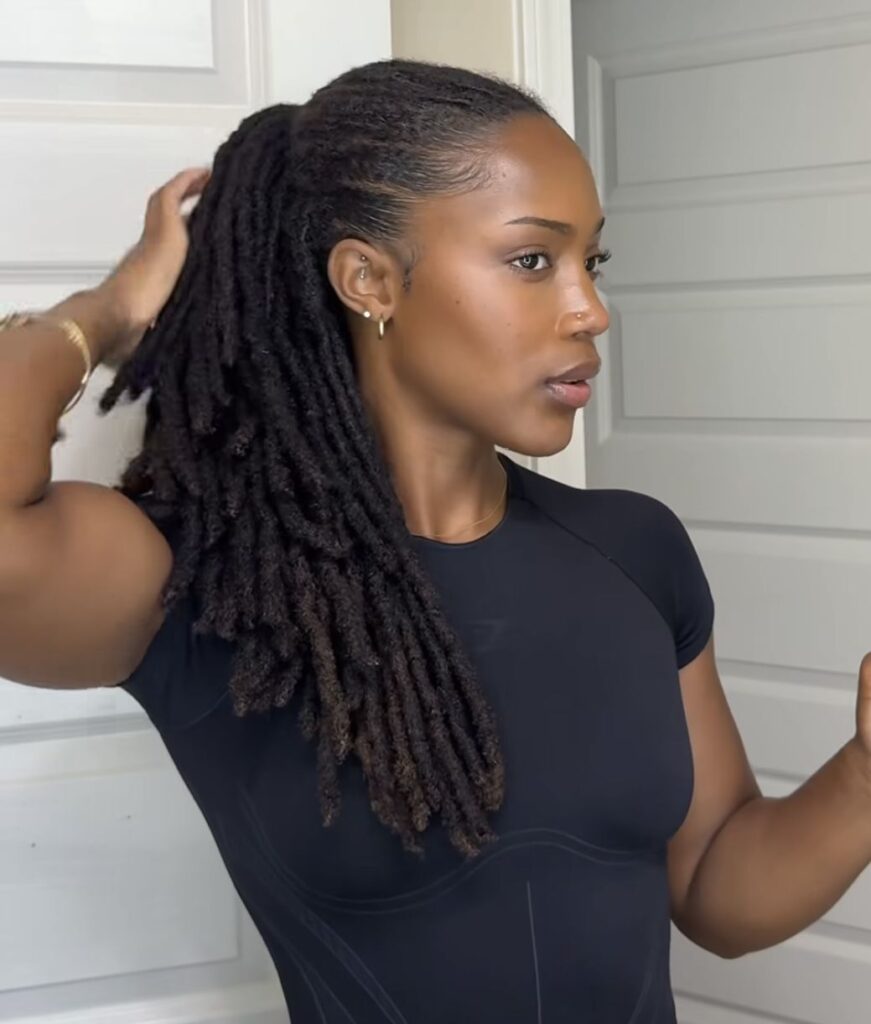
Photo credit: @ Larenzo Richmond
Your locs won’t remain in the same condition forever, so your routine shouldn’t be completely fixed either. Starter locs, developing locs, and mature locs can respond differently to washing, styling, and manipulation.
Starter Locs
Early locs can unravel more easily and may need gentler handling during washing and styling. Avoid judging their progress against someone else’s timeline.
Developing Locs
As the hair begins to compact, the texture and shape can change. You may find that your locs hold their form better and require less intervention to maintain their appearance.
Mature Locs
Mature locs generally have a more established structure, but they still need regular cleansing, careful drying, scalp care, and protection from unnecessary tension.
✔️ Reassess your routine when your hair changes. A method that worked when your locs were new may not be necessary, or appropriate—, ater.
✔️ Pay attention to your own hair rather than a fixed schedule. Growth rate, density, lifestyle, climate, and loc size all influence what works.
✔️ Keep the essentials consistent. Regardless of maturity, clean your scalp, cleanse your locs, dry them thoroughly, limit unnecessary tension, and address problems early.
Keep this in mind: Loc care becomes easier when you stop treating it as a fixed formula. Keep the healthy fundamentals, then adjust the details as your locs develop.
Need simple styling ideas that don’t take up your whole morning? Easy Hairstyles That Are Stress Free: 15 Simple Styles You’ll Actually Wear has practical everyday options.
Conclusion
Healthy locs don’t require a complicated routine or a shelf full of products. How to care for your locs comes down to consistent habits: keep your scalp and locs clean, moisturize thoughtfully, protect your hair, limit unnecessary tension, and pay attention when something changes.
You don’t need to chase every new loc-care trend. Learn what your hair needs, give it time, and adjust your routine as your locs mature.
If you’re building your routine from scratch, save this guide and explore our other loc-care articles for practical advice on maintaining strong, healthy locs at every stage.
Frequently Asked Questions
Can I swim with locs?
Yes. You can swim with locs, but rinse them with clean water afterward and cleanse them as needed. Chlorine and saltwater can leave residue and may contribute to dryness.
Is it okay to color locs?
Yes, but coloring involves chemical processing and can make hair more prone to dryness or breakage. Mature, healthy locs are generally better candidates than weak or thinning ones. Professional color services are safest.
Can I use dry shampoo on locs?
Dry shampoo isn’t a replacement for properly washing your locs. It may temporarily absorb oil, but it doesn’t remove sweat, dirt, or product buildup from the scalp and locs.
Why do my locs feel stiff after washing?
Locs can feel temporarily stiff as they dry, particularly when they are thick or contain product residue. If the stiffness persists, review your cleansing and product routine rather than automatically adding more oil.
Should I cover my locs in the sun?
You don’t need to cover them every time you’re outdoors, but prolonged sun exposure can contribute to dryness and may affect chemically colored locs. A hat or protective covering can help during extended exposure.
How long does it take for locs to become easier to maintain?
There isn’t one fixed timeline. Starter locs usually require more attention because they are still forming. As they mature and become more established, washing and everyday maintenance generally become easier.