Choosing between two beautiful loc styles can become confusing when both offer versatility, natural hair expression, and the freedom to enjoy different hairstyles. Microlocs vs Sisterlocks is a comparison worth understanding before you commit to either option. Although both involve creating small, individual locs, they differ in installation methods, maintenance requirements, styling possibilities, and the level of professional support you may need.
Perhaps you want a hairstyle that looks beautiful without taking too much time every morning. Maybe you enjoy experimenting with buns, ponytails, curls, and elegant updos. You might also be concerned about installation costs, retightening appointments, scalp comfort, or how much work your hair will require as it grows.
The good news is that neither option automatically requires more daily attention than the other. Your experience will depend on your hair texture, loc size, installation technique, lifestyle, and the maintenance routine you choose.
In this guide, we will explore the differences between microlocs and Sisterlocks, compare their maintenance routines, discuss styling ideas, and explain what to consider before choosing either option. You will also discover practical ways to care for your locs without creating unnecessary tension or product buildup.
If you are still exploring hairstyles, you can also read How to Style Sisterlocks for Short Hair for ideas that work with shorter locs.
What Are Microlocs?
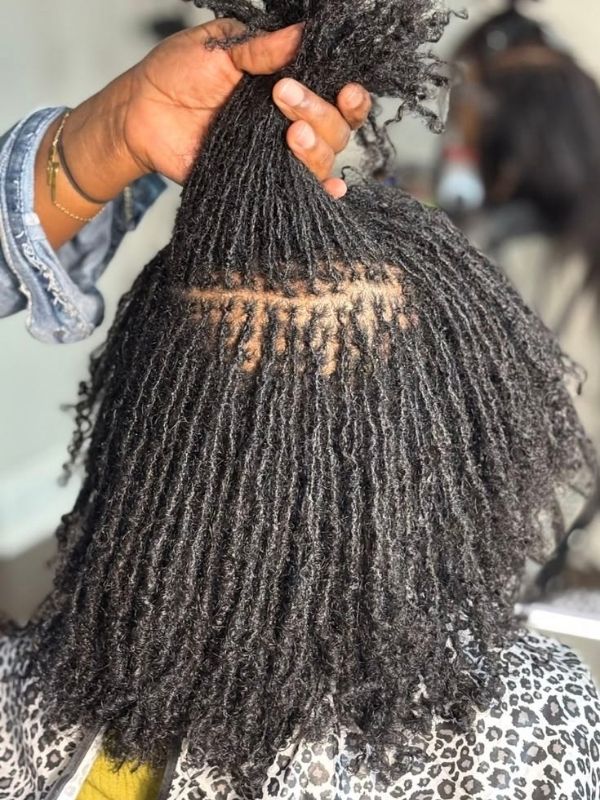
Microlocs are small, individual locs created from sections of natural hair. They offer an alternative to larger traditional locs and can provide considerable styling flexibility when installed and maintained appropriately.
Unlike larger locs, microlocs are generally created using smaller sections of hair. Their size allows the wearer to arrange them into different hairstyles while retaining the distinctive appearance of individual locs.
However, there is no single universal size that defines every microloc installation. The final result depends on the sectioning pattern, hair density, texture, installation method, and the preferences of the wearer.
Microlocs may be started using several techniques, including two-strand twists, braids, coils, or interlocking. The most suitable method depends on the hair and the desired result.
For example, someone who wants a structured installation may prefer a consistent parting pattern. Another person may prioritize a technique that works with their natural texture and existing hair routine.
The maintenance process also depends on the method used. Some microlocs are maintained through interlocking, while others may require twisting or another technique to manage new growth.
Because the sections are small, a full head of microlocs can contain many individual locs. This creates opportunities for intricate styles, although it may also mean that installation and maintenance require considerable time.
Microlocs are not automatically maintenance-free simply because they are small. They still need regular cleansing, appropriate moisture, careful handling, and professional attention when necessary.
If you want to understand the fundamentals of keeping locs healthy, read How to Care for Your Locs the Right Way: A Step-by-Step Guide.
What Are Sisterlocks?
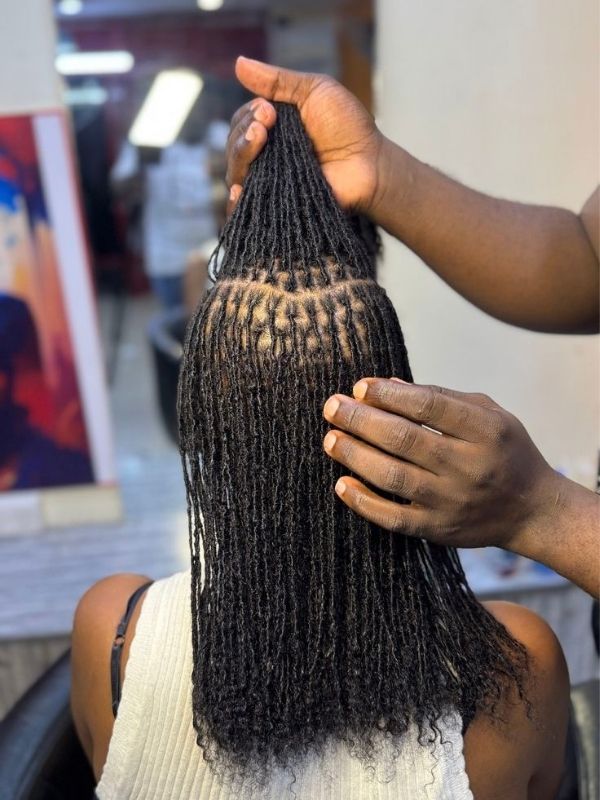
Sisterlocks are a specific natural hair locking system developed by Dr. JoAnne Cornwell. The system uses a specialized interlocking technique and a structured parting pattern to create very small, uniform locs.
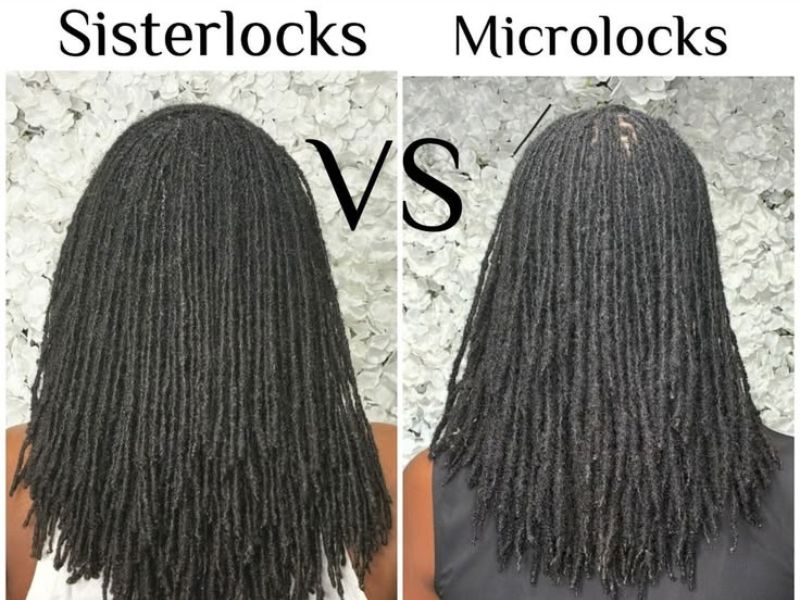
Although Sisterlocks are often discussed alongside microlocs, the two terms do not mean exactly the same thing. Microlocs describe a broader category of small locs, whereas Sisterlocks refers to a particular system with its own installation process, training, and maintenance practices.
Sisterlocks are generally installed by trained Sisterlocks consultants who understand the system’s techniques. The installation process involves creating a suitable grid and using a specialized locking pattern to establish the individual locs.
The resulting hairstyle can be lightweight and versatile. Depending on their length and maturity, Sisterlocks can be worn loose, arranged into ponytails, pinned into updos, or styled for special occasions.
Nevertheless, the installation process can be time-consuming because the locs are small and numerous. The precise time required depends on hair length, density, texture, and the consultant’s working process.
Sisterlocks also require appropriate follow-up maintenance. New growth must be managed carefully to preserve the structure of the locs and reduce the risk of unwanted joining or excessive root tension.
It is important to understand that Sisterlocks are not simply tiny locs created using any interlocking method. Their specific system, installation process, and professional training distinguish them from other microloc approaches.
For more styling inspiration, explore How to Choose Sisterlocks for Older Women: Low-Maintenance Styles You’ll Love.
Microlocs vs Sisterlocks: Understanding the Main Differences
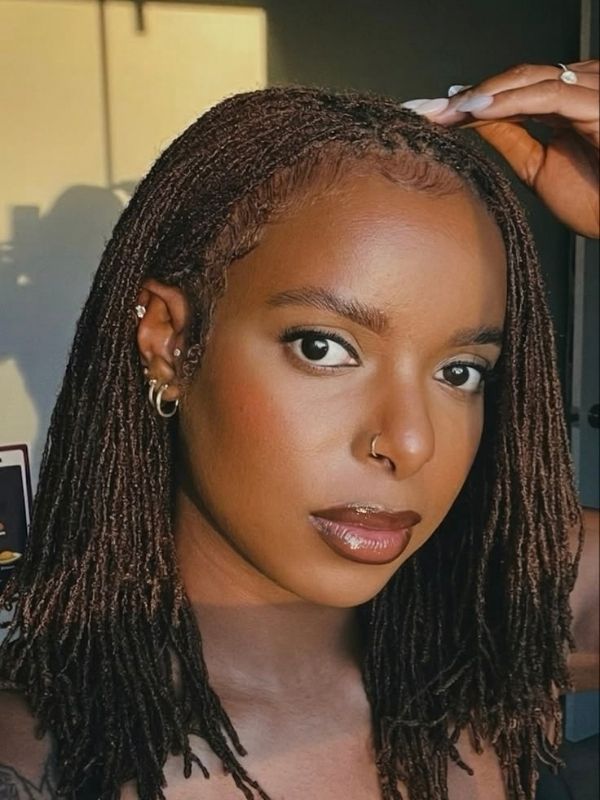
At first glance, microlocs and Sisterlocks can look remarkably similar. Both feature small individual locs, and both can be styled in numerous ways as they grow.
However, the process behind each hairstyle can differ considerably.
The main distinction is that microlocs encompass several installation and maintenance approaches, while Sisterlocks follow a specific system.
Understanding that difference helps you look beyond photographs and focus on the practical experience of wearing either hairstyle.
Installation methods
Microlocs can be started with twists, braids, coils, interlocking, or other suitable methods. The technique chosen influences how the locs develop and what maintenance they require.
Sisterlocks use a specialized interlocking technique associated with the Sisterlocks system. The installation also follows a structured parting pattern designed to create small, consistent locs.
Therefore, someone considering microlocs generally has a broader choice of installation approaches. Someone choosing Sisterlocks is choosing a particular system rather than simply selecting a small loc size.
Size and appearance
Both styles can create a fine, detailed appearance.
However, microlocs vary more widely in size because they can be customized according to personal preference, hair density, and installation technique.
Sisterlocks are designed to follow a consistent system, although the finished appearance still varies between individuals.
Neither style guarantees a particular amount of volume or length. Your natural hair characteristics and the way your locs develop influence the result.
Maintenance approach
Microloc maintenance depends on the original installation method and the technique selected for subsequent upkeep.
For example, interlocked microlocs and twist-started microlocs may require different maintenance schedules and handling techniques.
Sisterlocks maintenance follows the requirements of the system, including careful retightening and attention to the individual locs.
In either case, the objective is to maintain healthy roots and well-formed locs without repeatedly placing excessive tension on the scalp.
Professional support
Microlocs may be installed and maintained by a knowledgeable loctician who has experience with the particular method being used.
Sisterlocks are associated with trained Sisterlocks consultants who understand the specific system.
If you are choosing between the two, ask about the professional’s experience, maintenance approach, pricing, and plans for addressing problems such as thinning or unraveling.
These details will tell you more about your likely experience than the hairstyle’s name alone.
Microlocs vs Sisterlocks: Which Is Easier to Maintain?
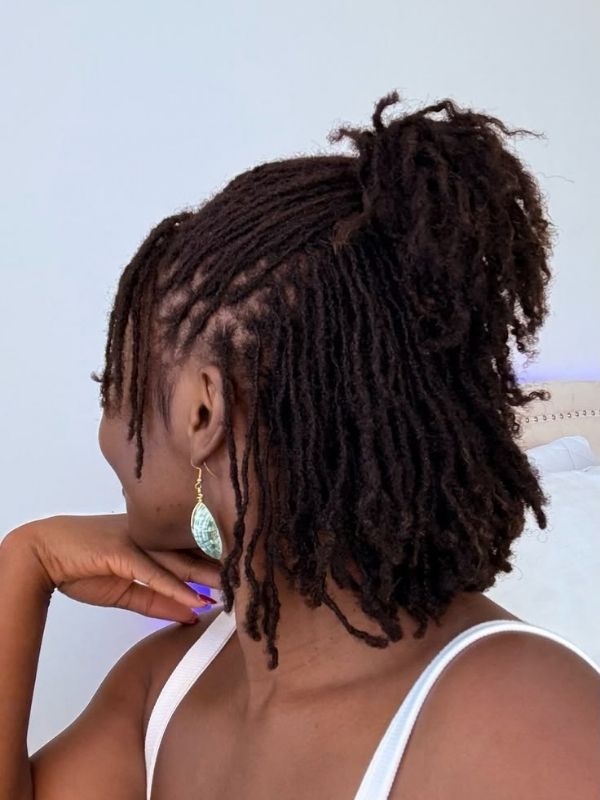
Maintenance is often the biggest consideration when comparing these two hairstyles. You may love the appearance of tiny locs, but you also need a routine that fits your daily responsibilities.
The answer depends on what you mean by maintenance.
Daily styling, washing, retightening, scalp care, and the cost of professional appointments are different parts of the overall process.
Microlocs may offer greater flexibility because you can choose from several installation and maintenance methods. However, that flexibility does not guarantee less work.
Sisterlocks provide a structured system, which may appeal to someone who prefers a specific installation and maintenance approach. Nevertheless, their small size and the number of individual locs can make professional installation and retightening time-consuming.
Consider the following factors before deciding.
Daily maintenance
Both hairstyles can be relatively simple to manage once they are established.
You may be able to wear your locs loose, arrange them with your fingers, or create a simple hairstyle without spending a long time on your hair every morning.
Daily maintenance usually involves protecting the locs while sleeping, checking for tangling between neighboring locs, keeping the scalp comfortable, and avoiding excessive product use.
The length of your locs also matters. Short locs may require little styling, while longer locs can offer more options but may take longer to arrange.
For practical ideas, read How to Style Short Locs: 13 Beautiful Looks for Women.
Retightening and root maintenance
Both microlocs and Sisterlocks need appropriate root maintenance.
As new hair grows, the roots can become less defined. Depending on the installation method, maintenance may involve interlocking, twisting, or another suitable technique.
Sisterlocks generally follow a system-specific retightening process. Microlocs may be maintained using different methods, depending on how they were started.
The time between appointments varies according to hair growth, loc maturity, scalp condition, and the professional’s recommendations. A fixed schedule will not suit every head of hair.
Avoid trying to keep your roots perfectly neat by tightening them too frequently. Excessive manipulation can weaken the hair and contribute to thinning.
Washing and drying
Both styles need regular cleansing.
Small locs can hold residue, so using heavy products repeatedly may create buildup. Your washing routine should keep the scalp clean without unnecessarily disturbing newly forming locs.
The correct washing technique depends on whether your locs are newly installed or mature. Ask your loctician for instructions suited to your installation method.
After washing, allow enough time for the locs to dry completely. Their compact structure can retain moisture longer than loose hair.
For additional guidance, see How to Steam Your Locs: Everything You Need to Know. Steaming is an optional care practice, not a requirement for every loc wearer.
Long-term maintenance
Neither hairstyle should be treated as a completely hands-off option.
Both require attention to scalp health, root strength, cleanliness, and the condition of individual locs.
The difference is that microlocs provide more freedom to choose the original method and subsequent maintenance approach. Sisterlocks follow a more specific system.
Your choice should reflect the routine you can maintain consistently rather than the hairstyle that looks easiest in a photograph.
Microlocs vs Sisterlocks: Which Is Easier to Style?
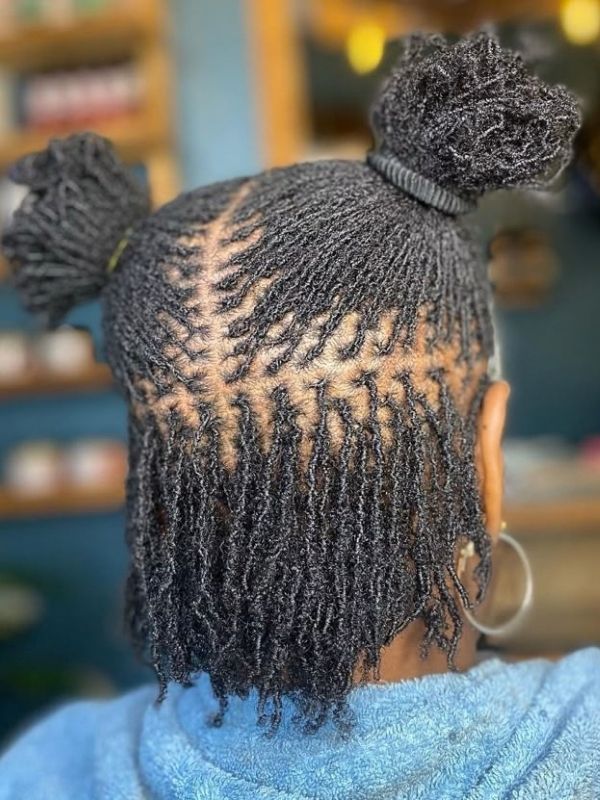
Styling is another important part of this comparison, particularly if you enjoy changing your appearance for work, school, celebrations, or everyday activities.
Both microlocs and Sisterlocks can be versatile. Their small size may allow them to move and arrange differently from larger traditional locs.
However, styling flexibility depends on several factors, including length, density, maturity, and the strength of the individual locs.
A short installation may not yet support a high bun or a full ponytail. Longer locs may offer more options, but they can also feel heavier when gathered into an updo.
Everyday hairstyles
Both styles can be worn loose, swept to one side, arranged with a middle part, or gathered into a simple half-up hairstyle when the length allows.
These options are useful when you want to change your appearance without manipulating every loc individually.
You can also use a lightweight headband or a few smooth hairpins to create a different look. Choose accessories that do not pull on the roots or catch on the locs.
For short hairstyles, start with ideas that work with your existing length rather than forcing the locs into styles designed for longer hair.
Formal hairstyles
Microlocs and Sisterlocks can both work for formal occasions.
Depending on their length, they may be arranged into low buns, pinned updos, elegant ponytails, or decorative styles suitable for weddings and celebrations.
The key is to choose an arrangement that distributes the weight comfortably.
If your locs are still developing, avoid elaborate styles that require excessive pulling or repeated manipulation. A simple arrangement can look polished without stressing the roots.
For additional inspiration, explore How to Choose Wedding Locs Styles That Make You Look Elegant and Put Together.
Curls and texture
Curling techniques can temporarily change the appearance of mature microlocs and Sisterlocks.
Some people use rollers, flexi-rods, or other gentle setting methods to create waves and curls. The appropriate technique depends on the locs’ maturity, condition, and ability to hold the desired shape.
Use methods recommended by a professional who understands your particular loc type. Avoid excessive heat and do not leave accessories so tight that they cause discomfort.
You can also experiment with natural volume, different partings, and the way the locs fall around your face.
Accessories
Accessories can transform a simple hairstyle without requiring an elaborate updo.
Lightweight cuffs, smooth clips, decorative pins, and fabric headbands can add detail to either style.
However, an accessory should never pull on a loc or create pressure around the hairline. Heavy decorations may strain individual locs, particularly when worn repeatedly.
Remove anything that causes discomfort or catches on neighboring locs.
The Installation Process: What Should You Expect?
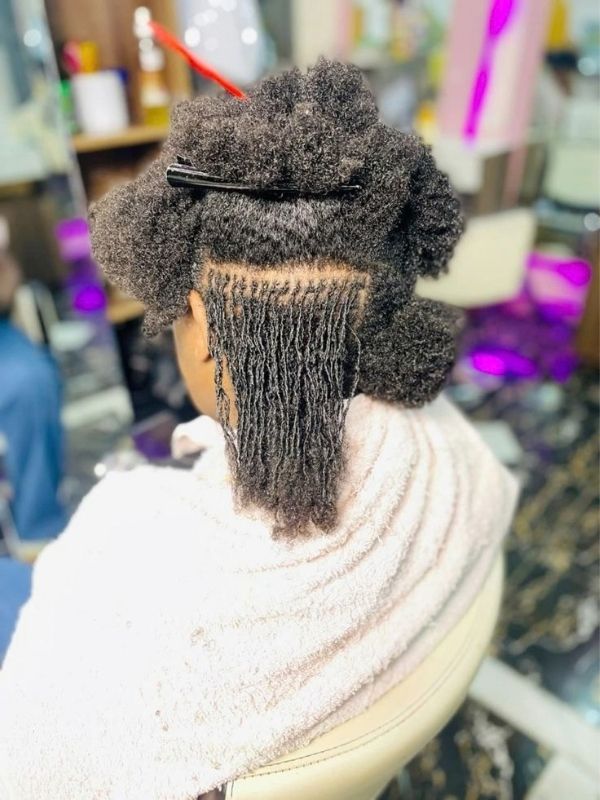
Installation is an important consideration because it influences the initial appearance, the time required to establish your locs, and the maintenance routine that follows.
Both styles can take several hours to install. In some cases, the appointment may extend across multiple sessions.
The actual duration depends on your hair length, density, texture, chosen method, and the professional’s experience.
Installing microlocs
The first step is deciding how small you want the locs to be and which installation technique suits your hair.
A consultation should include an assessment of your hair’s condition, scalp comfort, density, and existing chemical treatments.
The loctician can then recommend an appropriate sectioning pattern and explain how the chosen method affects washing, maintenance, and styling.
Microlocs may be installed using twists, braids, coils, or interlocking. Each approach has different characteristics, so the method should be selected deliberately rather than simply because it is popular.
Ask whether the professional offers a trial section or consultation before committing to a full installation.
You should also understand the expected appointment time, the maintenance schedule, and the cost of future visits.
Installing Sisterlocks
Sisterlocks installation follows a specific system.
A trained consultant assesses the hair, discusses the desired outcome, and determines whether the system is suitable for the person’s hair and expectations.
The installation uses a structured parting pattern and a specialized interlocking technique to create the individual locs.
Because the locs are small and numerous, the process can require considerable time and precision.
Before booking, ask about consultation fees, installation costs, expected appointment length, and follow-up maintenance.
It is also sensible to discuss how the consultant handles concerns such as unraveling, root thinning, or discomfort.
Why the initial consultation matters
Regardless of your choice, a consultation helps establish realistic expectations.
You should understand that locs change as they mature. Their texture, shape, fullness, and appearance may differ from the first photographs you admired.
A professional should explain the early stages, expected maintenance, and potential challenges without promising a particular growth rate or final appearance.
You should also feel comfortable asking questions about your budget, lifestyle, and preferred hairstyles.
The right installation begins with informed expectations rather than rushing into a decision.
Microlocs vs Sisterlocks: Cost and Time Considerations
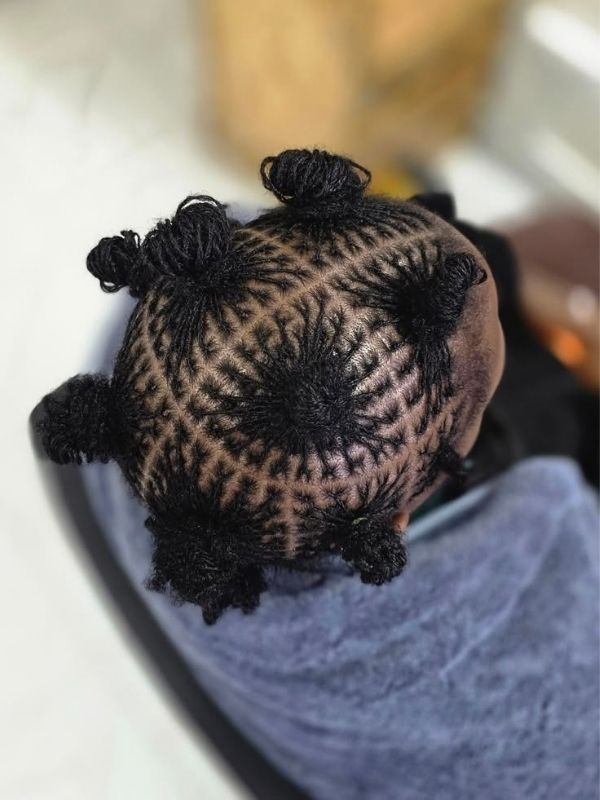
Cost can influence your decision as much as appearance and styling flexibility.
However, there is no universal price difference that applies to every microloc and Sisterlocks installation. Rates vary according to location, hair length, density, professional experience, and the services included.
Sisterlocks may involve a structured consultation and installation process with a trained consultant. Microloc costs vary according to the technique selected and the person performing the installation.
The initial fee is only one part of the overall expense.
Initial installation costs
When requesting a quote, find out exactly what the price covers.
Ask whether the consultation, installation, starter products, and follow-up appointment are included. If the installation will require multiple sessions, confirm whether each session is charged separately.
For microlocs, the chosen installation method may affect the cost. A detailed interlocking installation can require substantial time, just as a small and uniform loc pattern may require careful sectioning.
For Sisterlocks, ask the consultant for a complete estimate based on your hair rather than relying on general prices found online.
Ongoing maintenance costs
Both hairstyles may require regular professional appointments.
The cost and frequency depend on the method used, your hair growth, the condition of the locs, and the professional’s recommendations.
Before choosing, ask for the expected maintenance interval and the price of a typical appointment.
Then consider the yearly cost rather than looking only at the installation fee.
You should also ask whether the professional offers maintenance training or guidance for appropriate at-home care. Do not assume that a technique is safe to perform independently simply because the locs look small.
Time spent at home
Daily styling may be relatively simple for either hairstyle, but maintenance appointments can take time.
Washing, drying, separating neighboring locs, and preparing the hair for appointments all form part of the routine.
If your schedule is busy, consider whether you can attend appointments consistently and protect enough time for proper care.
A hairstyle that fits your everyday routine is easier to maintain over the long term than one that repeatedly conflicts with your responsibilities.
Choosing Between Microlocs vs Sisterlocks for Your Hair Type
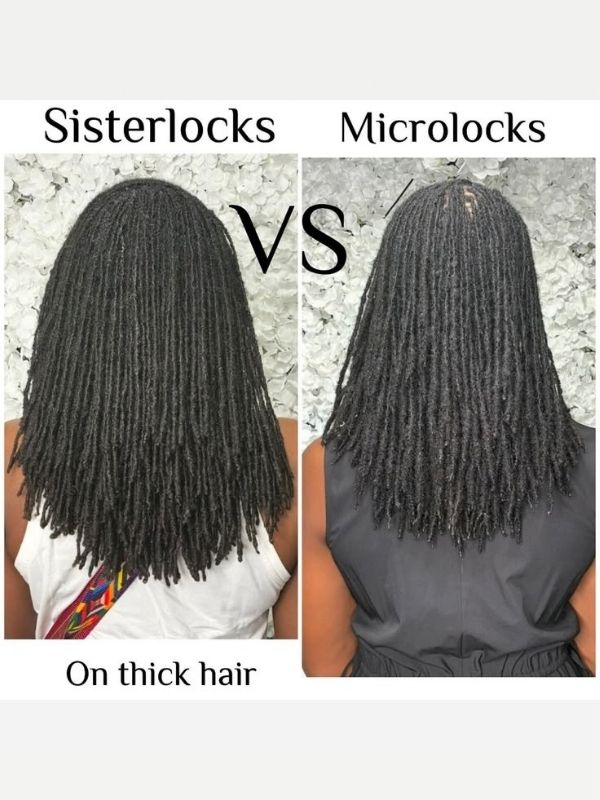
Your natural hair characteristics matter when choosing a loc system.
Hair texture, density, strand thickness, shrinkage, and scalp condition all influence the installation process and the way locs develop.
Neither hairstyle is automatically suitable for everyone, and neither guarantees a particular result.
Fine strands
People with fine strands may need special attention to section size and root strength.
A loc that is too heavy for its supporting hair can place unnecessary strain on the root. A skilled professional should assess the hair before recommending the installation method.
Small locs can provide styling flexibility, but their size alone does not guarantee that they will remain strong.
Dense hair
Dense hair can provide many options for sectioning and styling. However, a full head of dense hair may require more time during installation and maintenance.
Discuss your desired loc size with the professional and ask how the chosen pattern will work with your density.
It is important to balance the appearance you want with the strength of the individual locs.
Different curl patterns
Microlocs and Sisterlocks can be suitable for various textured hair types, but the installation method and maintenance routine may need to differ.
Curl pattern alone does not determine whether a loc system will succeed. Hair condition, strand characteristics, installation technique, and maintenance habits also matter.
A professional consultation can help identify an appropriate approach for your hair.
Previously relaxed or chemically treated hair
If your hair has been relaxed, bleached, or otherwise chemically treated, discuss its condition before installation.
Chemically processed sections may behave differently from new growth. Depending on the condition of the hair, a professional may recommend a gradual transition, trimming damaged ends, or another suitable approach.
Do not assume that every installation method will work equally well on hair with significant breakage or weakened sections.
For more guidance, read How to Transition from Relaxed Hair to Locs Without Damaging Your Hair.
Microlocs vs Sisterlocks: Which Style Offers More Versatility?
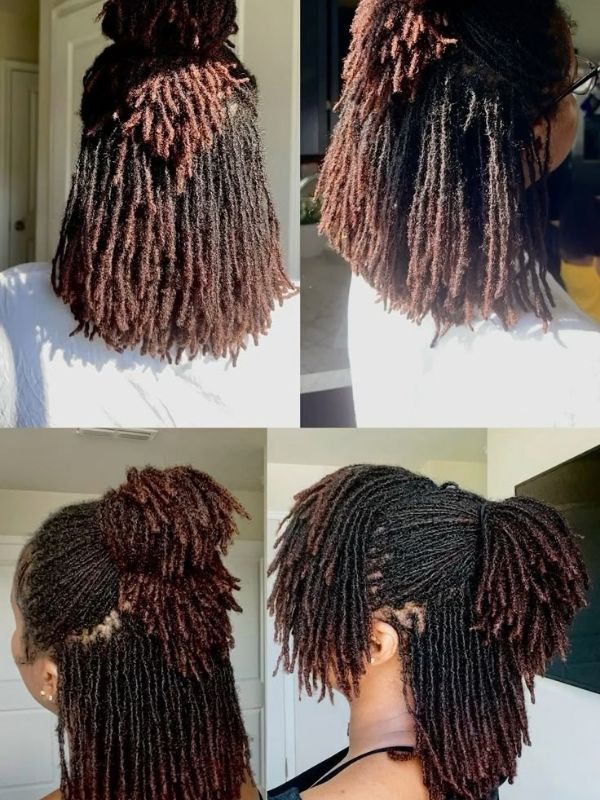
Versatility is not determined by the name of your loc system alone.
Both styles can support a wide range of hairstyles as the locs gain length and maturity. However, the size, number, density, and condition of the locs influence which styles are practical.
Loose styles
Wearing locs loose is one of the simplest ways to showcase their natural texture.
You can change your parting, sweep the locs to one side, or arrange the front sections to frame your face.
These small changes can create a different appearance without requiring a complicated styling routine.
Half-up hairstyles
A half-up style gathers some of the hair while leaving the remaining locs loose.
This approach can work well for casual outings, everyday activities, and occasions when you want your hair away from your face.
Use a comfortable band and avoid pulling the gathered section tightly against the scalp.
Ponytails
A ponytail can be practical for keeping locs away from the face and neck.
However, the length and weight of the locs should determine how high or low you gather them.
A low ponytail may distribute the weight more comfortably than a tightly pulled high ponytail. If the hairstyle creates soreness around the hairline, loosen it or choose another option.
Buns and updos
Buns and updos can create a polished appearance for formal events and everyday wear.
Their suitability depends on whether your locs are long enough to gather without pulling. Avoid using numerous tight pins or repeatedly forcing the locs into a shape they cannot comfortably hold.
If you need several accessories to keep the style in place, consider choosing a simpler arrangement.
Braided and pinned details
Some people enjoy creating braided-looking arrangements or using pins to shape small sections of their locs.
The approach should suit the locs’ maturity and condition. Do not braid or manipulate newly installed locs without appropriate guidance.
For another natural-hair styling option, see Braided Updo Natural Hair.
Low-Maintenance Styling Ideas for Microlocs vs Sisterlocks
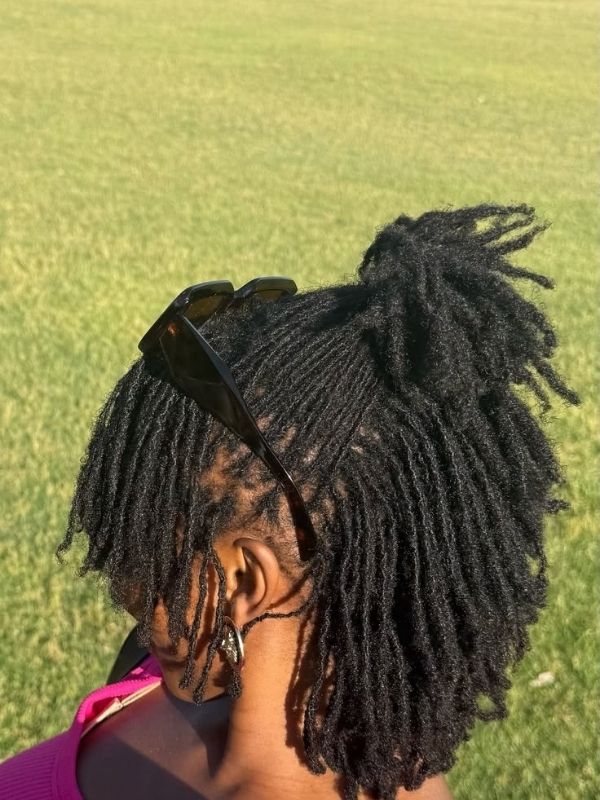
If your main priority is saving time, start with hairstyles that require little manipulation.
You do not need to create a completely different look every morning. Small changes can make your locs feel fresh while allowing you to keep your routine manageable.
1. Wear your locs loose
Allowing your locs to fall naturally is one of the simplest styling options.
You can arrange the front sections with your fingers and let the remaining hair follow its natural direction.
This style works for many lengths and requires few accessories.
2. Create a side part
A side part changes the direction of your locs without requiring an elaborate arrangement.
Use your fingers to create a comfortable part and allow the locs to settle naturally.
Avoid forcing the roots into a position that feels tight.
3. Try a middle part
A middle part offers a different appearance while keeping the styling routine simple.
It can work especially well when your locs already fall naturally on both sides of your head.
If the part does not remain in place easily, avoid repeatedly pulling the roots to make it look sharper.
4. Sweep the front sections back
Gently directing the front locs away from your face can create a neat everyday hairstyle.
Use a smooth clip or pin if necessary, making sure it does not catch or pull on individual locs.
This option is useful when you want a change without gathering all your hair.
5. Choose a loose half-up style
Gather a small upper section and secure it with a comfortable accessory.
Leave the remaining locs loose to maintain movement and avoid putting too much weight on the gathered section.
This style can work for casual outings, study days, and informal events.
6. Wear a low ponytail
A low ponytail keeps the hair organized without requiring a high-tension arrangement.
Use a soft band that does not grip individual locs too tightly.
If your locs are heavy or long, make sure the ponytail remains comfortable throughout the day.
7. Add a lightweight headband
A headband can change the appearance of your hairstyle within seconds.
Choose a smooth design that does not snag the locs or press uncomfortably against the hairline.
Remove it if you notice friction or discomfort.
8. Use a few decorative pins
Decorative pins can create a polished look for special occasions.
Place them carefully so they support the hairstyle without pulling individual locs.
Avoid sharp accessories that can catch on the hair.
9. Try a soft low bun
If your locs are long enough, gather them into a loose bun near the nape.
Secure the arrangement without repeatedly wrapping the hair tightly.
A comfortable bun should not leave your scalp sore.
10. Change your parting and framing
Sometimes, simply arranging the locs differently around your face creates a noticeable change.
Try a slightly off-center part or gently direct a few front locs toward one side.
This approach is particularly useful when your locs are too short for elaborate updos.
How to Maintain Microlocs vs Sisterlocks Without Causing Tension
Healthy maintenance is more important than keeping every loc perfectly neat.
Repeated pulling, tight hairstyles, and excessive manipulation can weaken the roots over time. Therefore, your routine should prioritize comfort and the condition of your hair.
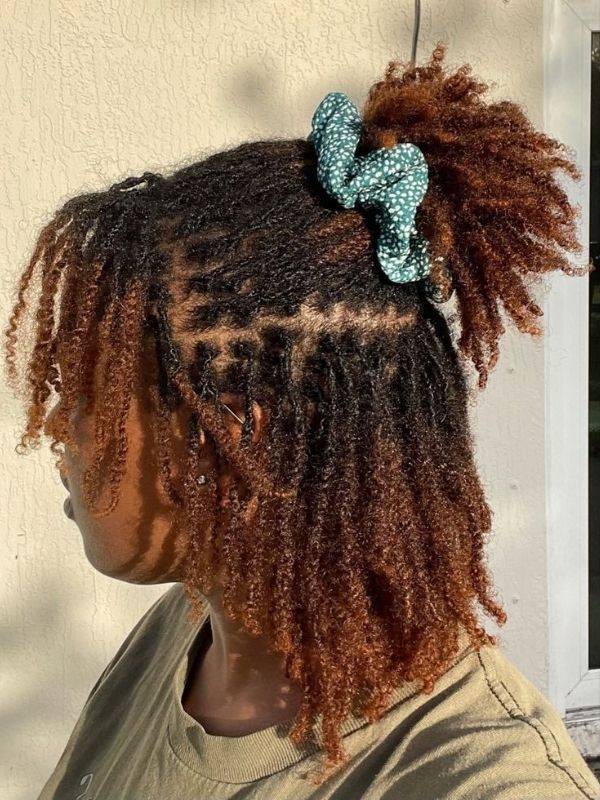
Keep your scalp clean
Regular cleansing helps remove sweat, oil, dead skin cells, and product residue.
Choose a washing routine suited to your scalp and loc maturity. If your locs are newly installed, follow the washing instructions provided by your loctician or Sisterlocks consultant.
Do not avoid washing simply because you are worried about frizz. Instead, learn the appropriate technique for your particular installation.
Use products sparingly
Heavy creams, waxes, gels, and oils can accumulate inside small locs.
Choose lightweight products when needed and avoid layering several products simply to create shine or hold.
If your locs feel coated or unusually heavy, consider whether they need proper cleansing rather than additional products.
Protect your locs while sleeping
A satin or silk bonnet, scarf, or pillowcase can help reduce friction during sleep.
Choose a comfortable covering that does not compress the locs or pull at the hairline.
Keep the covering clean and allow your locs to dry completely after washing before going to bed.
Avoid excessively tight hairstyles
A hairstyle should not cause pain or persistent discomfort.
Repeatedly wearing tight ponytails, buns, or updos can place tension on the same areas of the scalp.
Choose relaxed arrangements and alternate the direction in which you gather your hair.
Monitor individual locs
Check your locs periodically for unusual thinning, breakage, or roots that repeatedly join neighboring sections.
If you notice a problem, avoid trying to fix it through tighter twisting or aggressive manipulation.
An experienced professional can assess the condition of the loc and recommend appropriate care.
For additional troubleshooting advice, read How to Fix Common Loc Problems and Keep Your Locs Healthy.
Common Mistakes to Avoid When Choosing Between Microlocs vs Sisterlocks
A beautiful hairstyle should fit your lifestyle as well as your personal preferences.
Before choosing either option, consider these common mistakes and how to avoid them.
Choosing based only on photographs
Photographs can help you understand the appearance of each style, but they do not show the complete maintenance process.
A photograph will not tell you how long installation took, how often the person attends appointments, or which products they use.
Ask for realistic information about the full routine before making your decision.
Assuming smaller locs always mean less maintenance
Small locs can offer styling flexibility, but they may also require detailed installation and maintenance.
The number of locs, your chosen technique, and the condition of your hair all influence the amount of work involved.
Consider the complete routine rather than relying on size alone.
Ignoring the long-term cost
The installation fee is only one part of the financial commitment.
Retightening, occasional professional repairs, appropriate products, and travel to appointments may add to the overall cost.
Request a realistic estimate before committing to either style.
Trying to maintain every root perfectly
New growth is a normal part of having locs.
Trying to eliminate every loose hair can lead to unnecessary manipulation. Focus on keeping the roots healthy and the locs appropriately separated instead.
Using too many styling products
More product does not automatically create healthier or more manageable locs.
Heavy layers may contribute to residue and make cleansing difficult.
Keep your routine simple and introduce products only when they serve a clear purpose.
Choosing a style that does not fit your schedule
If you cannot attend maintenance appointments consistently, discuss your circumstances with a qualified professional before installation.
Your hairstyle should fit your routine rather than create unnecessary stress.
Ignoring discomfort
Pain, persistent tenderness, or noticeable thinning should not be treated as ordinary parts of wearing locs.
Reduce tension and seek professional advice if you notice these problems.
A Simple Decision Guide for Choosing Your Loc Style
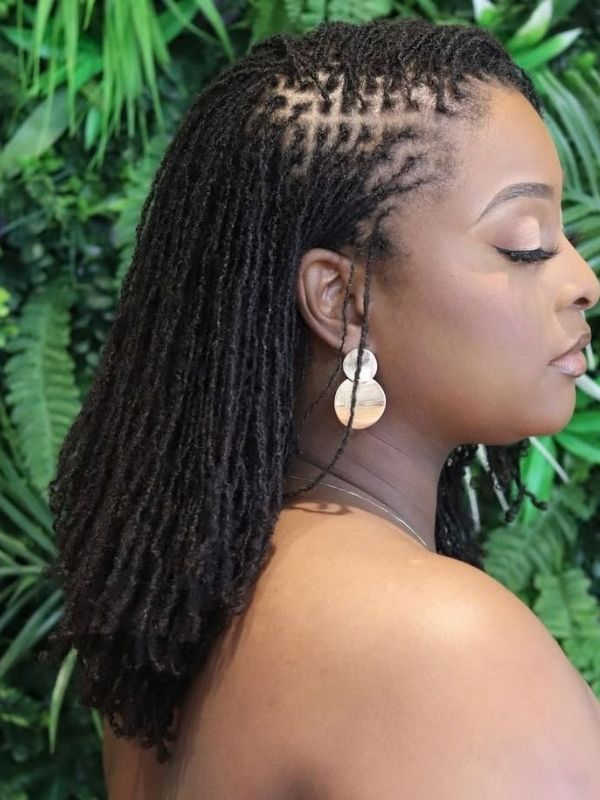
If you are still unsure which option suits you, compare your priorities rather than looking for a universal winner.
Consider the following questions before booking an appointment.
Do you want more flexibility in how your locs are installed?
Microlocs offer several installation methods, allowing you to discuss different approaches with your loctician.
Do you prefer a specific, structured locking system?
Sisterlocks may suit you if you want the particular installation process and maintenance framework associated with the system.
Are you comfortable with detailed maintenance appointments?
Both options can require substantial professional time. Ask about appointment length and expected maintenance frequency.
Do you enjoy changing your hairstyles?
Both styles can offer versatility, especially as they grow. Your loc length and condition will influence which styles are practical.
Is your budget a major consideration?
Request complete estimates for installation and ongoing care. Compare the total expected cost rather than only the initial price.
Do you have concerns about your scalp or hair condition?
Discuss them before installation. A qualified professional can help determine whether your hair is ready and which technique is appropriate.
Once you have considered these questions, arrange a consultation and ask the professional to explain the advantages, limitations, and maintenance needs of your preferred option.
How to Keep Your Locs Looking Neat Between Appointments
You do not need to visit a salon every time your roots begin to look less defined.
A simple routine can help your locs remain presentable while allowing natural growth to happen.
Separate neighboring locs gently
As new hair grows, neighboring locs can begin to connect at the roots.
Check the areas behind your ears, around the nape, and along the hairline. These areas may be harder to monitor during everyday styling.
If the roots are already firmly joined or separation causes discomfort, seek professional help rather than pulling them apart.
Accept normal frizz
Some frizz is a natural part of the loc process.
Constantly trying to smooth every stray hair can lead to unnecessary manipulation.
Focus on the overall condition of your locs instead of expecting every section to look freshly maintained.
Use low-tension styles
A loose ponytail, half-up arrangement, or simple side part can make your hairstyle look organized without putting excessive pressure on the roots.
Avoid using a tight style to hide thinning or weak areas.
Keep your locs clean
Buildup can make locs appear dull or coated.
Wash them according to your maintenance routine and dry them thoroughly.
If you notice persistent residue, ask your loctician about an appropriate cleansing approach.
Know when professional maintenance is needed
Some issues can be handled during a routine appointment, while others require earlier attention.
Persistent tenderness, thinning roots, repeated breakage, and difficult root connections deserve careful assessment.
For more practical advice, visit How to Keep Your Locs Looking Neat All the Time—Even Between Retwists.
The Long-Term Experience of Wearing Microlocs and Sisterlocks
The first few months of wearing locs can feel different from the experience you have after they mature.
Early locs may change in texture, shape, and fullness as the hair begins to form a more established structure.
During this period, it is important to follow appropriate maintenance guidance rather than comparing your progress with someone else’s photographs.
The early stage
Newly installed locs may require more careful handling than mature locs.
Some methods are more prone to unraveling during washing, while others may need specific root maintenance to preserve their structure.
Follow the instructions provided by your professional and ask questions whenever you are uncertain.
The developing stage
As your locs develop, their appearance may change.
They may become more compact, develop additional texture, or settle into a different shape than they had immediately after installation.
This is a normal part of the process, although individual results vary.
Mature locs
Mature locs still need care.
Regular cleansing, appropriate moisture, comfortable styling, and attention to root health remain important.
You may find that everyday styling becomes easier as you learn how your locs behave.
However, mature locs are not immune to buildup, breakage, or tension-related problems.
Adapting your routine
Your routine may change as your locs become longer or denser.
A hairstyle that felt comfortable when your locs were short may become heavy as they grow.
Review your styling habits periodically and adjust them to maintain comfort.
If you notice changes in root thickness or persistent scalp discomfort, seek professional advice rather than assuming that every change is part of normal maturation.
Tips Before Making Your Choice of Microlocs vs Sisterlocks
The decision between microlocs and Sisterlocks should reflect your personal preferences, available budget, styling goals, and willingness to maintain your hair consistently.
Microlocs offer flexibility in installation methods and maintenance approaches. Sisterlocks provide a specific system with its own installation technique and professional framework.
Both can support beautiful everyday hairstyles and more elaborate looks. Neither guarantees less maintenance, faster growth, or healthier hair simply because of its name.
Before committing, speak with a professional who has experience with the style you are considering. Ask about the installation process, expected maintenance, costs, and the best way to protect your roots.
Most importantly, choose a hairstyle that feels comfortable and works with your everyday life. Healthy locs do not need to look perfectly uniform at every moment. Consistent care, gentle styling, and realistic expectations will help you enjoy your loc journey.
Frequently Asked Questions About Microlocs vs Sisterlocks
1. Are microlocs vs Sisterlocks the same thing?
No. Microlocs are a broad category of small locs that can be installed using different techniques. Sisterlocks are a specific natural hair locking system that uses a specialized interlocking technique and structured parting pattern.
2. Which is easier to maintain, microlocs vs Sisterlocks?
Neither is automatically easier for everyone. Microlocs offer different installation and maintenance options, while Sisterlocks follow a specific system. The actual workload depends on your hair, chosen technique, maintenance schedule, and styling preferences.
3. Can you style microlocs vs Sisterlocks in the same hairstyles?
Many styles work for both, including side parts, loose hairstyles, half-up arrangements, ponytails, and buns. However, your loc length, density, maturity, and condition determine which hairstyles are suitable.
4. Do microlocs cost less than Sisterlocks?
Not always. Prices depend on the professional, location, hair length, density, installation technique, and maintenance services. Compare the complete installation and ongoing costs in this Microlocs vs Sisterlocks before deciding.
5. Can microlocs vs Sisterlocks be installed on relaxed hair?
Some people transition from relaxed hair to locs, but the suitability of a particular method depends on the condition of the hair and the amount of natural new growth. Consult an experienced professional before installation.
6. How often do microlocs and Sisterlocks need retightening?
The schedule varies according to hair growth, loc maturity, installation method, and the professional’s recommendations. Follow a schedule suited to your hair instead of assuming that everyone needs maintenance at the same interval.
7. Are microlocs or Sisterlocks better for short hair?
Both can work with short hair, depending on the installation method and your hair’s characteristics. A professional can assess whether your hair is suitable and explain what to expect during the early stages.
Conclusion
When comparing Microlocs vs Sisterlocks, remember that the best choice depends on your priorities rather than a universal rule about which style is easier.
Microlocs provide flexibility in installation methods, while Sisterlocks offer a structured locking system. Both can be versatile, and both require consistent care.
Think about the hairstyles you enjoy, the time you can dedicate to maintenance, your budget, and the professional support available to you. With realistic expectations and a suitable routine, you can choose a loc style that complements your lifestyle while keeping the health of your hair at the center of your decision.