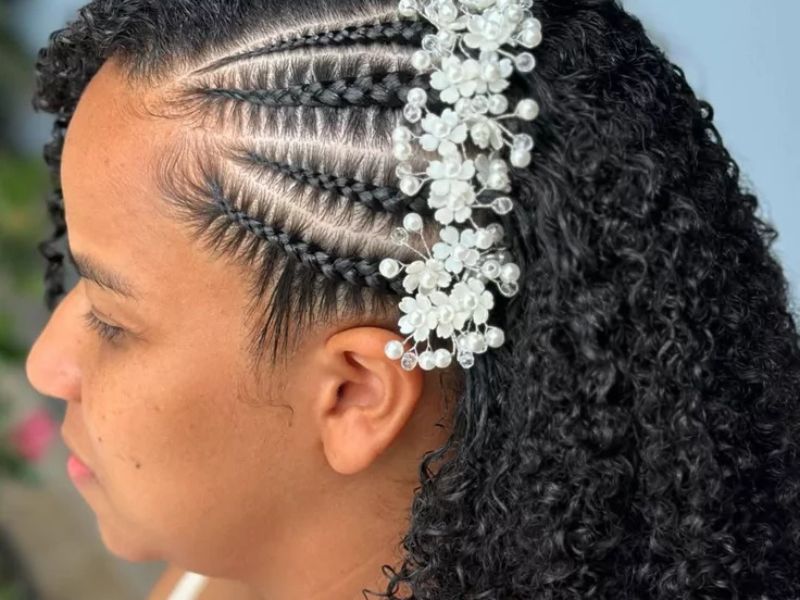

Dry, stiff locs that never seem to hold moisture? See how to steam your locs safely without buildup, excess heat, or keeping them damp for hours.
You’ve probably heard that steaming can make dry locs feel softer and easier to manage. But once you actually try to figure out how to steam your locs, the advice gets confusing.
Should you steam freshly washed locs or dirty ones? Do you need conditioner? How long should the steam sit on your locs? Can you do it between wash days? And what happens if your locs stay damp afterward?
The truth is, steaming isn’t a magic fix for every loc problem. It can be a useful way to introduce warm moisture and support a conditioning treatment, but how you steam, what you put on your locs, and what you do afterward matter just as much as the steam itself.
This guide walks you through the process step by step, including when to steam, how long to do it, what to use, how to dry your locs properly, and the mistakes that can leave you with more buildup or unnecessary moisture instead of healthier-feeling locs.
Starting your loc journey after years of relaxing your hair? How to Transition from Relaxed Hair to Locs Without Damaging Your Hair explains how to make the change while protecting fragile areas of your hair.
1. What You Need Before You Steam Your Locs
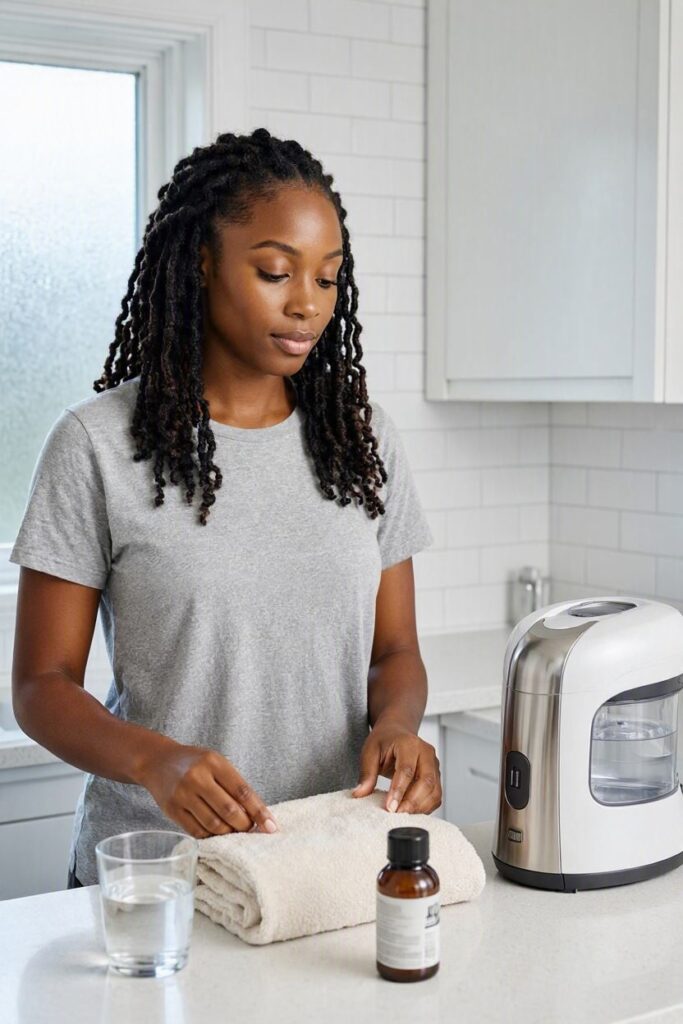
You don’t need a complicated setup to steam your locs. The goal is to create a controlled, warm-steam treatment without piling unnecessary products onto your hair.
✅ A Hair Steamer
Use a steamer designed for hair and scalp use, such as a hooded hair steamer or a handheld hair steamer. These are made to deliver steam at a distance and temperature intended for hair care.
A clothing steamer is different. Its steam output and design aren’t intended for direct contact with your scalp, so it is better not to improvise with one.
✅ Clean Water
Your steamer needs water to produce the steam. Follow the manufacturer’s instructions about what type of water to use and how much to add.
Don’t add oils, conditioner, herbs, or other ingredients to the steamer unless the device specifically says it is designed for them.
✅ Lightweight Conditioner or Loc-Safe Treatment
If you’re steaming as part of a conditioning treatment, choose a product that suits your locs and doesn’t leave a heavy coating behind.
You don’t need to saturate your locs with conditioner. Locs can hold onto product, so using more simply because you’re adding steam isn’t necessarily better.
✅ Clean Towel
Keep a clean towel nearby to gently remove excess water afterward. Avoid rough rubbing, especially when your locs are wet and heavier than usual.
What You Don’t Need
You don’t need a collection of oils, heavy butters, essential oils, or DIY mixtures to make steaming “work.” Start with steam, a suitable treatment if needed, and proper drying.
And if your locs already have significant buildup, don’t use steaming as a substitute for washing. Clean the locs first and decide whether they actually need a conditioning steam treatment.
Steaming is only one part of healthy loc care. How to Care for Your Locs the Right Way: A Step-by-Step Guide walks you through the everyday habits that keep your scalp and locs in good condition.
Should You Wash Your Locs Before Steaming?
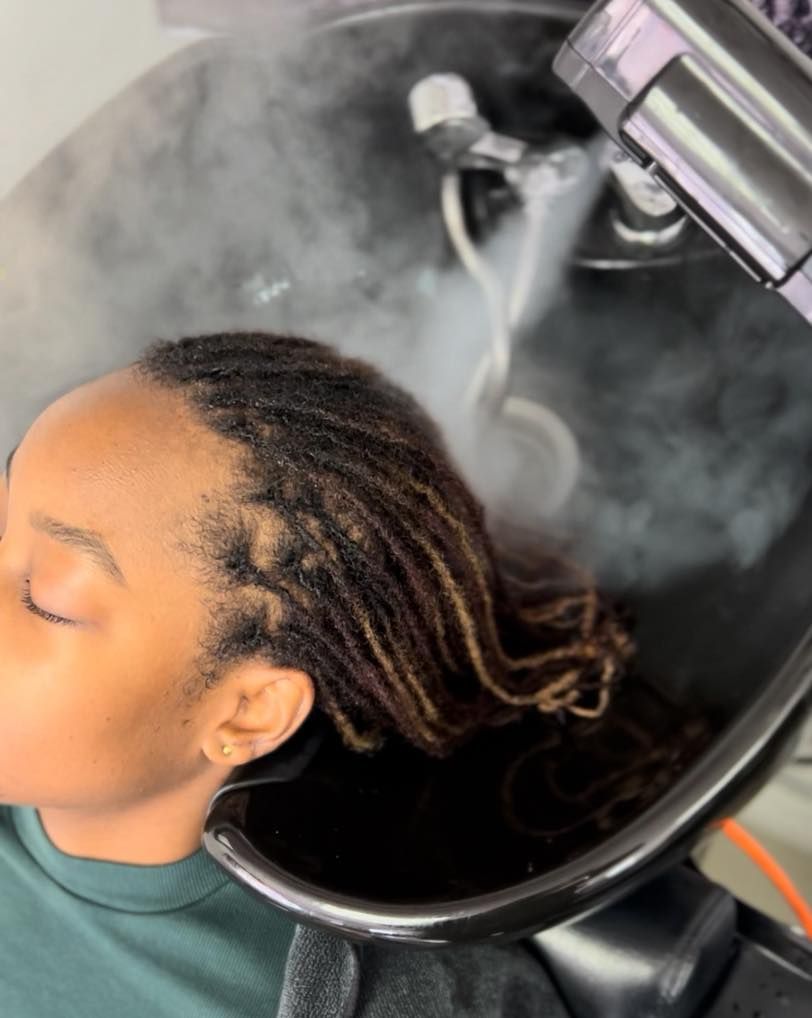
Usually, yes, especially if you’re steaming as part of a conditioning treatment.
Start with clean locs so sweat, dirt, and product residue aren’t sitting underneath the treatment. A common professional loc-steaming routine is wash → condition → steam → rinse → dry.
If you’re steaming between wash days, keep it lighter. Steam is not a substitute for cleansing, so don’t use it to cover up buildup or heavily coated locs.
One exception: very new starter locs may need a different routine because excess moisture and manipulation can contribute to unraveling.
Follow the washing and maintenance instructions for your particular starter-loc method.
What Should You Put on Your Locs Before Steaming?

You don’t always need to put a product on your locs before steaming.
In fact, steam alone is a perfectly reasonable option when your locs simply feel dry and you want to add moisture without coating them with product.
Steam Alone
If your locs are clean and you’re mainly looking to soften dry, stiff hair, you can steam them with no conditioner or other product beforehand. The warm, moist environment helps your hair absorb water, while the steam can make the locs feel softer and more pliable.
This is especially useful when you want a simple moisture routine without adding another layer of product to your locs.
Steam + Conditioning Treatment
If your locs need more than just water, you can pair steaming with a lightweight, loc-friendly conditioning treatment.
Choose a product that is designed to rinse clean and does not contain heavy oils, waxes, butters, or ingredients that are likely to leave significant buildup inside the loc.
Apply a small amount rather than coating each loc heavily. The steam can help the conditioning treatment spread and soften the hair, but you still want to rinse thoroughly afterward according to the product’s directions.
More conditioner does not mean more moisture. Once a loc has formed, its compact structure can hold onto product residue more easily than loose hair. Applying too much conditioner can leave your locs coated, sticky, or weighed down instead of genuinely moisturized.
The idea here is: use enough product to condition the hair, not so much that you’re filling your locs with residue.
How to Steam Your Locs Step by Step
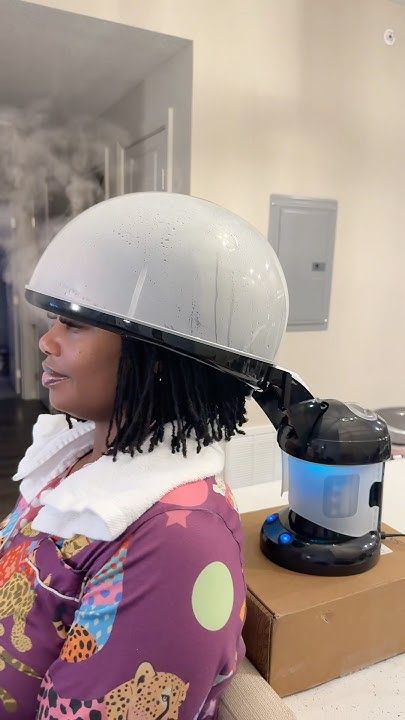
This guide on how to steam your locs is less about standing over a steamer for a long time and more about getting the preparation, heat, timing, and drying right.
A simple routine can help your locs feel softer and more moisturized without turning steaming into a complicated treatment.
What to do:
Step 1: Clean Your Locs
Start with clean locs, especially when steaming is part of your wash-day routine. Shampoo your scalp and locs thoroughly, then rinse well to remove sweat, oil, dirt, and product buildup.
Gently squeeze out excess water after washing. Your locs can be damp, but they don’t need to be soaking wet before you begin steaming.
Clean hair also gives any conditioning treatment you use a better surface to work on.
Step 2: Apply Your Conditioner or Treatment
Apply a lightweight conditioner or loc-friendly conditioning treatment if your steaming session includes one. Work a small amount through the locs, paying attention to areas that feel particularly dry.
Follow the product’s directions for how much to use and whether it is meant to be rinsed out.
Avoid piling on conditioner simply because you plan to steam. Locs are tightly formed, so excess product can settle inside them and become difficult to remove. The goal is to condition the hair, not coat the locs.
Steaming without a conditioning product is also an option. Clean locs can be steamed with no product when your main goal is simply to introduce moisture and soften the hair.
Step 3: Prepare Your Steamer
Fill your hair steamer with water according to the manufacturer’s instructions. Place it on a stable, level surface and allow it to produce steam before positioning your head.
Different steamers produce different amounts of heat and steam, so don’t assume that every machine should be used in exactly the same way. Follow the recommended operating instructions for your particular device.
Step 4: Position Yourself Safely
Sit comfortably and position your head where the steam reaches your scalp and locs without being excessively hot.
Steam should feel comfortably warm, not painful or burning.
Your scalp does not need intense heat for steaming to work. Move farther away from the steamer whenever the heat feels too strong, and stop immediately if your scalp becomes painful, irritated, or excessively hot.
Step 5: Steam Your Scalp and Locs
Place your locs under the steam and allow the warm moisture to reach both the scalp and the length of your locs.
Rather than keeping the steamer focused on one area, work around your head. You can gently move your head or reposition yourself so different sections receive similar exposure.
The purpose is not to make your locs dripping wet. Controlled steam provides warmth and moisture that can help soften the hair and make a conditioning treatment more effective.
Give extra attention to areas that commonly feel dry, such as the ends, while still keeping the steam comfortable against your scalp.
Step 6: Keep the Session Controlled
Follow the steaming time recommended by your steamer’s manufacturer or the treatment you’re using. Longer does not automatically mean better results.
A beginner may be tempted to keep steaming because the locs feel softer as the session continues. Resist the urge to keep adding time simply to get more moisture.
A controlled session is enough. Excessive heat or prolonged exposure can leave your scalp uncomfortable without giving your locs a proportional benefit.
Step 7: Rinse If Your Treatment Requires It
Rinse your locs thoroughly when you’ve used a rinse-out conditioner or treatment.
Steam does not change a rinse-out product into a leave-in product.
Leaving conditioner inside your locs after steaming can create unnecessary residue, particularly when the product is not formulated to remain in the hair.
Take your time rinsing the locs and scalp so the treatment is actually removed rather than simply diluted.
Step 8: Dry Your Locs Completely
Drying is one of the most important parts of learning how to steam your locs correctly.
Gently squeeze excess water from the locs with a clean towel, then allow them to dry completely. A hooded dryer or other suitable hair dryer can speed up the process when used at a comfortable temperature.
Locs are compact, so water can remain trapped inside the strands even when the outside feels dry. This is why locs often take much longer to dry than loose hair.
Don’t cover freshly steamed, wet locs for hours or go to bed with them still damp. Make sure the inside and outside of the locs are fully dry before considering the routine finished.
A good steaming session should leave your locs feeling softer and your scalp comfortable, not overheated, coated with residue, or damp for the rest of the day.
Noticing that some locs seem to be growing faster than others? Why Some Locs Grow Faster Than Others and How to Fix Slow Growth explains what may be causing uneven growth and what you can do about it.
How Long Should You Steam Your Locs?

There isn’t one scientifically proven steaming time that works for every head of locs.
Many loc-care recommendations fall somewhere around 15–30 minutes, with some sources commonly suggesting 20–30 minutes.
That range is a useful starting point, but your steamer and your hair still matter.
✅ Start With Your Steamer’s Instructions
Your first reference should be the manufacturer’s instructions for the steamer you’re using. Different machines produce steam at different rates and may have their own recommended operating times and safety guidelines.
Follow those instructions rather than choosing a longer session simply because someone else steams for longer.
✅ Consider Your Loc Thickness and Density
Thick or densely packed locs may take longer to receive even steam exposure than small, lightweight locs. The goal is to give your scalp and locs comfortable, consistent exposure rather than chasing a specific number of minutes.
Someone with very dense locs doesn’t automatically need a much longer session. Moving around so the steam reaches different sections can be more useful than simply extending the treatment.
✅ Longer Doesn’t Mean More Moisture
A common mistake is thinking that another 10 or 20 minutes must mean deeper hydration. It doesn’t.
Once your locs have received adequate steam, continuing to expose them to heat isn’t necessarily going to give you better results. Excessive heat can also make your scalp uncomfortable.
Think controlled exposure, not maximum exposure.
✅ Stop When the Heat Becomes Uncomfortable
Your scalp should feel comfortably warm throughout the session. Burning, stinging, excessive heat, dizziness, or discomfort are reasons to move away from the steamer or stop altogether.
For a beginner, 15–30 minutes is a reasonable general range to work within, provided it is consistent with your steamer’s instructions and feels comfortable.
There is no need to force your routine into a “perfect 20-minute rule.” Your goal is healthy, comfortable steaming, not staying under the steam as long as possible.
Short Sisterlocks can still give you plenty of styling options. How to Style Sisterlocks for Short Hair: 10 Stunning Ideas When Your Locs Feel Too Short to Style offers practical styles to try without forcing your hair into uncomfortable looks.
What Should You Do After Steaming Your Locs?

Knowing how to steam your locs is only half of the routine. What you do afterward determines whether you leave your locs comfortably moisturized or simply keep them wet and coated with product.
Rinse Out Your Treatment
A rinse-out conditioner or treatment should be rinsed thoroughly after steaming. Steam does not change the product into a leave-in treatment, so follow the instructions on the product you used.
Take your time around the roots and along the length of the locs, where leftover conditioner can contribute to buildup.
Remove Excess Water
Gently squeeze your locs to remove excess water. Avoid aggressively rubbing them with a towel, which can create unnecessary friction and frizz.
A clean microfiber towel can help absorb surface moisture without rough handling.
Dry Your Locs Completely
This is one of the most important steps after learning how to steam your locs.
Locs can hold water deep inside their compact structure, so the outside may feel dry while the inside remains damp. Give them enough time to dry completely, using a suitable dryer when necessary.
Avoid immediately covering wet locs with a hat, scarf, or tight style. Trapped moisture has nowhere to escape.
Let Your Locs Settle Before Styling
Once your locs are fully dry, you can style them as usual. Avoid manipulating them excessively while they’re wet, especially if your hair is still developing its strength or your roots are delicate.
The finished result you’re looking for is simple: clean, conditioned locs that are soft and completely dry, not heavy with product or damp inside.
Looking for a protective style that doesn’t require daily manipulation? Crochet Hairstyles for Black Women gives you plenty of ideas to switch up your look while keeping styling manageable.
How Often Should You Steam Your Locs?

There is no universal schedule for steaming locs. How often you should steam your locs depends on how your hair and scalp respond, your climate, your washing routine, and whether you are using steam alone or pairing it with a conditioning treatment.
For many people, once every few weeks or about once a month is a reasonable place to start. You can then adjust based on how your locs feel rather than steaming automatically every few days.
Signs You May Benefit From Steaming
Your locs may respond well to occasional steaming when they regularly feel:
- Dry or stiff, especially between wash days
- Less pliable than usual
- In need of extra softness after cleansing
- Dry despite maintaining a consistent moisturizing routine
Steam can be useful as an occasional moisture-supporting treatment, but it shouldn’t replace regular washing or a sensible loc-care routine.
Don’t Steam Simply Because More Must Be Better
Steaming more frequently does not automatically mean healthier or more moisturized locs. Frequent sessions can also mean more exposure to heat or more product if you are repeatedly using conditioning treatments.
Start with occasional steaming and pay attention to how your locs and scalp respond. Your hair’s needs are more useful than a rigid calendar.
Planning your wedding and unsure how to make your locs look polished with your dress? How to Choose Wedding Locs Styles That Make You Look Elegant and Put Together shows you how to choose a style that works with your overall bridal look.
Can You Steam Starter Locs?

Yes, starter locs can be steamed, but they need a gentler approach than mature, established locs. At this stage, the hair is still forming and the locs can be more prone to unraveling, frizzing, or becoming disturbed by too much manipulation.
When learning how to steam your locs, don’t treat starter locs like fully matured locs. Keep the steam comfortable, avoid excessive heat, and don’t handle or pull at the locs while they are soft and damp.
A few things matter most:
- Keep the session gentle: Avoid intense heat or unnecessarily long steaming sessions.
- Limit manipulation: Let the steam reach the locs without constantly twisting, squeezing, or retightening them.
- Be careful with products: Heavy conditioners and oils can interfere with the locking process or leave buildup inside developing locs.
- Dry them completely: Starter locs can hold moisture too, so allow them to dry thoroughly after steaming.
Your loctician’s advice also matters, particularly during the early stages. Some starter-loc methods have specific maintenance requirements, and excessive moisture or manipulation may affect how your particular locs are forming.
For most beginners, steam alone or a very lightweight, loc-appropriate treatment is safer than loading starter locs with conditioner.
The goal is to support softness and moisture without disturbing the process that is allowing your locs to mature.
Prefer a cut that can dry naturally without turning into a frizzy mess? 10 Layered Cuts for Air Drying Without Frizz shows which layered shapes work better with air-dried hair.
Handheld vs Hooded Steamer: Which Should You Use?
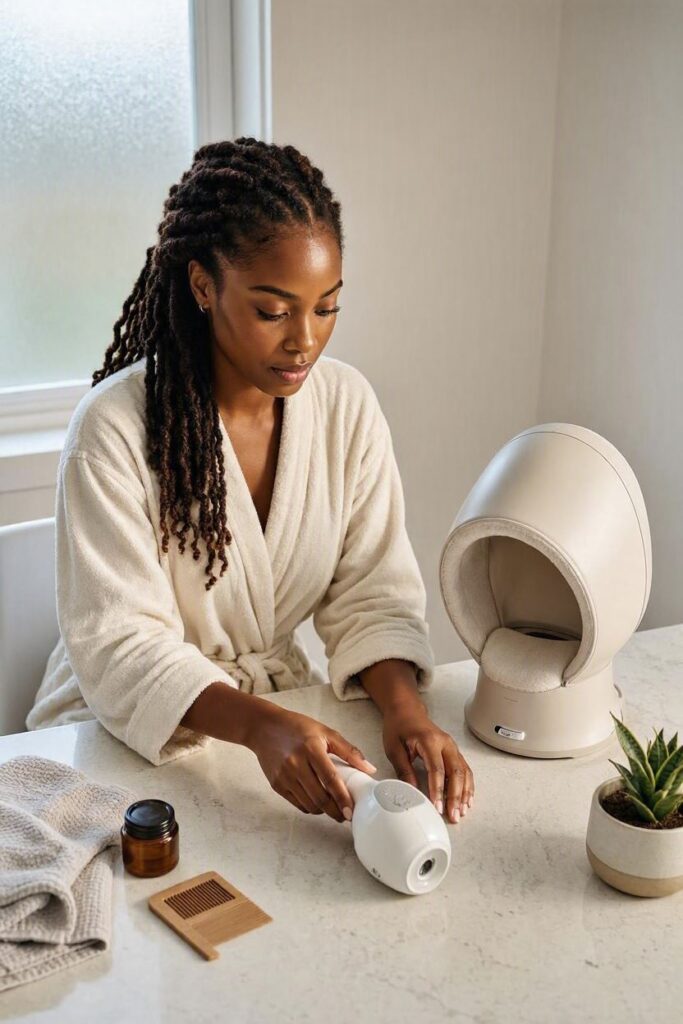
Both handheld and hooded steamers can work for loc care. The better choice depends on how much control you want over the steam, the size and density of your locs, and how often you plan to use the device.
Handheld Steamer
A handheld steamer gives you more control over where the steam goes. You can move it around your head and give extra attention to areas that feel particularly dry.
Best for:
People who want targeted steaming, have a smaller head of locs, or already own a handheld device.
The main drawback is that you have to hold and move the steamer yourself. Keeping it too close to your scalp can also expose one area to more heat than necessary, so distance and movement matter.
Hooded Steamer
A hooded steamer surrounds your head with steam, allowing both your scalp and locs to receive more even exposure while you sit underneath the hood.
Best for:
People with long, thick, or dense locs who prefer hands-free steaming.
The trade-off is less control over individual sections. You also need to position your head comfortably and make sure the steam isn’t excessively hot.
Which One Should You Choose?
Neither type is automatically better. A hooded steamer can be convenient for even, hands-free coverage, while a handheld steamer gives you greater control over specific areas.
Whichever type you choose, prioritize comfortable heat, controlled steaming, and complete drying afterward. The quality of your routine matters more than whether the steamer is handheld or hooded.
Dealing with dryness, thinning, buildup, or other frustrating loc issues? How to Fix Common Loc Problems and Keep Your Locs Healthy breaks down common problems and practical ways to address them.
Can You Use a Clothes Steamer to Steam Your Locs?

A clothes steamer is not the best choice for steaming your locs. Although both devices produce steam, a clothes steamer is designed to remove wrinkles from fabric, not to safely deliver steam around your scalp and hair.
The main concern is heat and distance. A clothes steamer can produce a concentrated stream of hot steam, and holding it too close to your scalp could cause a burn. You also have less control over how evenly the steam reaches your scalp and locs.
A hair steamer is specifically designed for use around the head, with a setup that allows steam to reach the hair more evenly and comfortably.
So, when learning how to steam your locs, use a hair steamer designed for this purpose rather than improvising with a clothes steamer. The small difference in convenience isn’t worth risking your scalp.
Common Mistakes People Make When Steaming Locs
Steaming can be a useful part of loc care, but it is easy to turn a simple treatment into a problem. Most mistakes come from using too much heat, too much product, or too little attention to what happens afterward.
1. Using Too Much Heat
More heat does not mean better conditioning. Holding your head too close to the steamer can make your scalp painfully hot and increase the risk of a burn.
The steam should feel comfortably warm. Move farther away whenever the heat becomes uncomfortable.
2. Steaming for Too Long
A longer session isn’t automatically a more effective session. Once your locs have received adequate steam, continuing to expose them to heat does not guarantee additional moisture.
Follow your steamer’s instructions and keep the session controlled rather than chasing a specific number of minutes.
3. Applying Too Much Conditioner
This is particularly important with locs. Their compact structure can hold onto product, making heavy conditioners harder to rinse away completely.
Use enough conditioner to coat the hair lightly when a treatment calls for it. More product does not equal more moisture. Excess can leave your locs heavy, greasy, sticky, or prone to buildup.
4. Using Heavy Products That Aren’t Suitable for Locs
Thick butters, waxes, heavy oils, and products that leave a substantial coating may be difficult to remove from locs.
Choose lightweight products that are appropriate for loc care and check whether they are meant to be rinsed out or left in the hair.
5. Focusing Only on the Locs and Ignoring the Scalp
Your scalp is directly exposed to the steam, so it should never be treated as an afterthought.
Pay attention to how your scalp feels throughout the session. Excessive heat, burning, itching, or irritation is a reason to stop rather than push through the treatment.
6. Holding the Steamer in One Spot
Keeping concentrated steam on one section for too long can expose that area to unnecessary heat.
Move around your head so the steam reaches different sections instead of repeatedly concentrating on one spot.
7. Treating Steam Like a Substitute for Washing
Steam can support softness and moisture, but it does not replace shampooing your scalp and locs.
Sweat, oil, dirt, and styling products still need to be properly cleansed. Steaming dirty locs does not remove that buildup.
8. Leaving Rinse-Out Conditioner in the Locs
A rinse-out conditioner remains a rinse-out conditioner after steaming.
Some people assume that because steam helps the treatment penetrate, the product should stay in the locs. That’s not how the product is intended to be used. Rinse it out according to the manufacturer’s directions.
9. Covering Wet Locs Immediately Afterward
Freshly steamed locs can contain a surprising amount of water. Covering them while they are still damp can slow evaporation and leave moisture trapped inside.
Give your locs enough time to dry completely before putting them under a hat, scarf, or tight style.
10. Going to Bed With Damp Locs
This is one of the easiest mistakes to make after wash day. Locs are dense, so the outside can feel dry while moisture remains deeper inside.
Check the locs rather than judging dryness from the surface alone. When necessary, give them additional drying time before bed.
11. Assuming Every Loc Needs the Same Routine
A person with mature, thick locs may have very different needs from someone with small or newly forming locs.
Your loc thickness, density, scalp sensitivity, products, and overall routine should influence how you steam. A routine that works beautifully for someone else may simply be too much for your hair.
Good steaming is controlled steaming: comfortable heat, appropriate products, reasonable timing, and completely dry locs afterward.
Natural curls don’t need complicated styling to look good. 10 Easy Hairstyles for Naturally Curly Hair shares simple options for days when you want your curls styled without spending forever in the mirror.
How to Know If Steaming Is Actually Helping Your Locs

The easiest way to judge a steaming routine is to stop focusing on how soft the locs feel immediately afterward. Wet hair will naturally feel different.
What matters is how the locs feel once they are completely dry and over the days that follow.
1. Softness Lasts Beyond Wash Day
A useful steaming session should leave the hair feeling softer and more flexible after it dries. The improvement shouldn’t disappear as soon as the water evaporates.
Locs that usually feel stiff or rough may become easier to handle and less rigid between wash days.
2. Dryness Becomes Easier to Manage
Pay attention to what happens several days after steaming. When the routine suits your hair, dryness may become less noticeable and the locs may remain more comfortable and manageable for longer.
Needing to steam constantly just to prevent extreme dryness is a sign that something else in the routine may need attention.
3. The Scalp Feels Calm, Not Irritated
A healthy steaming session should feel warm and comfortable from beginning to end.
Burning, prolonged tenderness, unusual itching, or irritation afterward shouldn’t be dismissed as part of the process. Those symptoms suggest that the heat, duration, or frequency may be too much.
4. The Locs Feel Conditioned, Not Coated
Good moisture shouldn’t leave behind a greasy or sticky film.
After drying, the locs should feel soft without feeling heavy, waxy, or weighed down. A coated feeling can point to excessive conditioner, unsuitable products, or incomplete rinsing.
5. Drying Doesn’t Become a Struggle
Steaming naturally adds water, but the locs should still be able to dry completely within a reasonable amount of time.
Consistently damp locs, especially when moisture seems trapped inside thicker locs, are a reason to reconsider the amount of water, product, or frequency involved.
6. The Routine Works Without Constant Steaming
A good routine should support your overall loc care rather than become something you have to repeat every few days to make the hair feel normal.
Look at the bigger picture: softer hair, a comfortable scalp, manageable dryness, little residue, and completely dry locs are much better signs of success than simply feeling a lot of steam during the session.
When those benefits aren’t happening, steaming more often isn’t necessarily the answer.
The product, washing routine, frequency, heat level, or even the underlying reason for the dryness may need to be addressed instead.
Need something quick when you don’t have the time or energy for an elaborate hairstyle? Easy Hairstyles That Are Stress Free: 15 Simple Styles You’ll Actually Wear focuses on practical styles that don’t make getting ready feel like another chore.
When You Should Skip the Steam
Steaming can be useful for loc care, but it isn’t something you need to do every time your hair feels dry.
Knowing when to skip the steam is just as important as knowing how to use it safely.
-
Your Scalp Is Irritated or Injured
Give your scalp time to settle when there is an open sore, burn, fresh irritation, or significant inflammation. Adding heat and moisture to an already irritated area may make the discomfort worse.
-
You Have a Fresh Scalp Treatment
Recent chemical treatments, procedures, or other scalp treatments may come with specific aftercare instructions. Follow those instructions rather than adding a steaming session on your own.
-
The Locs Are Still Wet
Steaming already damp or wet locs immediately after washing isn’t automatically more beneficial. Once the hair has enough moisture, adding more water doesn’t necessarily improve hydration.
Allow the locs to dry properly and assess whether they actually need additional moisture before steaming again.
-
The Hair Already Feels Moisturized
Soft, flexible locs that aren’t experiencing noticeable dryness don’t necessarily need a steam treatment. Steaming should have a purpose rather than becoming a routine you perform simply because it’s available.
-
You Can’t Dry the Locs Properly Afterwards
This one is easy to overlook. Wet locs need a proper drying plan. Thick or mature locs can hold moisture inside for much longer than loose hair.
When you know you won’t have enough time to dry them completely, postponing the session is the better choice.
-
The Heat Makes You Uncomfortable
Painful or excessively hot steam is a reason to stop, not something to tolerate because you believe it will give better results.
A safe steaming session should feel comfortably warm. When the scalp starts feeling too hot, move away from the steam or end the session.
Conclusion
Learning how to steam your locs doesn’t mean steaming as often or for as long as possible.
The real goal is to use controlled steam to support softer, more manageable locs without creating heat stress, product buildup, or trapped moisture.
Start with clean locs, use only the amount of treatment you actually need, keep the heat comfortable, and give your locs enough time to dry completely afterward.
Most importantly, pay attention to how your hair responds rather than copying someone else’s routine.
Your locs don’t need a complicated routine to thrive.
Save this guide for your next steaming session, and use it as a reference whenever you’re unsure about the products, timing, or aftercare.