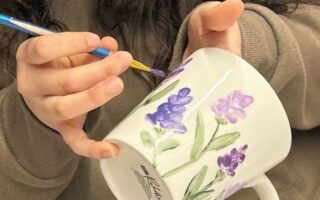

A craft can be more than something to pass the time. Try crafts for seniors in assisted living that give you something personal to make, keep, or give away.
What do you do when the activity room is full, but someone still says, “There’s nothing to do”?
It is an easy problem to underestimate. Assisted living communities may have plenty of scheduled activities, yet a resident can still lose interest when the same games, crafts, and routines begin to blur together.
The problem may not be a lack of activities at all. It may be that nothing on the table feels particularly worth doing.
That changes the way you should think about crafts.
A good project does not have to be complicated, impressive, or even finished in one sitting.
It might give someone a reason to choose a colour, tell a story about an old photograph, make a card for a grandchild, work alongside another resident, or simply spend twenty minutes making something that did not exist before.
But here is the part that is easy to miss: a craft can be easy to make and still be the wrong craft.
Tiny pieces can turn a relaxing activity into a struggle. A childish-looking project can feel patronising.
A complicated set of instructions can take the fun out of making anything at all. And when every resident is given the same project, there is very little room for personal preference.
That is why the best crafts for seniors in assisted living are not necessarily the simplest ones. They are the ones that give people something to choose, create, remember, share, or come back to.
Here are some worth putting on the activity table, and the small changes that can make them work better for real people in real assisted-living settings.
Need something creative to do at home? Creative DIY Crafts for Adults: 20 Fun Crafts for Adults to Try When You’re Bored at Home has plenty of projects to fill a quiet afternoon.
What Makes a Craft Ideal for Seniors in Assisted Living?

The easiest craft is not always the best one. In assisted living, a good project needs to leave enough room for the resident to make choices and participate at their own level.
Look for crafts with:
- Simple steps: The process should be easy to demonstrate without a long set of instructions.
- Flexible participation: Someone can do the whole project, one part of it, or work with assistance without losing the creative decisions.
- Materials that are easy to handle: Oversized or easy-grip materials can be more practical than tiny, fiddly pieces.
- A meaningful result: A card to give away, a picture to display, or something useful can give the activity a clearer purpose than an object made simply to fill time.
- Room for personal taste: Residents should be able to choose colours, images, patterns or what they want to make rather than all producing identical pieces.
This matters because research on art activities in long-term care points to the value of adapting activities to individual strengths and preferred levels of participation, while newer research also cautions against assuming that every older adult will experience arts activities in the same way.
The real test is simple: does the craft make the resident feel like a participant, or just someone being given an activity?
1. My Recipe Keepsake Book

A recipe keepsake book gives a familiar recipe a new life. Choose dishes that carry a story, a family favourite, something made for holidays, a meal learned from a parent, or a recipe you were always asked to prepare.
The recipe can be written down by the senior or recorded with help from a family member, caregiver, or activity staff member. Add photographs, handwritten notes, ingredient substitutions, or little memories alongside the recipes.
It does not have to be completed in one sitting. One recipe can be added today and another next week, gradually turning the book into something personal rather than another craft that gets finished and put away.
2. Places I Remember Collage

Choose one place that still feels familiar, a childhood home, hometown, favourite holiday spot, former workplace, garden, or even a street you remember well.
Build the collage with photographs, printed pictures, maps, magazine cut-outs, fabric, or drawings that help bring that place to mind.
This is one of those crafts for seniors in assisted living that can become a conversation as much as a finished piece. A family member or caregiver can help gather images while the senior decides what belongs in the collage and explains the memories behind the choices.
3. Scrap-Fabric Memory Art
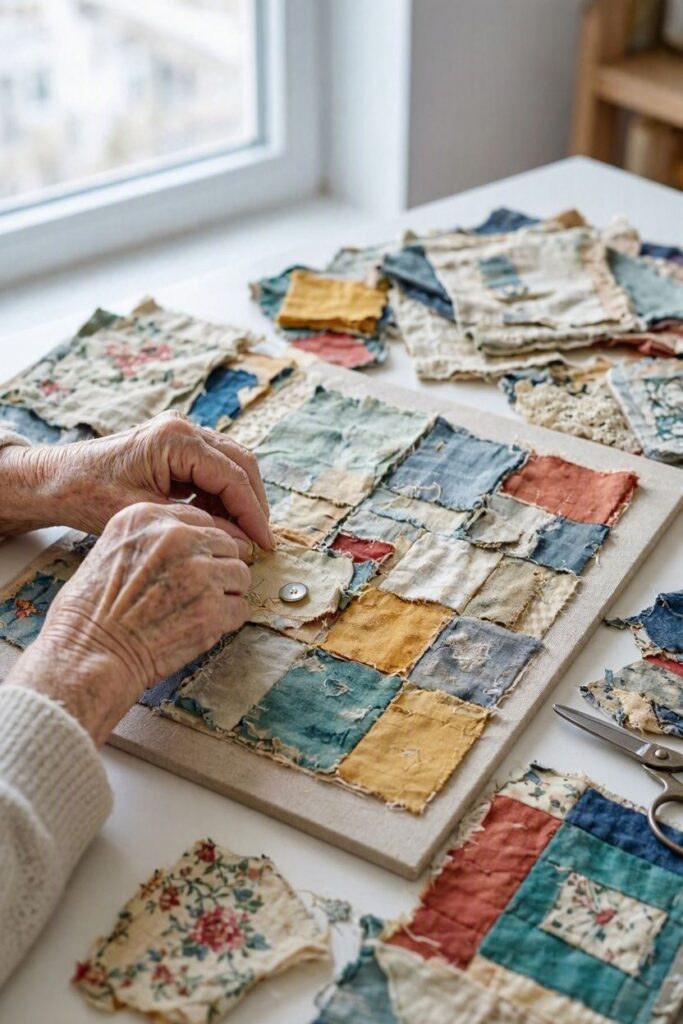
Old fabric can carry more memories than it seems. A piece may remind someone of sewing projects, a favourite dress, a quilt, curtains from a former home, or simply a colour they have always loved.
Arrange fabric scraps into a small picture, pattern, or abstract design on a firm backing.
Sewing is not necessary; the pieces can be attached with a suitable craft adhesive when handling a needle or thread is difficult.
For crafts for seniors in assisted living, this also gives someone who has always enjoyed textiles a way to work with a familiar material without requiring a complicated sewing project.
4. My Life Skills Book

Some things are worth writing down because they are knowledge, not just memories.
This little book can collect the things a senior knows how to do well, making a particular meal, caring for plants, sewing a button, preparing for a holiday, keeping a home organised, or doing something they learned from a parent.
The senior can write the instructions, dictate them to someone helping, draw simple illustrations, or simply talk through each step while someone records it.
Add one skill at a time, so the book can grow gradually rather than becoming another project that has to be finished in one sitting.
For a Halloween-focused project session, check out Halloween Crafts for Teens: 15 Projects for Room Decor, Costumes, and Fun.
5. Personal Door Sign
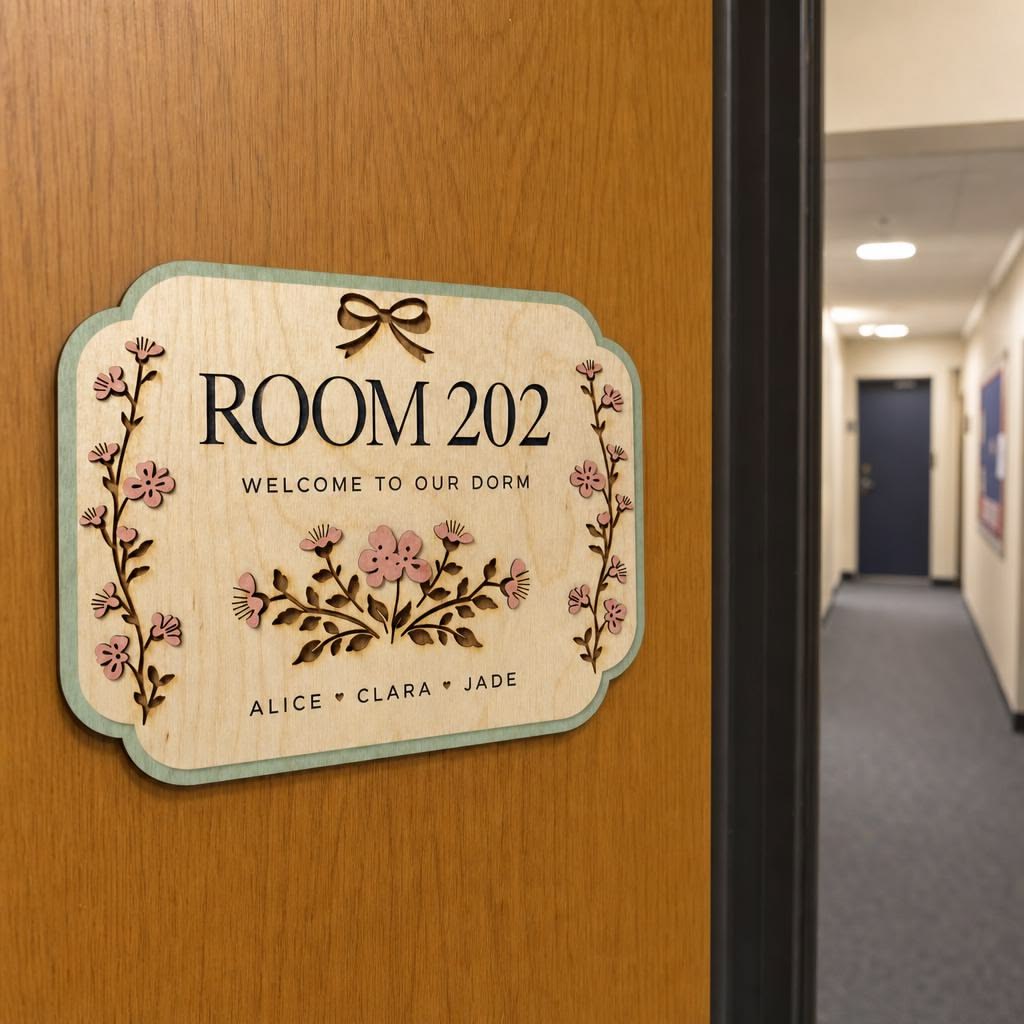
Photo credit: @ Etsy
A room sign does not have to stop at a name and a number.
Make one that says something about the person who lives there, a favourite colour, hobby, saying, flower, animal, sport, or even a phrase friends and family associate with them.
The senior can choose what goes on the sign and how it looks, while someone assisting can handle any difficult cutting or lettering.
Once finished, it can become part of the room rather than another craft that gets packed away after activity time.
6. Clay Keepsake From Something Familiar

Rather than starting with make something from clay, start with an object that already means something.
A leaf from a favourite garden, a button from an old garment, a simple pendant, or the shape of a familiar household object can become the inspiration for a small clay keepsake.
For crafts for seniors in assisted living, this approach gives the project a starting point that is already familiar.
The senior can choose the object and decide how much detail to include, while a helper can assist with the parts that are difficult to handle.
Use the clay according to its specific instructions.
Air-dry clay, polymer clay, and pottery clay have different drying, curing, and firing requirements, so a finished keepsake should not automatically be described as suitable for food, heat, or outdoor use.
7. Then-and-Now Picture

Pick one subject that has changed noticeably over the years, fashion, transport, houses, shops, cooking, school, music, or even the way people communicated.
Create one side showing what it was like then and another showing what it looks like now.
This gives crafts for seniors in assisted living a simple subject to work from without requiring the senior to produce a complicated drawing.
Old photographs, magazine pictures, printed images, paper scraps, and handwritten notes can all be used.
The senior can choose what belongs on each side and explain the differences in their own words.
Someone assisting can do the cutting or writing where needed without taking over the decisions.
8. Memory Exhibition Cards

Turn small pieces of artwork into a mini collection that can actually be displayed.
Each card can represent a favourite place, food, hobby, song, season, object, or moment, with a short note explaining what it represents.
Several residents can make cards around the same theme and display them together in a common area, or a senior can create a small collection for their own room.
This gives crafts for seniors in assisted living a second purpose: the finished work can become something others can look at and ask about.
Keep the information personal rather than trying to make the cards historically perfect. The point is to preserve the senior’s own perspective and give them control over what they choose to share.
9. Make-a-Gift Craft

Start with the person who will receive the gift rather than choosing the craft first.
A grandchild might appreciate a handmade card, while another family member may value a small piece of artwork, decorated container, or keepsake.
The senior can decide what they want to give and how it should look, while a helper handles any cutting, writing, or other step that has become difficult.
This keeps the gift-giving decision with the senior instead of turning the activity into something someone else simply chose for them.
The finished item does not need to be elaborate. Its value can come from knowing who it was made for and why.
10. Our Shared Story Wall
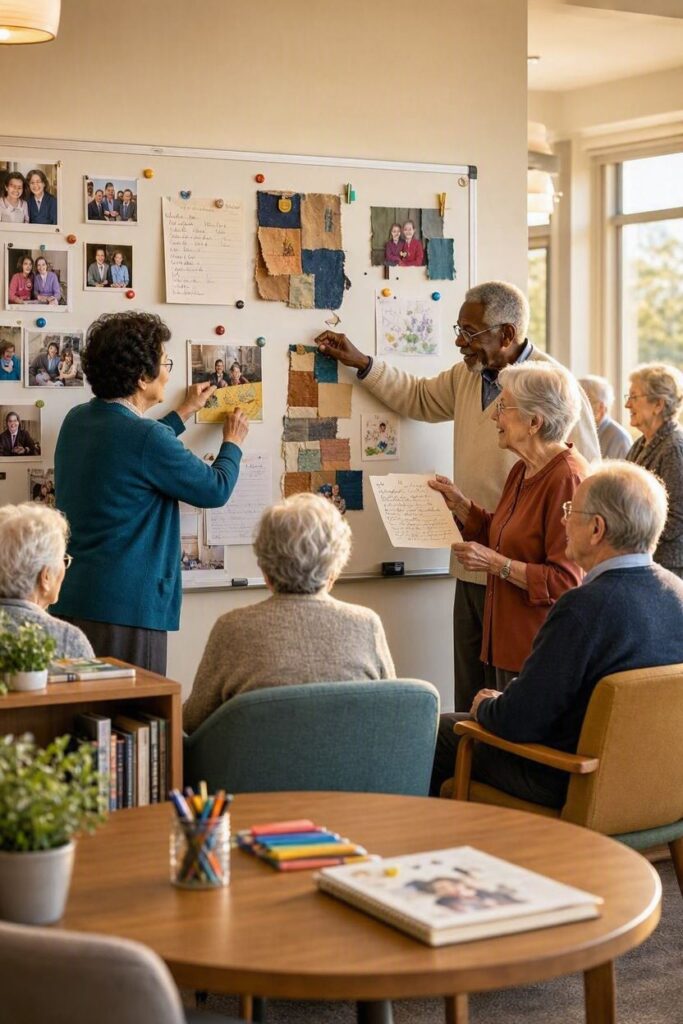
Create one large artwork that several residents can contribute to rather than asking everyone to make the same individual project.
Choose a theme such as places we’ve lived, favourite foods, things that remind us of home, childhood games, or flowers we love.
Each person can contribute a photograph, drawing, word, paper shape, fabric piece, or another small element.
Someone who does not want to make a full piece can still choose an image or colour and explain why it belongs.
This makes the activity more than a craft project.
The finished wall represents contributions from the people who live there, and the different pieces can naturally give residents, families, and staff something to ask about and discuss.
11. A Handmade Gift for Someone Special

A craft can feel very different when you know exactly who will receive it.
Instead of choosing a project first, start with the person, a grandchild, friend, family member, fellow resident, or someone who has been especially helpful.
Among crafts for seniors in assisted living, this gives the senior a real decision to make: Who am I making this for, and what would they enjoy receiving? A handmade card, small artwork, decorated keepsake, or simple paper or fabric project can all work.
The gift does not need to be perfect or expensive. What matters is that the senior chooses the recipient and has a hand in deciding what to make.
Teens who want crafts that feel a little more current can try Fun DIY Crafts for Teens: Creative and Trendy Projects That Actually Feel Cool to Make.
Let the Craft Fit the Person

A good craft does not need to have one fixed way of doing it.
The important parts can stay the same while the amount of cutting, writing, arranging, gluing, or decorating changes according to what the person is comfortable doing.
Take a memory collage. One person may want to choose every photograph and arrange the whole page.
Someone else may prefer to choose the pictures while a helper handles the cutting. Another may enjoy talking about the photographs and deciding where each one should go without doing the physical work.
There is no need to make these differences feel like separate activities. Give the senior choices about the parts that matter and provide help where it is needed.
This approach is consistent with National Institute on Aging guidance to adapt activities to a person’s abilities and interests, offer assistance when necessary, and avoid letting the activity become frustrating.
The aim is not for everyone to produce the same finished craft; it is for everyone to have a meaningful way to take part.
Make Room for Dementia-Friendly Participation

Not every craft will suit someone living with dementia, and there is no single type of craft that works for everyone.
The better approach is to start with the person’s interests, abilities, and comfort level, then adjust the activity around them.
For crafts for seniors in assisted living, that might mean using fewer steps, offering larger or easier-to-handle materials, giving one choice at a time, or providing help with the parts that become frustrating.
The National Institute on Aging recommends matching activities to what a person can do, helping them get started, and watching for signs that the activity has become too difficult.
Most importantly, participation does not have to mean finishing the craft.
Someone may choose the colours, sort materials, press shapes into clay, select a photograph, tell a story while another person works, or simply watch and enjoy being part of the activity.
That still counts.
The goal is not to produce a perfect finished project. It is to give the person a genuine opportunity to choose, contribute, create, remember, or connect without making the activity feel like a test they have to pass.
How to Plan a Better Craft Session in Assisted Living

A good craft can lose its appeal when the session around it lacks planning.
The project itself may work well, but too many instructions, difficult materials, or pressure to keep up can quickly turn making into a chore. A better session leaves room for choice, assistance, conversation, and even stopping before the project feels finished.
Before the Session
Start by considering what the craft actually asks someone to do. Cutting, threading, writing, sorting small pieces, or following several steps may feel easy for one person but tiring or frustrating for another.
Prepare the parts that may cause difficulty, but don’t prepare so much that you remove the senior’s opportunity to choose or create. Keep materials within easy reach, and have a simpler option ready in case someone finds the original project too demanding.
Think beyond the finished craft, too. A project that someone can display, give as a gift, add to a personal collection, or use afterward may feel more worthwhile than something that simply gets made and put away.
During the Session
Give a short explanation and demonstrate the first step rather than presenting the entire process at once. Then let people begin.
Make choices part of the activity, not an extra. Let each senior choose colours, photographs, patterns, words, or where pieces should go.
Someone may need help with the physical part of a task without needing another person to make the creative decisions for them.
Stay ready to slow down or change direction. Tiredness, frustration, or fading interest should prompt an adjustment rather than pressure to finish.
For someone living with dementia, NIA guidance recommends matching activities to their abilities and interests, helping them get started, and watching for signs of frustration.
After the Session
Give the finished work somewhere to go. Display it in the person’s room, add it to a shared display, give it to a family member, or simply keep it somewhere the senior can see it.
Then think about what happened during the session. Which part seemed most enjoyable—the choosing, making, or talking? Did any step feel frustrating or unnecessarily difficult? What captured people’s interest?
Use those observations when planning the next activity. The goal isn’t to get everyone to finish a craft.
It is to create a session where people have something meaningful to do, retain some control over how they participate, and leave feeling that their time was well spent.
When you want something bright and seasonal, Cute Summer Crafts: Bright and Simple DIY Ideas for Sunny Days You’ll Want to Try is an easy place to find your next project.
A Better Way to Choose Crafts for Seniors in Assisted Living When Interests Differ

Choosing one craft for a group does not mean everyone has to like the same subject. The mistake is trying to find one project that appeals equally to everyone.
A better approach is to choose a craft format that leaves room for personal choices.
Take a memory collage. Everyone can follow the same basic format while choosing completely different images. One person might choose photographs of places they have lived, another might choose flowers, while someone else prefers pictures of food, cars, fashion, or family celebrations.
The person leading the activity can keep the process simple without making every finished piece look the same.
The same idea works with shared displays, handmade cards, fabric art, clay projects, and simple paper crafts. Keep the materials, basic process, or theme consistent, then let each person choose the subject, colours, images, and final arrangement.
This approach works particularly well for crafts for seniors in assisted living because people can have very different interests, abilities, and preferred ways of taking part.
Research on meaningful activities in residential care also supports adapting activities to individual interests, abilities, and preferences rather than treating participation as a one-size-fits-all task.
You do not need a completely different craft for every person. Sometimes, you simply need to give everyone room to make the same craft their own.
Final Thoughts
The right crafts for seniors in assisted living do not have to be complicated to make your time feel worthwhile.
You might make something for yourself, create a gift for someone you love, work on a project with others, or simply enjoy having something interesting to do with your hands.
And if you are helping someone choose an activity, let them have a say in what they make and how they take part.
Sometimes the most meaningful part is not the finished craft but the conversation, memory, or personal choice that happens along the way.
Choose a project that feels enjoyable, make it your own, and give yourself permission to enjoy the process, not just the finished piece.
Frequently Asked Questions
-
What crafts are suitable for seniors with limited hand strength?
Choose projects with larger materials and easy-grip tools, such as paper crafts, fabric art, stickers, or soft clay.
-
Can seniors with dementia still enjoy craft activities?
Yes. Simplify the steps and let the person participate through choosing, sorting, arranging, creating, or watching.
-
How long should a craft session in assisted living last?
There is no fixed time. Keep the session flexible and allow breaks or stopping when someone becomes tired or frustrated.
-
Should everyone make the same craft?
Not necessarily. Use one basic project but allow different choices in colours, materials, subjects, or designs.
-
What if a senior does not want to join the craft?
Do not force participation. They can watch, help choose materials, or simply skip that activity and try another later.
-
Are group or individual crafts better?
Both have value. Group projects encourage social interaction, while individual crafts allow more control over pace and personal choices.
-
What should you do with finished crafts?
Display them, give them as gifts, use them, or keep them somewhere meaningful. The senior should have a say in what happens to their work.