Easy Ten Commandments Crafts for Kids That Make Bible Lessons Fun, Meaningful, and Easy to Remember
Teaching children about the Ten Commandments can be a wonderful opportunity to help them understand God’s instructions and learn how to live with love, kindness, honesty, and respect. However, children often learn best when lessons involve creativity, movement, and practical activities. This is where Ten Commandments crafts for kids become especially useful for parents, Sunday school teachers, children’s ministry leaders, and Christian homeschoolers.
Instead of asking children to memorize long passages or listen to lengthy explanations, you can introduce the Ten Commandments through colorful artwork, simple paper projects, handmade decorations, and interactive activities. These crafts allow children to explore biblical principles in ways they can understand and remember.
The beauty of Ten Commandments crafts for kids is that they can be adapted to different ages, abilities, and learning environments. Younger children can enjoy coloring and gluing, while older children can create posters, booklets, and more detailed projects. Every activity offers an opportunity to discuss what the commandments mean and how children can apply their lessons in everyday life.
Whether you are preparing for Sunday school, a Bible study session, a Christian classroom, or a family devotional, these creative ideas can make learning more enjoyable. You do not need expensive supplies or complicated instructions. With paper, crayons, glue, and a little imagination, you can create meaningful projects that encourage children to grow in their understanding of God’s Word.
In this guide, you will discover easy Ten Commandments crafts for kids, practical preparation tips, age-appropriate activities, and suggestions for making each project both educational and memorable.
Why Teach the Ten Commandments Through Crafts?
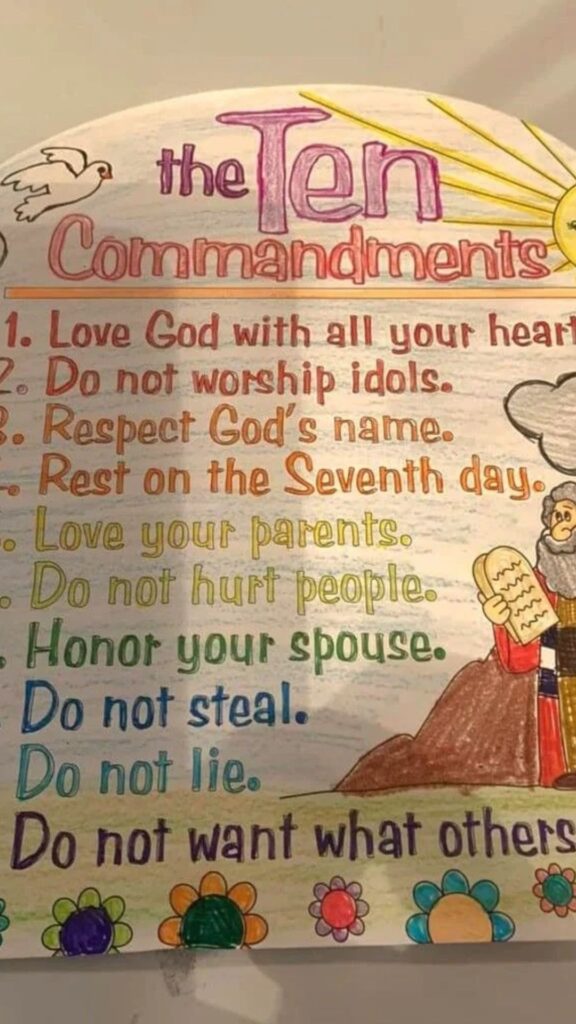
Children are naturally curious. They enjoy touching materials, choosing colors, creating shapes, and showing others what they have made. Combining these interests with Bible teaching creates opportunities for meaningful learning.
Ten Commandments crafts for kids help transform an abstract lesson into something visible and engaging. When children create tablets, decorate commandments, or assemble a Bible-themed poster, they have a practical activity connected to the lesson.
Crafts also encourage conversations. A teacher can ask children why telling the truth matters, how they can show respect to their parents, or what it means to worship God. These discussions help connect biblical teaching with familiar experiences at home and school.
Another benefit is that finished crafts can serve as reminders. A paper tablet displayed beside a child’s bed or a commandments poster placed in a classroom can encourage continued reflection after the lesson ends.
Creative activities can also accommodate different learning preferences. Some children understand concepts through pictures, others through discussion, and others through hands-on experiences. Ten Commandments crafts for kids can combine these approaches in one enjoyable session.
Most importantly, crafts should support the Bible lesson rather than replace it. Explain the relevant commandment, read an appropriate passage, and help children understand its meaning before beginning the activity.
Paper Tablet Craft
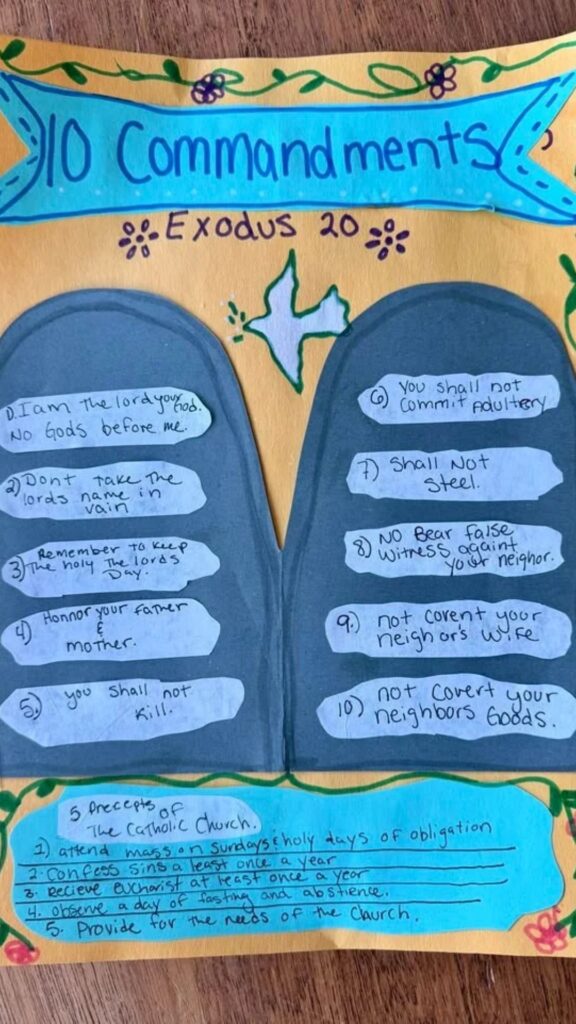
A paper tablet craft is one of the simplest ways to introduce the Ten Commandments to children. It represents the stone tablets associated with Moses and gives children a recognizable symbol for the biblical story.
Materials Needed
You will need gray or white construction paper, pencils, crayons, scissors, glue, and markers. Optional materials include cotton balls, stickers, and decorative paper.
How to Make It
First, help each child draw two tablet shapes on construction paper. Rounded tops make the shapes resemble traditional illustrations of the stone tablets.
Next, let the children cut out their shapes with age-appropriate supervision. Younger children can use pre-cut templates.
Ask them to write a short phrase on each tablet. Examples include loving God, telling the truth, respecting parents, and treating others kindly.
Children who are learning to write can copy words from a prepared example. Those who cannot write independently can draw pictures representing the commandments.
Finally, encourage children to decorate the tablets with simple borders, stones, hearts, or stars.
This project is among the most accessible Ten Commandments crafts for kids because it requires inexpensive materials and can be completed in a short lesson.
What Children Learn
Explain that the tablets remind Christians of God’s commandments given through Moses. Emphasize that the activity is an introduction to the biblical account and that the commandments teach important principles about our relationship with God and other people.
Ten Commandments Paper Chain
A paper chain makes the lesson interactive and gives children a visual way to represent all ten commandments.
Materials Needed
Prepare ten strips of colored paper for each group, markers, glue or tape, and a Bible.
Instructions
Give each child or group ten paper strips. Write one simplified commandment or its main idea on each strip.
For example, the strips might represent worshipping God, avoiding idols, honoring God’s name, remembering the Sabbath, honoring parents, protecting life, honoring marriage, respecting property, telling the truth, and avoiding coveting.
Explain the meaning of each commandment before asking children to decorate the strips.
Connect the first strip into a loop, then pass the next strip through it and secure the ends. Continue until all ten strips form a chain.
Display the finished chains around the classroom or use them during a review activity.
These Ten Commandments crafts for kids work particularly well in group settings because children can cooperate, share supplies, and discuss each commandment together.
Learning Extension
Ask each child to select one link and describe a practical way to apply its lesson during the coming week. Encourage specific examples, such as telling the truth about a mistake or showing respect when a parent gives instructions.
Ten Commandments Coloring Pages
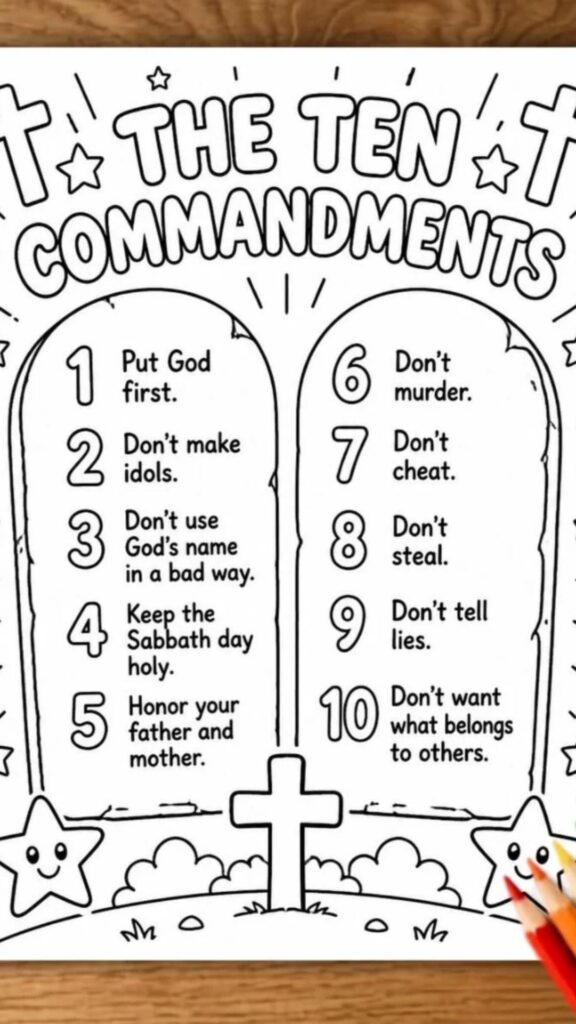
Coloring activities are excellent for preschoolers and younger primary-school children. They provide an easy introduction to biblical concepts without requiring advanced cutting or writing skills.
Materials Needed
Use printed illustrations of Moses, stone tablets, mountains, or individual commandments. Provide crayons, colored pencils, and washable markers.
Activity Instructions
Give each child a coloring sheet connected to the biblical story. Before coloring begins, briefly explain what the picture represents.
Children can color Moses holding the tablets, decorate illustrations of the commandments, or complete a page showing children practicing kindness and honesty.
You can also prepare ten separate pictures, each representing a different commandment.
For instance, a picture of a child helping a parent can introduce honoring parents. A picture of two friends speaking honestly can introduce the importance of telling the truth.
As children color, ask simple questions that encourage discussion without making the activity feel like a test.
Coloring is one of the easiest Ten Commandments crafts for kids to prepare because teachers can organize the materials beforehand and adjust the activity to the available time.
Popsicle Stick Tablet Craft
Popsicle sticks can be transformed into small decorative tablets that children can take home.
Materials Needed
Gather craft sticks, glue, cardboard, gray paint or crayons, markers, and child-safe scissors.
Instructions
Arrange several craft sticks side by side to create a flat surface. An adult can help attach the sticks to a cardboard backing for extra stability.
Trim the edges or add a rounded cardboard top to suggest the shape of stone tablets.
Once the glue has dried, allow children to color the surface gray or decorate it with small patterns.
Write a short Bible phrase on the front, such as “God’s instructions teach us how to live.” Older children may write selected commandments.
Attach a small ribbon or string if you want to hang the finished project.
These Ten Commandments crafts for kids combine building and Bible learning, making them especially appealing to children who enjoy working with their hands.
Teaching Point
Remind children that the tablets represent the biblical account of Moses receiving God’s commandments. Explain that the craft is a model rather than an exact historical reconstruction.
Ten Commandments Mini Book
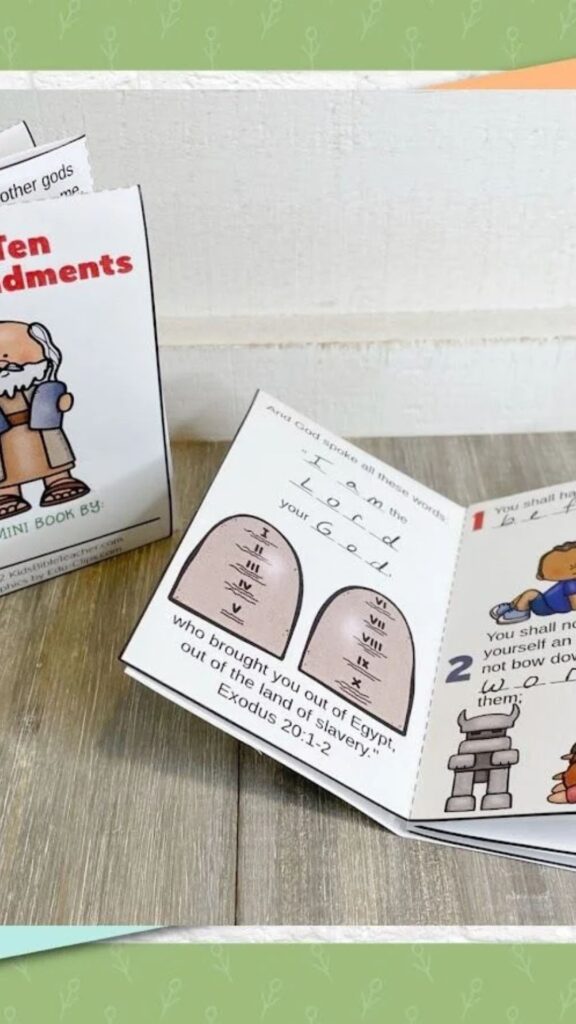
A mini book gives children a compact resource they can revisit after the lesson.
Materials Needed
You will need paper, a stapler or string, crayons, pencils, and markers.
How to Create the Book
Fold several sheets of paper in half to make a small booklet. Secure the pages with a stapler handled by an adult or tie them together with string.
Write the title “The Ten Commandments” on the cover.
Dedicate one page to each commandment. On every page, include a simplified explanation, a small illustration, or a practical example.
For younger children, prepare pages with pictures and short phrases they can color. Older children can write their own examples.
Encourage children to include a final page titled “How I Can Show Love This Week.” They can write or draw two or three ways to practice kindness, honesty, respect, and responsibility.
Among Ten Commandments crafts for kids, this activity is particularly useful for children who enjoy drawing and storytelling.
Follow-Up Activity
Invite children to take their books home and share one page with a family member. At the next Bible lesson, ask volunteers to describe something they learned or practiced.
Commandments Poster

A large poster can become a classroom display and a collaborative learning project.
Materials Needed
Prepare poster board, markers, colored paper, glue, scissors, stickers, and a printed list of the commandments.
Instructions
Write the title “Learning God’s Ten Commandments” across the top of the poster.
Divide the remaining space into ten sections. Assign one commandment to each child or small group.
Children can decorate their sections with pictures, symbols, or short explanations. Hearts may represent love, speech bubbles may represent truthful words, and helping hands may represent respect and responsibility.
Once all ten sections are complete, assemble the poster and discuss how the commandments relate to daily choices.
For younger groups, use simplified phrases while explaining that the wording and numbering of commandments can differ between Christian traditions.
Ten Commandments crafts for kids become especially meaningful when every child contributes something to the finished display.
Handprint Craft About Loving Others
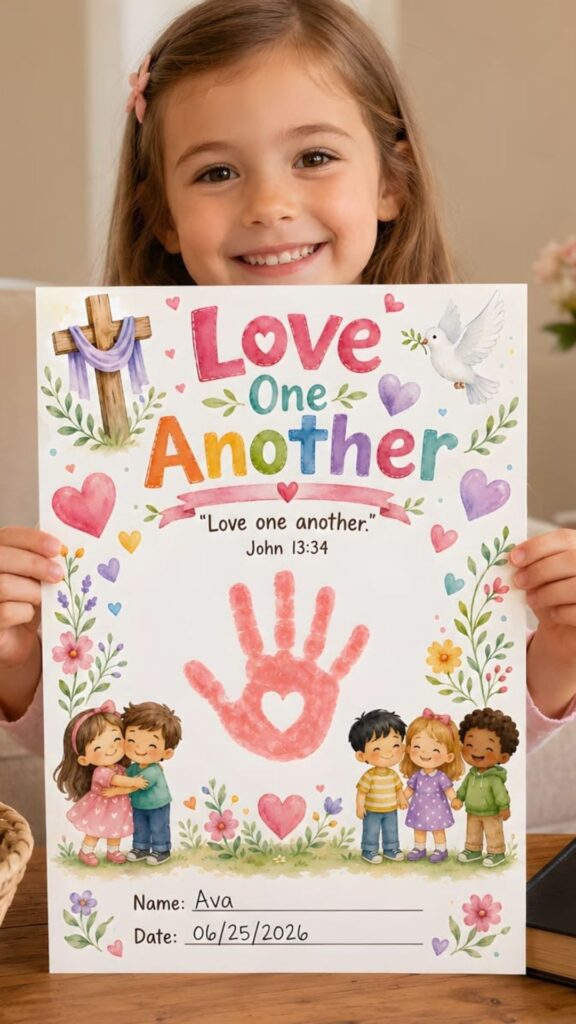
Handprint projects offer a personal way to connect biblical teaching with everyday actions.
Materials Needed
Use paper, washable paint or colored pencils, markers, and a damp cloth for cleanup.
Instructions
Help children trace one hand on paper. They can decorate the outline with colors, patterns, and small pictures.
Inside the palm, write a phrase such as “I can show love through my actions.”
On each finger, children can write or draw one positive action: helping someone, telling the truth, sharing fairly, respecting parents, or speaking kindly.
For younger children, adults can write the words while children choose pictures or colors.
Discuss how loving others connects with several commandments, including honoring parents and respecting the lives, relationships, and property of others.
This activity does not represent all ten commandments individually. Instead, it helps children explore the practical values reflected in the biblical teaching.
It is one of the most adaptable Ten Commandments crafts for kids because it can be completed using materials already available at home or in a classroom.
Read our post on
How To Make Bird Crafts With Kids: Simple Projects Using EveryPday Materials
Ten Commandments Memory Cards
Memory cards combine creativity with a simple review game.
Materials Needed
Prepare index cards or small pieces of cardboard, markers, crayons, and scissors.
Instructions
Create one set of cards containing short descriptions of the commandments and another set containing matching pictures or examples.
For instance, one card might say “Tell the truth,” while its matching card shows a child speaking honestly.
Decorate the cards together and explain each pairing.
Once the cards are ready, place them face down on a table. Children take turns turning over two cards and trying to find a matching pair.
When a match is found, ask the child to explain the lesson in their own words.
Keep the language simple and focus on understanding rather than perfect memorization.
These Ten Commandments crafts for kids are useful when you want an activity that can be reused during future lessons.
Commandments Door Hanger
A door hanger offers children a decorative reminder they can display in their bedrooms.
Materials Needed
You will need sturdy cardboard, pencils, markers, scissors, glue, and decorative supplies.
Instructions
Cut a long rectangle from cardboard and create a hanging hole near the top. Adults should handle difficult cutting tasks.
Write a short message such as “Choose kindness,” “Speak truthfully,” or “Remember God’s instructions.”
Children can decorate the hanger with hearts, stars, borders, and drawings.
On the reverse side, write one commandment or a short explanation of a related biblical principle.
Encourage children to choose a message they want to remember throughout the week.
Because the finished craft is visible every day, it can encourage conversations between children and their families.
When preparing Ten Commandments crafts for kids, remember that decorative projects become more educational when children can explain the message they have chosen.
Moses and the Tablets Story Scene
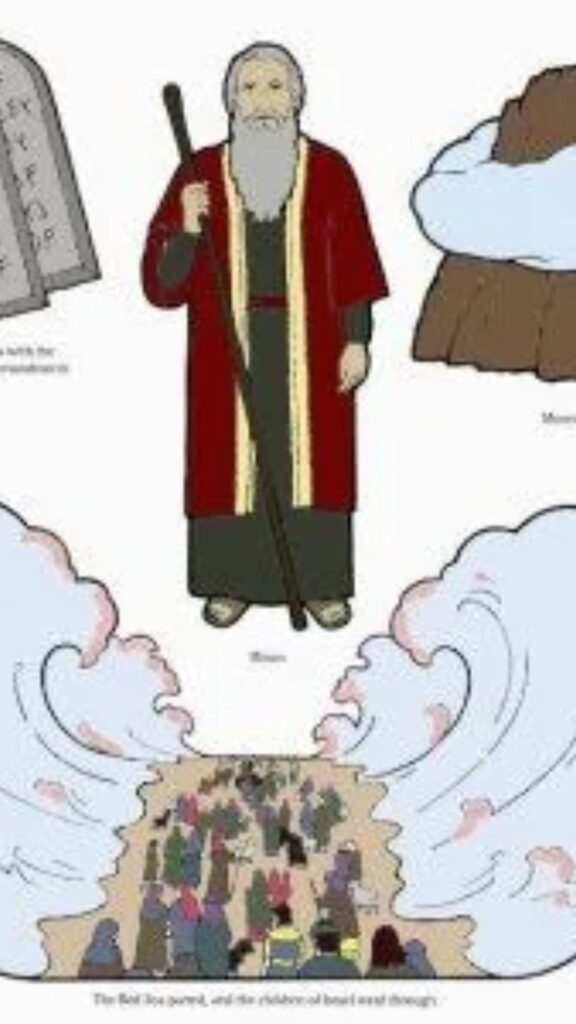
This project combines storytelling, art, and simple construction.
Materials Needed
Gather paper, cardboard, crayons, glue, markers, and child-safe scissors. Optional materials include cotton balls and colored paper.
Instructions
Begin by telling the biblical story of Moses receiving the Ten Commandments. Read an appropriate passage, such as Exodus 20, and explain the setting in language children can understand.
Ask children to create a mountain scene using folded paper or cardboard. They can draw Moses, make two paper tablets, and add clouds, rocks, or other simple details.
For younger children, provide pre-cut figures they can color and attach to the background.
Older children can write a short caption describing what happened in the story.
When everyone has finished, invite children to retell the story using their pictures.
This activity helps children understand the biblical context behind the commandments instead of treating them as a disconnected list of rules.
Among Ten Commandments crafts for kids, storytelling scenes are particularly helpful for children who enjoy imaginative play and visual expression.
Ten Commandments Bookmark
A bookmark is a simple project for children who are learning to read the Bible or enjoy illustrated books.
Materials Needed
Use cardstock, markers, pencils, a ruler, scissors, and optional ribbon.
Instructions
Cut cardstock into long, narrow rectangles.
Write a short phrase on each bookmark, such as “Love God,” “Tell the truth,” or “Show respect.”
Children can decorate their bookmarks with small drawings representing the message.
For an older group, write a Bible reference on the reverse side so children can find the relevant passage later.
You may also invite children to create ten different bookmarks, each representing one commandment, and distribute them among classmates.
Explain that a bookmark is a reminder of the lesson rather than a substitute for reading the Bible.
These Ten Commandments crafts for kids are inexpensive, practical, and easy to prepare for a larger Sunday school group.
How to Choose Crafts for Different Ages
Not every craft is suitable for every age group. Selecting activities according to children’s abilities makes the lesson safer, more enjoyable, and easier to understand.
Preschool Children
Preschoolers usually benefit from large pictures, simple coloring activities, paper tablets, and handprint crafts.
Keep instructions short and demonstrate each step before asking children to begin.
Use pre-cut shapes whenever possible. Children at this age may need help applying glue, holding materials, or understanding abstract ideas.
Focus on a few simple principles, such as loving God, telling the truth, and respecting family members.
Primary-School Children
Primary-school children can often complete paper chains, posters, bookmarks, and memory cards with limited assistance.
Encourage them to read short phrases, work in pairs, and explain their illustrations.
Give them opportunities to connect the commandments with everyday situations, including sharing fairly, admitting mistakes, and respecting other people’s belongings.
Older Children
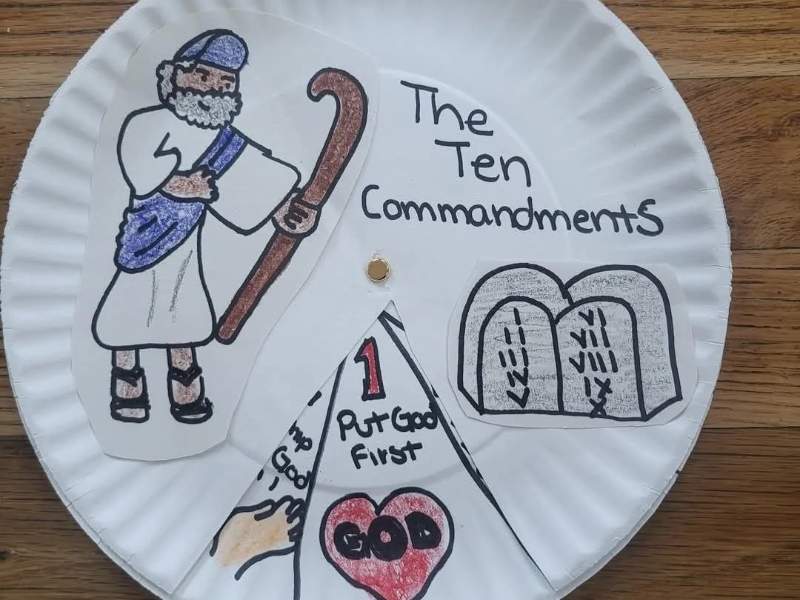
Older children may enjoy mini books, detailed posters, story scenes, and commandment wheels.
Ask them to compare different examples, discuss why the commandments matter, and explain how biblical principles can guide decisions.
Avoid assuming that every child has the same level of Bible knowledge. Provide clear explanations and encourage thoughtful questions.
Choosing age-appropriate Ten Commandments crafts for kids helps make the lesson accessible without making it unnecessarily difficult.
Essential Supplies for Bible Craft Activities
You do not need an expensive craft collection to teach the Ten Commandments creatively.
Basic supplies can support most projects, including construction paper, cardstock, pencils, washable markers, crayons, glue sticks, rulers, and child-safe scissors.
Recycled cardboard, clean paper packaging, and leftover craft materials can also be useful.
Before the lesson, count the materials and prepare individual workspaces. Place shared supplies where children can reach them safely.
For younger groups, cut difficult shapes beforehand and avoid small pieces that could present choking hazards.
Choose washable materials when possible, particularly if the activity involves paint or glue.
If you are organizing Ten Commandments crafts for kids for a large group, prepare sample projects in advance. A finished example helps children understand the instructions and reduces confusion.
Remember that creativity matters more than perfection. A child’s uneven paper tablet or colorful handmade bookmark can be just as meaningful as a carefully finished adult example.
How to Make Bible Crafts More Meaningful
The most effective Bible craft sessions connect the activity with a clear teaching goal.
Start With Scripture
Read the relevant biblical passage before introducing the craft. Exodus 20 contains the Ten Commandments, while Deuteronomy 5 provides another account.
Explain the story in language appropriate for the children’s ages. Avoid giving instructions without explaining why the activity relates to the Bible.
Ask Questions
Invite children to think about the lesson.
You might ask, “Why is telling the truth important?” or “How can you show respect to your parents?”
Give children time to answer. Their responses can reveal what they understand and where further explanation is needed.
Connect the Lesson With Daily Life
Use examples children recognize, such as returning something borrowed, admitting a mistake, respecting family members, and avoiding hurtful behavior.
Explain that applying biblical principles involves making thoughtful choices, not simply completing an artwork.
Encourage Participation
Allow children to choose colors, pictures, and decorative details. Offer assistance without taking control of their projects.
Children often feel more connected to a lesson when they have contributed their own ideas.
Review the Lesson
At the end, ask children to explain one thing they learned.
They might share their favorite commandment, describe a craft step, or identify one action they want to practice during the week.
These simple teaching methods help Ten Commandments crafts for kids become meaningful learning experiences rather than activities designed only to fill time.
Tips for Teaching the Ten Commandments Without Overwhelming Children
The Ten Commandments contain serious religious and moral instructions, so explanations should be accurate, gentle, and age-appropriate.
Avoid presenting the commandments only as frightening punishments or a long list of things children must never do.
Instead, explain their purposes within the biblical story and discuss the importance of loving God, respecting others, and making responsible choices.
Some commandments address worship and honoring God, while others concern family relationships, human life, marriage, property, truthful speech, and desires.
Use examples that help children understand these differences.
It is also important to acknowledge that Christian traditions sometimes number or group the commandments differently. If your church follows a particular teaching tradition, use its preferred wording and explain it consistently.
Do not expect young children to understand every theological detail immediately. Learning can happen gradually through repeated discussion, Bible reading, and practical examples.
The goal of Ten Commandments crafts for kids is to introduce the teaching clearly and encourage children to continue exploring its meaning.
Common Mistakes to Avoid During Craft Sessions
Even a simple activity can become frustrating if it is poorly organized. A few practical adjustments can help.
First, avoid choosing a craft that is too complicated for the available time. A project requiring several drying stages may not work well during a short Sunday school lesson.
Second, do not allow the craft to overshadow the Bible teaching. Children should understand why they are making the project and how it relates to the story.
Third, avoid criticizing children’s artwork. Differences in drawing ability, handwriting, and coordination are normal. Encourage effort and participation instead.
Fourth, prepare materials before the children arrive. Searching for scissors or cutting paper during the lesson can interrupt the discussion.
Fifth, remember that children may ask difficult questions about rules, fairness, or religious beliefs. Respond calmly, acknowledge sincere questions, and explain what you can in age-appropriate language.
Finally, do not insist that every child finish at exactly the same pace. Some children work quickly, while others need additional help.
Thoughtful planning makes Ten Commandments crafts for kids easier to manage and more enjoyable for everyone involved.
A Simple Sunday School Lesson Plan
If you want to organize a complete lesson around these crafts, use the following structure.
Welcome and introduction: 5 minutes
Welcome the children and ask whether they have heard the story of Moses and the Ten Commandments.
Bible reading and explanation: 10 minutes
Read selected verses from Exodus 20. Explain the historical setting and introduce the main ideas.
Craft activity: 15–25 minutes
Choose one project, such as paper tablets, a commandments chain, or a mini book. Demonstrate the steps and provide assistance.
Discussion and review: 5–10 minutes
Ask children to share their crafts and explain the lesson represented by their work.
Closing prayer: 2–5 minutes
End with a suitable prayer asking God to help everyone practice love, honesty, respect, and obedience.
Adjust the schedule according to the children’s ages and the length of your session.
A structured plan helps teachers use Ten Commandments crafts for kids as part of a complete learning experience rather than an isolated activity.
Frequently Asked Questions
What are the easiest Ten Commandments crafts for kids?
Paper tablets, coloring pages, paper chains, bookmarks, and handprint crafts are among the easiest options. They require inexpensive supplies and can be adapted to different ages and abilities.
What age can children start making Ten Commandments crafts?
Preschool children can participate in simple coloring and gluing activities with adult supervision. Older children can complete more detailed projects, such as mini books, posters, and memory cards.
How can I teach the Ten Commandments through crafts?
Begin by reading an appropriate Bible passage, explain the commandment in simple language, and introduce a related craft. During the activity, discuss practical examples and review the lesson afterward.
What supplies do I need for Ten Commandments crafts for kids?
Most projects use paper, cardboard, crayons, markers, glue, and child-safe scissors. Recycled materials can also help reduce costs while providing plenty of creative opportunities.
Conclusion
Teaching children the Ten Commandments does not have to be difficult or boring. With simple materials, thoughtful explanations, and creative activities, you can help children explore important biblical teachings in an enjoyable and memorable way.
From paper tablets and coloring pages to memory cards, story scenes, and handmade bookmarks, there are many Ten Commandments crafts for kids to choose from. Each activity offers a different opportunity to discuss God’s instructions and connect them with daily life.
The best project is not necessarily the most elaborate one. It is the activity that helps children understand the lesson, participate confidently, and remember what they have learned.
Whether you are a parent teaching at home, a Sunday school teacher preparing a class, or a children’s ministry leader planning a special event, start with one simple craft and build from there.
Read the Bible together, invite questions, encourage creativity, and help children identify practical ways to show love and respect.
With consistent teaching and meaningful activities, Ten Commandments crafts for kids can become a valuable part of a child’s Bible-learning journey.