Easy Five Loaves and Two Fish Crafts for Kids to Teach the Bible Story Through Fun, Hands-On Activities
Five loaves and two fish crafts for kids as a way of teaching children about the Bible can be a wonderful experience, especially when lessons include creativity, storytelling, and play. One of the most memorable stories for young learners is the miracle of Jesus feeding five thousand people with five loaves of bread and two fish. This beautiful account teaches children about faith, generosity, gratitude, and God’s ability to do great things with what we have.
However, keeping children interested during Bible lessons can sometimes be challenging. Fortunately, Five Loaves and Two Fish Crafts for Kids provide an enjoyable way to introduce this important story. Through simple materials, colorful designs, and hands-on activities, children can explore the miracle while developing their creativity.
Moreover, these crafts help children remember the lesson long after Sunday school ends. Instead of simply hearing the story, they can create something that represents its message. As a result, learning becomes more personal, meaningful, and fun.
Whether you are a Sunday school teacher, parent, children’s ministry leader, or homeschool educator, these activities can make Bible learning more engaging. Best of all, many projects use inexpensive supplies you probably already have at home.
Paper Plate Bread and Fish Craft
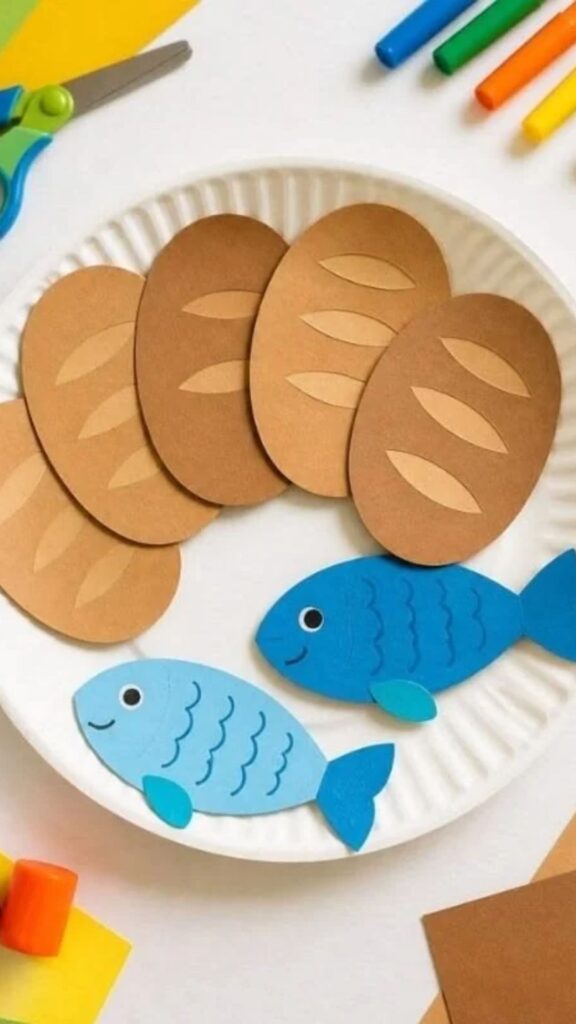
Paper plates are inexpensive, easy to find, and suitable for many children’s activities. Therefore, they are an excellent starting point for Five Loaves and Two Fish Crafts for Kids.
For this project, children create five small loaves and two fish using paper, crayons, and paper plates.
Materials needed:
– One paper plate per child
– Brown and blue construction paper
– Child-safe scissors
– Glue sticks
– Crayons or washable markers
– Five small paper bread shapes
– Two paper fish shapes
How to make it:
First, give each child a paper plate. Next, help them draw a simple basket in the center. Alternatively, you can provide a basket template for younger children.
Then, ask them to cut out five bread shapes from brown paper. Afterward, they can decorate two fish shapes using blue, gray, or silver paper.
Once everything is ready, children should glue the five loaves and two fish inside the basket. Finally, encourage them to write a short message around the edge, such as “Jesus provides” or “Share what you have.”
Through this activity, children practice cutting, arranging, coloring, and gluing. At the same time, they learn about the important objects in the Bible story.
As they work, explain that a small amount of food became enough to feed a large crowd through Jesus’ miracle. In other words, the craft becomes more than an art project. Instead, it becomes a visual reminder of God’s provision.
Furthermore, children can share their finished crafts with their families. Consequently, the lesson can continue at home, where parents can discuss the story with them.
Five Loaves and Two Fish Paper Basket
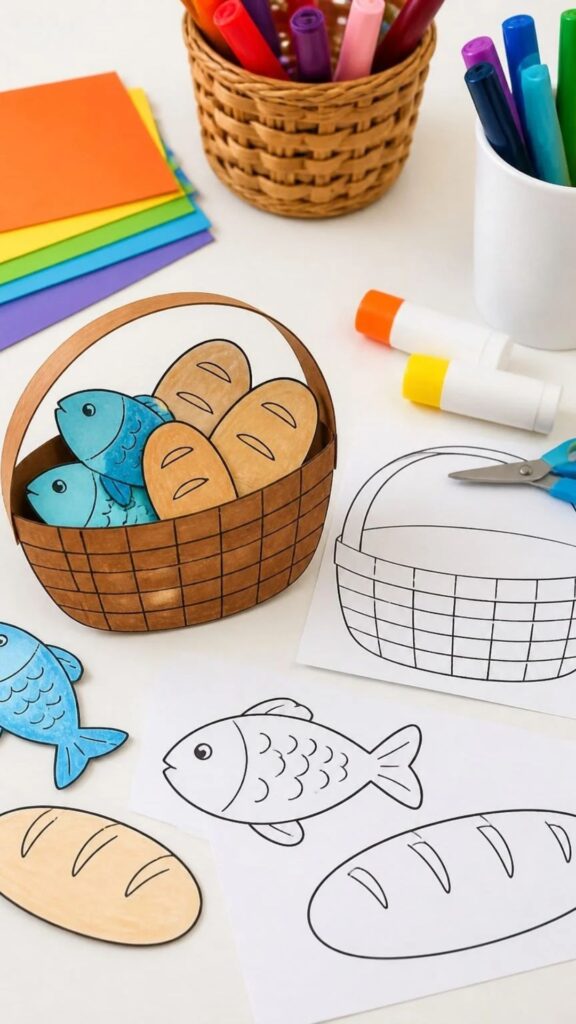
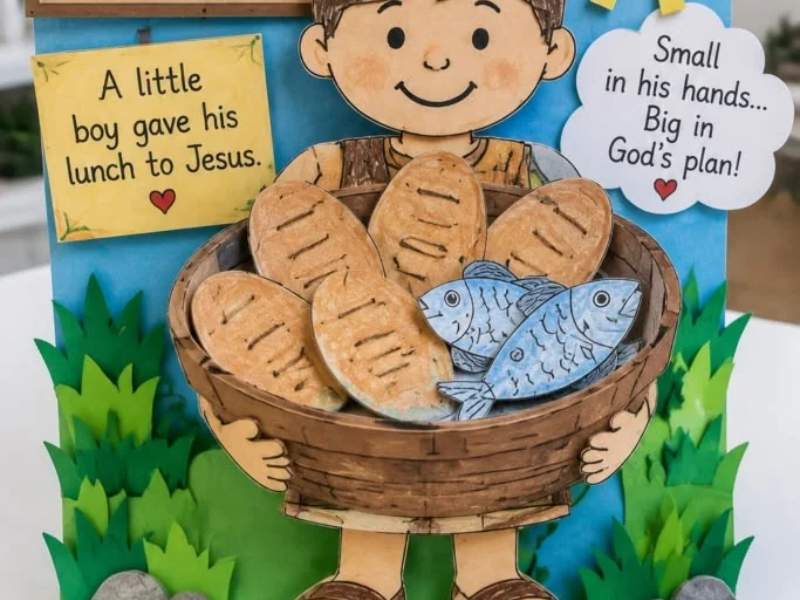
A paper basket is another wonderful option for Five Loaves and Two Fish Crafts for Kids. Unlike a flat picture, this project gives children a three-dimensional basket they can hold and display.
Materials needed:
– Construction paper
– Brown paper strips
– Colored paper
– Glue
– Child-safe scissors
– Markers
– A simple basket template
How to make it:
First, prepare a basket template using sturdy paper. Then, help children fold the sides upward to create a small container.
Next, weave brown paper strips across the front if you want the basket to resemble a traditional woven basket. However, younger children can simply glue the strips in place instead.
Afterward, cut out five small loaves and two fish. Encourage children to decorate each piece before placing them inside the basket.
Finally, attach a small card with the words “Five loaves, two fish, one amazing miracle.”
As children complete the project, they learn how separate pieces can come together to create something meaningful. In addition, the activity encourages patience, concentration, and creativity.
Teachers can also use the baskets during storytelling. For example, children can hold up their creations whenever the teacher mentions the bread or fish.
As a result, the lesson becomes interactive rather than passive. More importantly, children have a physical reminder of the story they have learned.
Handprint Fish Craft
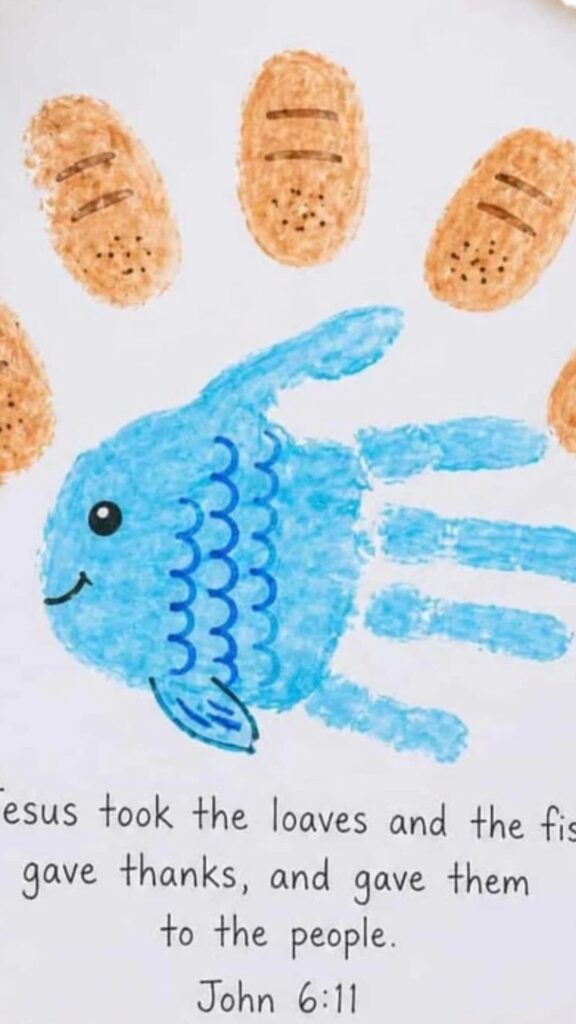
Handprint crafts are especially popular with preschoolers because they create a personal connection between children and their artwork. Therefore, this project is ideal for younger learners exploring Five Loaves and Two Fish Crafts for Kids.
Materials needed:
– Blue, green, or silver construction paper
– Washable paint or crayons
– Child-safe scissors
– Glue
– Googly eyes, if available
– Markers
How to make it:
First, help each child trace their hand onto colored paper. Next, cut out the handprint carefully.
Then, turn the handprint sideways so the fingers resemble a fish’s tail. Afterward, add an eye, draw scales, and decorate the body with colorful patterns.
Once the fish is complete, create five small bread shapes from brown paper. Finally, arrange everything on a larger sheet of paper to represent the miracle.
For a classroom display, write “Little hands can share great kindness” above the artwork.
Meanwhile, discuss how children can share their toys, snacks, time, and kindness with others. For instance, they might help a classmate, share crayons, or offer food to someone who needs it.
Although this craft is simple, it introduces an important lesson: generosity does not depend on having expensive gifts. Instead, it begins with a willing heart.
Furthermore, the handprint makes the artwork special because it reflects each child’s own creativity. As a result, children can feel proud of their work while learning about kindness and sharing.
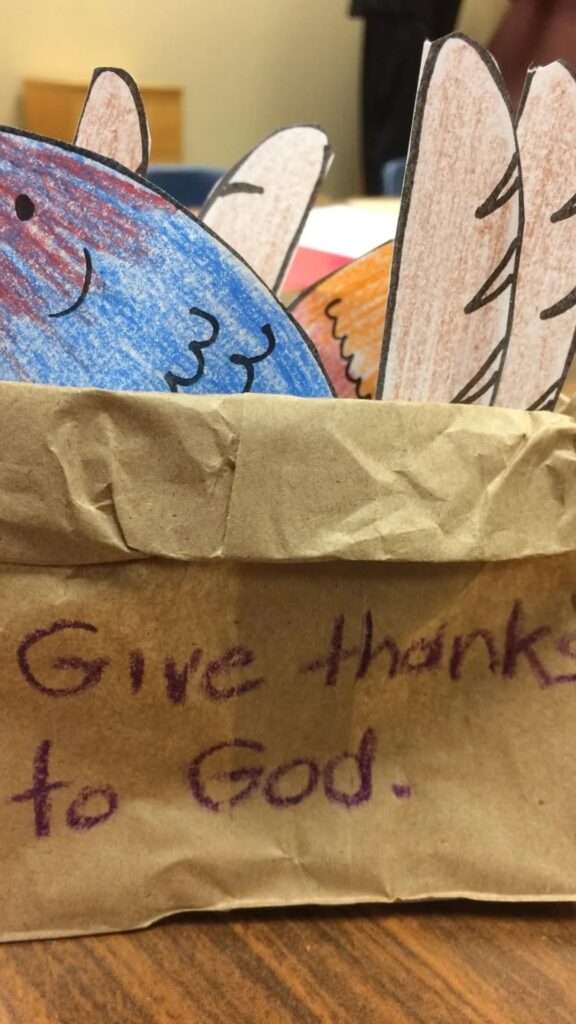
- Paper Bag Bread Basket
Paper bags can become charming baskets for Five Loaves and Two Fish Crafts for Kids. Moreover, they are easy to personalize, making them useful for both classroom activities and family Bible lessons.
Materials needed:
-Small paper bags
– Brown construction paper
– Blue construction paper
– Glue
– Markers
– Ribbon or paper strips
How to make it:
First, fold the top of a paper bag outward to create a neat rim. If necessary, trim the bag to a comfortable height.
Next, cut a long strip of paper and attach it to opposite sides to form a handle. Alternatively, use ribbon for a decorative finish.
Then, create five bread shapes and two fish. Children can draw faces, scales, and bread crusts to make the pieces more interesting.
Afterward, place the shapes inside the basket. For an extra touch, children can decorate the outside with hearts, stars, or pictures showing people sharing food.
Finally, let each child explain what their basket represents.
This craft also provides an opportunity to discuss helping others. For instance, ask children what they could share with someone who has forgotten a snack or needs school supplies.
Similarly, encourage them to think about ways they can help friends and family members. Consequently, they begin connecting the Bible story with everyday decisions.
In this way, a simple paper bag becomes both a creative project and a practical teaching tool.
Five Loaves and Two Fish Coloring Craft
Sometimes, the simplest activities are the most effective. In particular, coloring projects are useful when working with large groups, limited supplies, or children who need extra assistance.
Therefore, a printable or handmade coloring page is a practical choice among Five Loaves and Two Fish Crafts for Kids.
Materials needed:
– White paper
– Pencils
– Crayons
– Markers
– Printed or hand-drawn outlines
How to make it:
First, draw a large basket in the middle of a sheet of paper. Then, sketch five loaves and two fish inside it.
Next, add a simple background showing a crowd listening to Jesus. However, younger children may prefer a page containing only the basket, bread, and fish.
Afterward, let children color the picture however they like. Encourage them to count the loaves and fish before finishing.
Once they have completed their artwork, ask them to explain what their picture represents. Additionally, invite them to name their favorite part of the story.
This activity strengthens number recognition, observation, and storytelling skills. At the same time, children can practice describing colors, shapes, and details.
For an extra learning opportunity, ask older children to write one sentence about the miracle beneath their pictures. Alternatively, younger learners can dictate their sentences to an adult.
That way, the craft combines art, counting, and early writing skills. Furthermore, it gives children different ways to participate according to their abilities.
Recycled Cardboard Fish and Bread
Crafting with recycled materials teaches children that useful things can come from items that might otherwise be discarded. Moreover, it encourages creativity without requiring expensive supplies.
For this reason, recycled cardboard projects belong among the most practical Five Loaves and Two Fish Crafts for Kids.
Materials needed:
– Clean cardboard
– Brown and blue paint
– Paintbrushes
– Child-safe scissors
– Glue
– Markers
– Paper scraps
How to make it:
First, draw five bread shapes and two fish on cardboard. For younger children, an adult should cut out the shapes to make the process safer and easier.
Next, paint the bread brown and the fish blue, silver, or another preferred color. Meanwhile, place the pieces on a protected surface and allow the paint to dry completely.
Afterward, use paper scraps to add fins, scales, eyes, and bread crusts.
Then, arrange the pieces inside a cardboard basket or glue them onto a larger background. If desired, children can add a title describing the miracle.
Finally, display the finished artwork in a classroom or reading corner.
This activity helps children understand reuse while reinforcing the Bible lesson. In addition, it demonstrates that creativity does not always require brand-new materials.
Teachers can also explain that caring for God’s creation includes avoiding unnecessary waste and using available materials thoughtfully. As a result, the project connects generosity, creativity, and environmental responsibility in an age-appropriate way.
This post will be helpful to Sunday school children
Daniel and the Lion’s Den Craft: An Easy Bible Activity That Helps Kids Remember the Story
Five Loaves and Two Fish Story Wheel
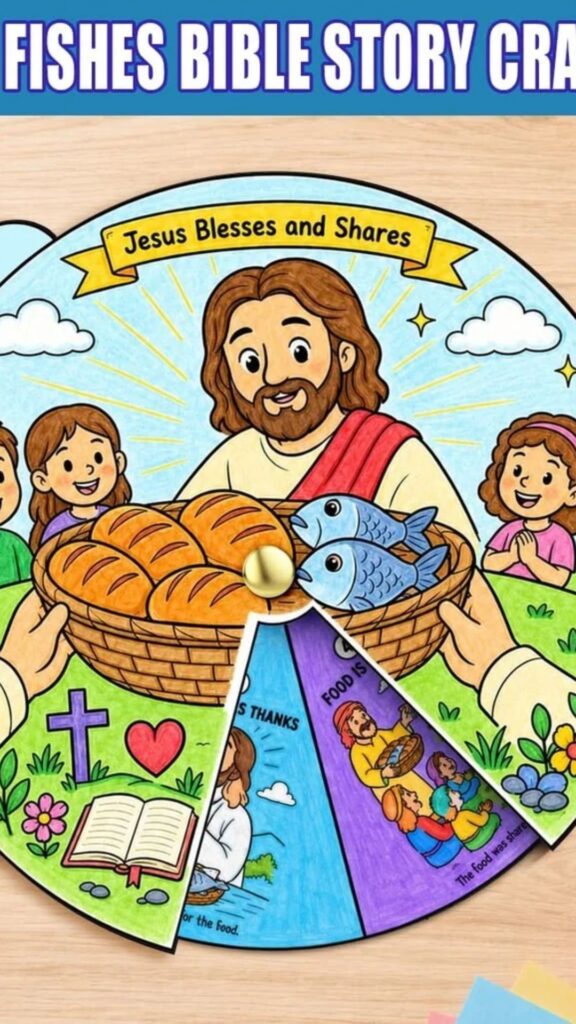
A story wheel helps children remember events in the correct order. Consequently, it is an excellent choice for teachers who want to combine crafts with Bible storytelling.
Among Five Loaves and Two Fish Crafts for Kids, this activity is particularly useful for older preschoolers and primary school children.
Materials needed:
– Two paper circles
– Colored pencils
– Cardboard
– A paper fastener
– Glue
– Scissors
– Markers
How to make it:
First, divide one circle into several sections. Each section should represent a moment in the Bible story.
For example, children can draw Jesus teaching the crowd, the disciples noticing the food shortage, the five loaves and two fish, the distribution of food, and the remaining baskets.
Next, decorate each section with pictures and short captions. Encourage children to use simple words so they can easily understand each scene.
Then, place the second circle over the first and attach both using a paper fastener. Carefully cut a small viewing window in the top circle so children can reveal each scene by rotating the wheel.
Finally, invite children to turn the wheel and retell the story.
This project encourages sequencing, memory, and speaking skills. Furthermore, it helps children understand that Bible stories contain connected events rather than isolated details.
As they turn the wheel, they can explain what happened first, what followed, and how the story ended. In this way, a simple craft becomes an engaging storytelling tool.
Making the Bible Lesson More Meaningful
Although crafts are enjoyable, their greatest value comes from the conversations they encourage. Therefore, teachers and parents should connect each activity to the message of the miracle.
In the biblical account found in John 6:1–14, Jesus feeds a large crowd using five barley loaves and two fish. Similarly, the other Gospel accounts describe this miracle in Matthew 14:13–21, Mark 6:30–44, and Luke 9:10–17.
First, read an age-appropriate version of the story aloud. Then, show children the craft materials and explain how they relate to the events.
Next, ask simple questions. For example, who needed food? What did the boy have? What did Jesus do? How did the disciples help distribute the food?
Afterward, encourage children to describe their favorite part of the story. Additionally, ask them what surprised them most about the miracle.
Furthermore, explain that the miracle demonstrates Jesus’ compassion and power. It also reminds Christians to trust God and respond generously to the needs of others.
However, avoid suggesting that every small gift will automatically produce a miraculous result. Instead, help children understand that sharing is valuable because it expresses love, compassion, and willingness to help.
For example, a child might share a pencil with a classmate or help a friend who is struggling with a task. Although these actions may seem small, they demonstrate care for others.
Consequently, children begin to understand that the story’s message can influence their everyday behavior. Ultimately, the purpose of the lesson is to encourage both faith and kindness.
Helpful Tips for Parents and Sunday School Teachers
Preparing Five Loaves and Two Fish Crafts for Kids does not need to be complicated. With a little planning, you can create an enjoyable learning experience for children of different ages.
First, choose activities that match children’s abilities. Preschoolers generally benefit from larger shapes, simple coloring tasks, and adult assistance. In contrast, older children may enjoy weaving, assembling baskets, and creating story wheels.
Next, prepare materials before the lesson begins. This saves time and allows children to spend more time creating and learning.
Additionally, use child-safe scissors, washable paint, and non-toxic glue. Adults should handle sharp tools and supervise younger children throughout the activity.
Meanwhile, encourage creativity rather than demanding identical results. Every child should feel proud of their work, even when their fish or bread looks different from the example.
Another useful tip is to ask open-ended questions. Instead of asking only whether a craft looks correct, ask children what they learned while making it.
For example, you might ask, “What would you share with someone who needed help?” This question encourages children to think about generosity in practical terms.
Furthermore, allow children to work at their own pace. Some may finish quickly, while others may need additional guidance. Therefore, prepare optional coloring or decorating activities for children who finish early.
Finally, display their creations where family members can see them. This encourages children to explain the Bible story at home and reinforces the lesson beyond the classroom.
As a result, the craft becomes part of a wider learning experience involving teachers, parents, and children.
Frequently Asked Questions (FAQs)
- What are the best Five Loaves and Two Fish Crafts for Kids?
Some of the best Five Loaves and Two Fish Crafts for Kids include paper plate baskets, handprint fish, recycled cardboard crafts, paper bag baskets, coloring pages, and Bible story wheels. These activities help children understand the miracle while developing creativity and practical skills.
- What Bible story teaches children about five loaves and two fish?
The story describes Jesus feeding five thousand people with five loaves of bread and two fish. It appears in Matthew 14:13–21, Mark 6:30–44, Luke 9:10–17, and John 6:1–14.
- What lessons can children learn from the five loaves and two fish miracle?
Children can learn about faith, generosity, gratitude, compassion, and sharing. Furthermore, the story reminds them that even small gifts can make a meaningful difference when offered with a willing heart.
- What materials are needed for Five Loaves and Two Fish Crafts for Kids?
Most projects require simple materials, such as construction paper, paper plates, cardboard, crayons, glue, child-safe scissors, and markers. Additionally, recycled materials can help make these activities affordable and environmentally friendly.
- How can parents and Sunday school teachers make these Bible crafts more meaningful?
Parents and teachers can read the Bible story before starting each craft. Then, they can ask questions about the miracle and encourage children to share what they have learned. Finally, connecting the lesson to everyday acts of kindness helps children put the message into practice.
Conclusion
Teaching children about Jesus feeding the five thousand becomes more memorable when Bible storytelling includes practical activities. From paper plate baskets and handprint fish to recycled cardboard creations and story wheels, these projects offer many opportunities for learning, creativity, and conversation.
Most importantly, Five Loaves and Two Fish Crafts for Kids help children explore the miracle while discovering meaningful lessons about generosity, compassion, gratitude, and faith.
Whether you are teaching a Sunday school class or planning a family Bible activity, you do not need expensive supplies or complicated instructions. Instead, use simple materials, encourage questions, and give children time to express themselves.
Furthermore, remember that children learn in different ways. While some enjoy drawing and coloring, others prefer building, cutting, or telling stories. By offering several activities, you can make the lesson enjoyable and accessible to more children.
Ultimately, the goal is not to create perfect artwork. Rather, it is to help children understand the story, remember its message, and practice kindness in their everyday lives.
Through these enjoyable activities, even a simple piece of paper can become a reminder that sharing what we have and caring for others are valuable expressions of love. In the end, the most meaningful result is not the finished craft but the important lesson children carry with them.