
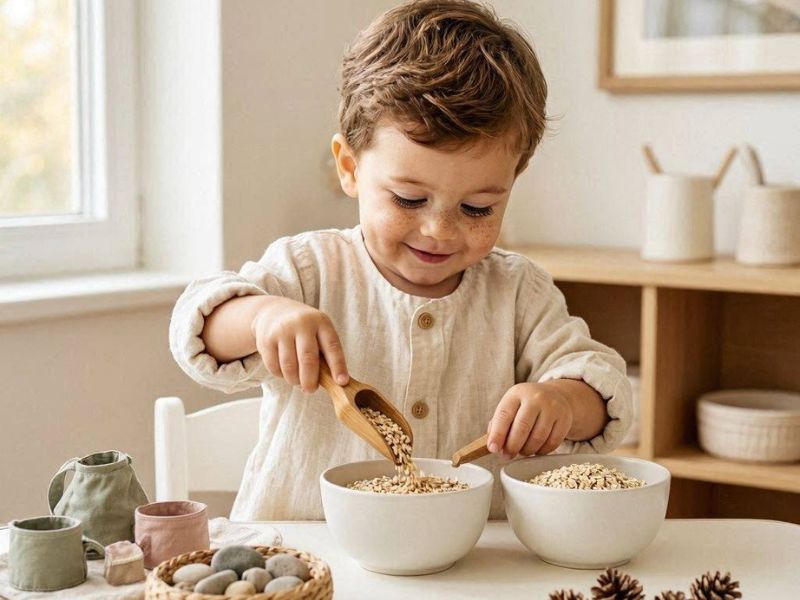
Short on time or supplies? Try sensory activities for nursery children that encourage early learning with everyday items you already have.
Young children learn best when they can explore the world with their hands, eyes, ears, and other senses.
Pouring, scooping, sorting, squeezing, listening, and feeling different textures all help them make sense of new experiences while building important skills for everyday learning.
The encouraging part is that meaningful sensory activities for nursery children don’t require expensive toys or a classroom full of specialist equipment.
Many of the best learning opportunities begin with simple household items, a little curiosity, and time to explore at a child’s own pace.
In this guide, you’ll discover practical sensory activities that use everyday materials to support early learning, along with tips for choosing safe supplies, encouraging exploration, and helping nursery children develop skills through play.
Whether you’re a parent, caregiver, or nursery teacher, these ideas are designed to be easy to set up, engaging, and adaptable to different learning environments.
Encourage outdoor exploration with Garden Crafts for Preschool: Fun and Easy Nature Projects for Kids, where children learn through hands-on activities using flowers, leaves, and other natural treasures.
How to Choose Everyday Items That Encourage Learning Instead of Frustration
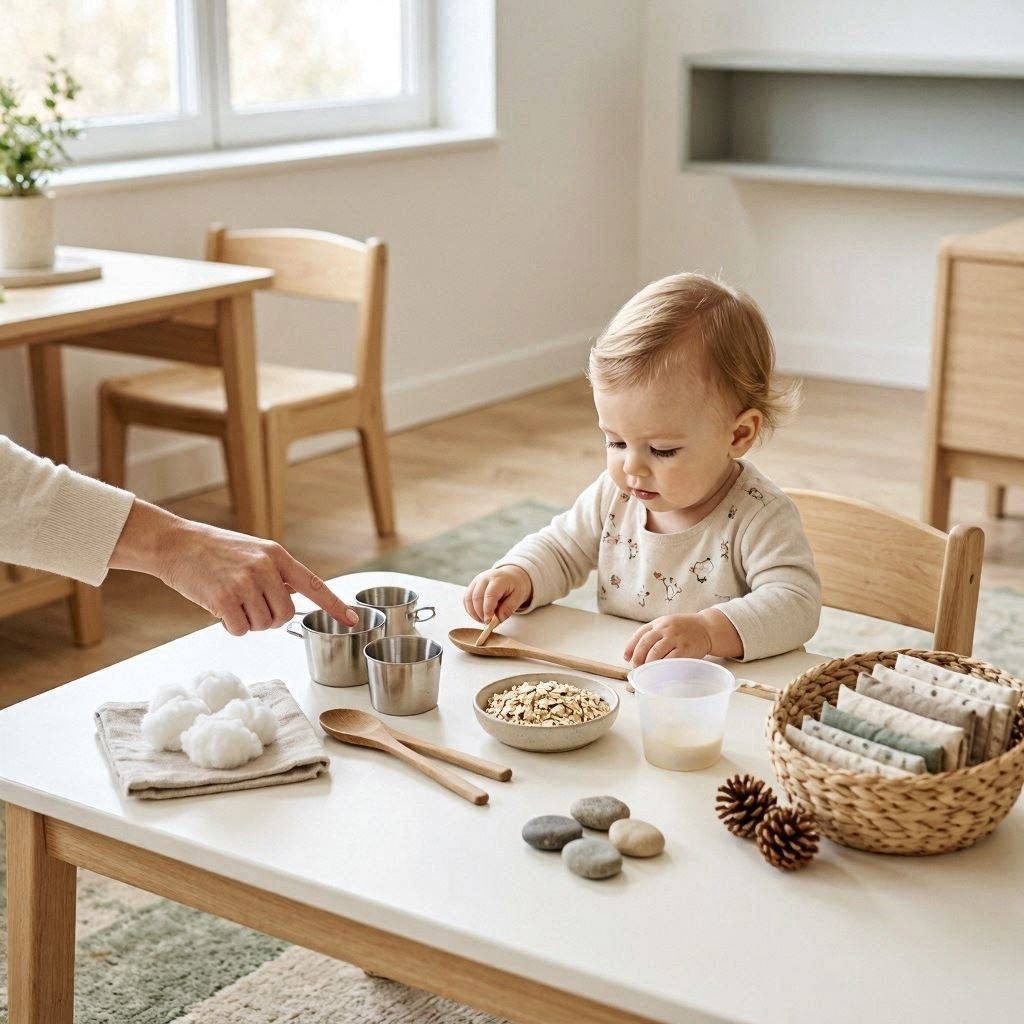
Not every household item is suitable for sensory play. The best materials are those that invite children to explore, experiment, and discover without becoming overwhelmed or discouraged.
Choosing simple, safe, and age-appropriate items creates a more enjoyable learning experience and helps nursery children stay focused on exploring rather than struggling with the activity.
✅ Choose Items That Are Easy to Hold
Small hands are still developing strength and coordination, so look for objects that are lightweight and easy to grasp. Measuring cups, large pom-poms, wooden spoons, fabric scraps, and chunky blocks are often easier for nursery children to handle than heavy or awkward objects.
✅ Offer a Variety of Textures
Children learn a great deal by comparing how things feel. Soft fabric, smooth stones, corrugated cardboard, cotton balls, sponges, and dry leaves all provide different sensory experiences that encourage observation and descriptive language.
✅ Use Safe Materials
Select items that are clean, non-toxic, and appropriate for your child’s age. Avoid anything with sharp edges, loose parts that could be a choking hazard, or materials that break easily. Adult supervision is especially important when activities involve water or small objects.
✅ Look for Open-Ended Materials
The best sensory materials don’t have just one purpose. Rice can be scooped, poured, sorted, or hidden with objects to discover. Cardboard tubes can become tunnels, shakers, or sorting tools. Open-ended materials encourage creativity because children can explore them in many different ways.
Keep It Simple
Too many materials at once can be distracting. Offering just a few carefully chosen items allows nursery children to concentrate, make discoveries, and stay engaged without feeling overwhelmed.
Choosing everyday items with these qualities helps create sensory experiences that are enjoyable, meaningful, and supportive of early learning, while making the most of materials you already have at home or in the classroom.
Keep kids happily engaged outside with Outdoor Crafts for Kids: Fun and Easy Summer DIY Ideas, featuring simple projects that combine creativity, fresh air, and active play.
Sensory Activities for Nursery Children Using Everyday Items
1. Scooping and Pouring Station
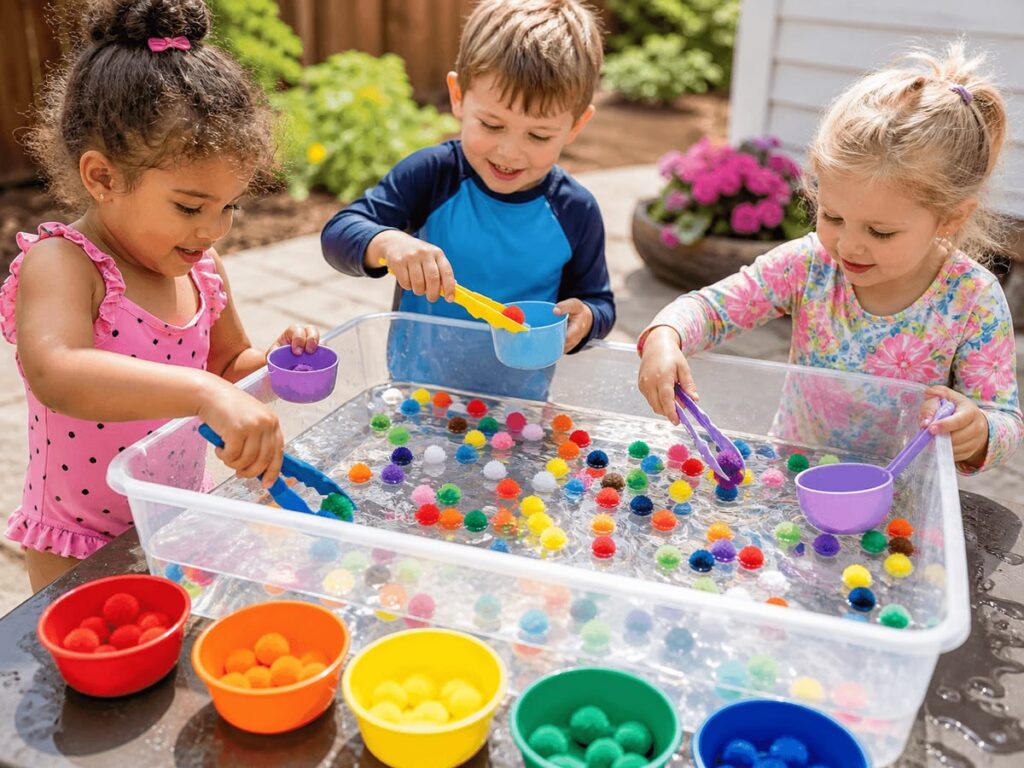
Scooping and pouring may look like simple play, but it helps nursery children develop hand control, coordination, concentration, and an understanding of basic concepts such as full, empty, more, and less.
Because children can repeat the movements in different ways, the activity encourages exploration without the pressure of getting a “right” answer.
Learning Objective
Help children strengthen hand-eye coordination while introducing early maths vocabulary and encouraging independent exploration.
Materials
- Dry rice, oats, dried beans (for older nursery children), or large pasta
- Two small bowls or containers
- Measuring cups, scoops, or large spoons
- A tray or shallow storage container to catch spills
Setup Time
5 minutes
Supervision Level
Close adult supervision. Avoid using small materials with children who still mouth objects. Choose age-appropriate fillers and supervise throughout the activity.
How to Do It
Fill one container with the chosen sensory material and leave the second container empty. Show the child how to scoop, pour, and transfer the contents from one bowl to the other. Encourage them to experiment with different scoops or spoons and allow plenty of time to repeat the process at their own pace.
As they play, introduce simple words and questions such as:
- “Which bowl is full?”
- “Can you fill the small cup?”
- “What happens when you pour slowly?”
- “Which scoop holds more?”
These conversations naturally build language and early maths understanding while keeping the activity enjoyable.
Skills Developed
- Fine motor control
- Hand-eye coordination
- Early maths concepts (full, empty, more, less)
- Concentration
- Language development through conversation
2. Texture Discovery Bag
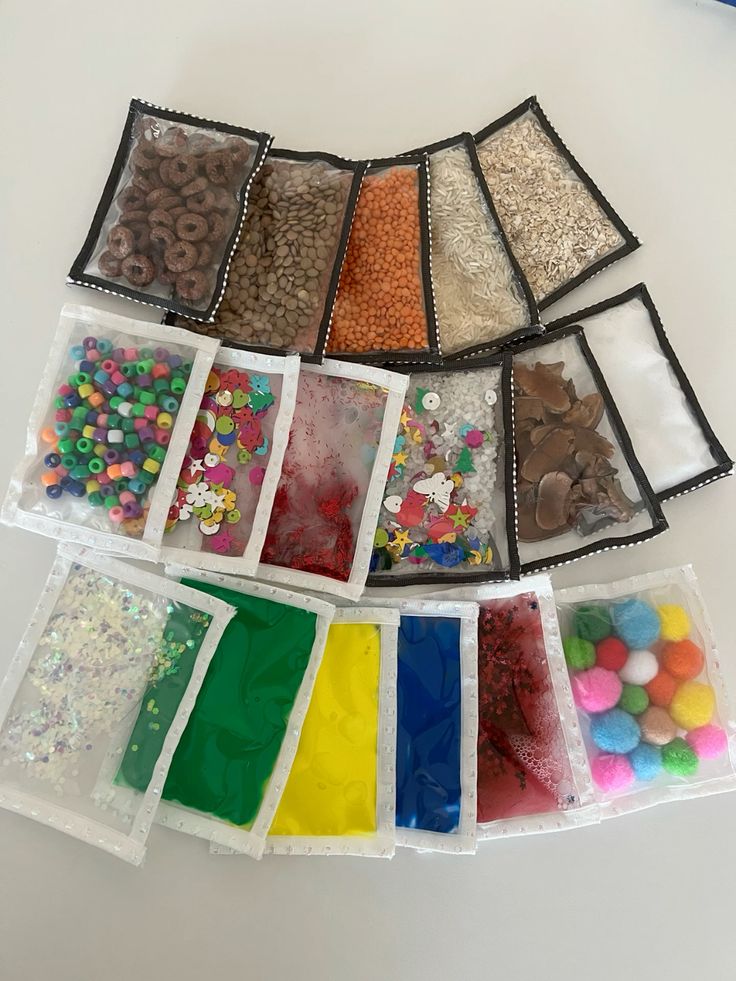
One of the easiest sensory activities for nursery children is a texture discovery bag.
Feeling and comparing different materials encourages children to explore with their sense of touch while building the vocabulary they need to describe what they experience. It also introduces the idea that objects can be grouped by their characteristics.
Learning Objective
Help children identify, compare, and describe different textures while strengthening observation and language skills.
Materials
- A small fabric bag or pillowcase
- Cotton balls
- Sponge pieces
- Large smooth stones
- Pinecones
- Fabric scraps with different textures
Setup Time
5 minutes
Supervision Level
Close adult supervision, especially when using natural materials. Check that all items are clean, large enough to avoid choking hazards, and free from sharp edges.
How to Do It
Place the materials inside the bag without letting the child see them. Invite them to reach inside, feel one object, and describe how it feels before taking it out. Use simple descriptive words such as soft, rough, smooth, bumpy, or fluffy, then encourage the child to compare it with the next object.
Ask open-ended questions like:
- “Which one feels the softest?”
- “Can you find something rough?”
- “Which two objects feel similar?”
These simple conversations help expand vocabulary while encouraging careful observation.
Skills Developed
- Sensory awareness
- Descriptive language
- Vocabulary development
- Observation skills
- Comparing and classifying
3. Nature Sorting Basket
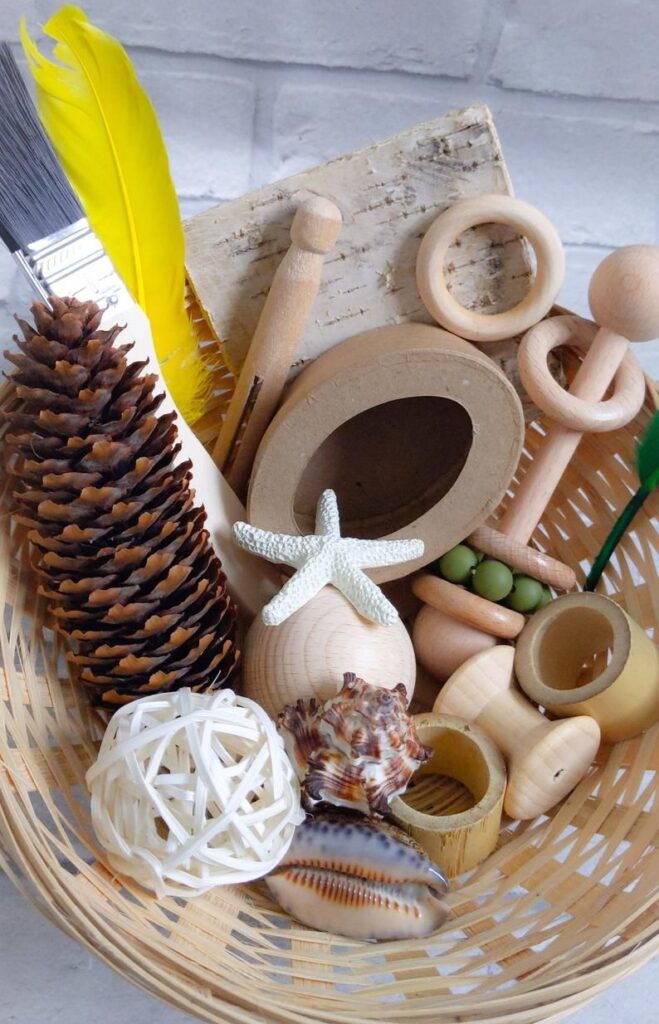
Photo credit: @ Jozefina Gocman
Using leaves, stones, pinecones, seed pods, and sticks turns an ordinary walk into one of the most meaningful sensory activities for nursery children.
Exploring natural materials helps children notice differences in colour, size, texture, and shape while encouraging curiosity about the world around them.
Learning Objective
Develop early observation, sorting, and critical thinking skills by exploring natural objects with different characteristics.
Materials
- A small basket or tray
- Large leaves
- Pinecones
- Smooth stones
- Small sticks
- Seed pods or other safe natural treasures collected outdoors
Setup Time
10 minutes (including collecting materials)
Supervision Level
Adult supervision is recommended. Inspect all natural items to make sure they are clean, safe to handle, and free from sharp points or mould.
How to Do It
Spread the collected items on a tray and invite the child to sort them into groups. They might organise them by texture, size, colour, or type. There isn’t one correct answer, so allow the child to explain their thinking as they create each group.
Support learning by asking questions such as:
- “Which items feel smooth?”
- “Can you find the biggest leaf?”
- “What makes these two objects different?”
- “Which group has the most items?”
These conversations encourage children to observe closely, explain their ideas, and build confidence in making simple comparisons.
Skills Developed
- Sorting and classifying
- Early maths concepts
- Observation skills
- Critical thinking
- Language and communication
4. Sound Matching Containers
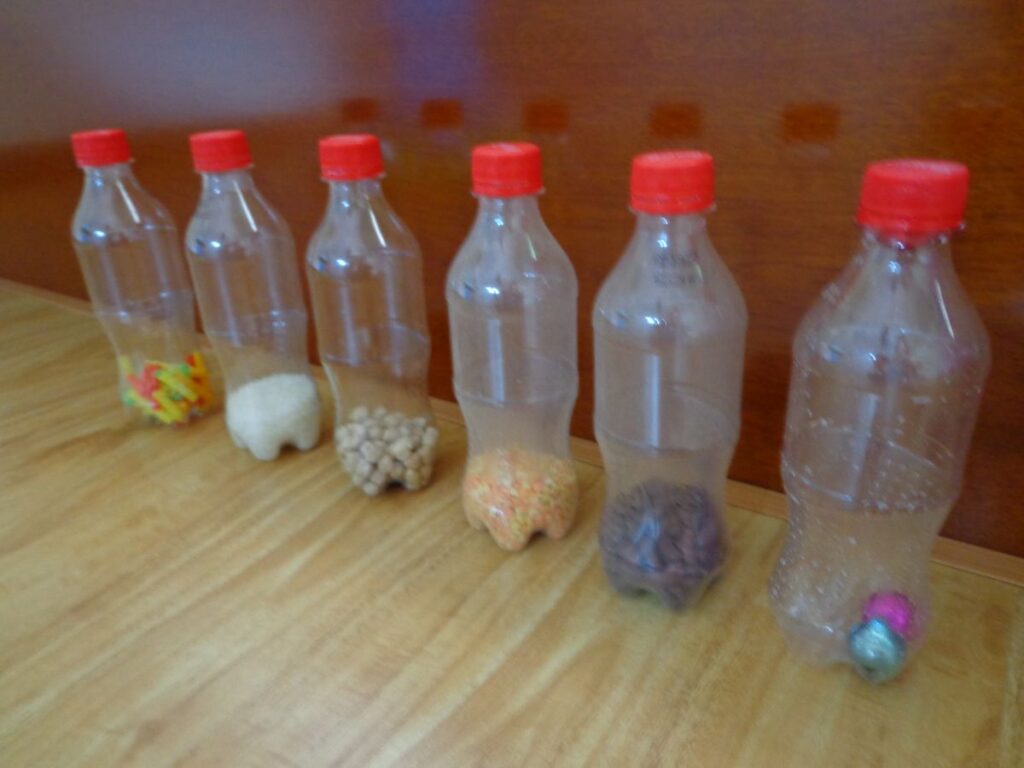
Photo credit: @ Montessori Mama in Saigon
Listening carefully is an important part of early learning. This activity helps nursery children recognise and compare sounds while encouraging concentration, memory, and careful observation.
It also introduces the idea that different materials produce different sounds.
Learning Objective
Strengthen listening skills by identifying and matching sounds made by different everyday materials.
Materials
- 6–8 small opaque containers with secure lids
- Rice
- Dried pasta
- Buttons
- Small pebbles
- Cotton balls
- Lentils or dried beans (for adult preparation only)
Setup Time
10 minutes
Supervision Level
Close adult supervision. Ensure all containers are tightly sealed and check them regularly to prevent small items from coming loose.
How to Do It
Fill pairs of containers with the same material so they make matching sounds. Shake one container and invite the child to find the container that sounds the same. Encourage them to listen carefully before making their choice.
Ask questions such as:
- “Which one sounds louder?”
- “Do these two sound the same?”
- “Why do you think this one makes a softer sound?”
There is no need to rush. Giving children time to listen and compare helps strengthen their attention and confidence.
Skills Developed
- Listening and auditory discrimination
- Memory
- Concentration
- Comparing and matching
- Problem-solving
5. Ice Exploration Tray
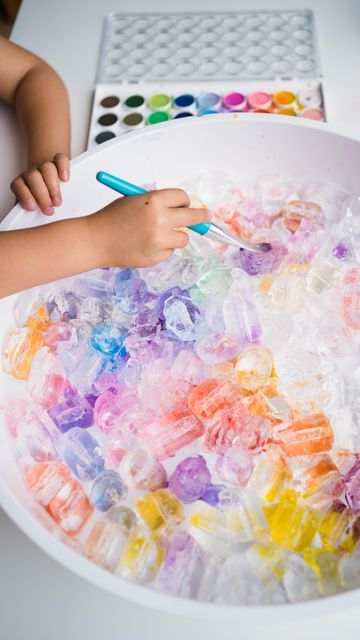
Photo credit: @ Juanita L
Ice offers a simple way to introduce nursery children to early science through hands-on discovery. As they touch, watch, and experiment, they begin to notice how temperature affects different materials and how ice changes as it warms.
Learning Objective
Encourage curiosity by exploring changes in temperature, texture, and the simple process of melting.
Materials
- Ice cubes
- A shallow tray or bowl
- Plastic cups or measuring spoons
- Warm and cold water in separate containers
- Food colouring (optional)
Setup Time
5 minutes
Supervision Level
Adult supervision is required, especially when water is involved. Wipe up spills promptly to reduce the risk of slipping.
How to Do It
Place several ice cubes on a tray and let the child touch, hold, and observe them. Offer warm and cold water and encourage them to pour each over the ice to see what happens. Allow plenty of time for questions, predictions, and observation.
Support learning with questions like:
- “How does the ice feel?”
- “What happens when warm water touches it?”
- “Which melts the ice faster?”
- “What do you notice as the ice gets smaller?”
Simple conversations like these encourage children to observe changes, make predictions, and build confidence in exploring the world around them.
Skills Developed
- Scientific observation
- Cause-and-effect thinking
- Sensory awareness
- Language development
- Curiosity and problem-solving.
Make the most of warm afternoons with Easy Summer Crafts for Toddlers That Keep Little Hands Busy All Day, packed with age-appropriate activities that are easy to set up and fun to repeat.
6. Treasure Rescue Activity
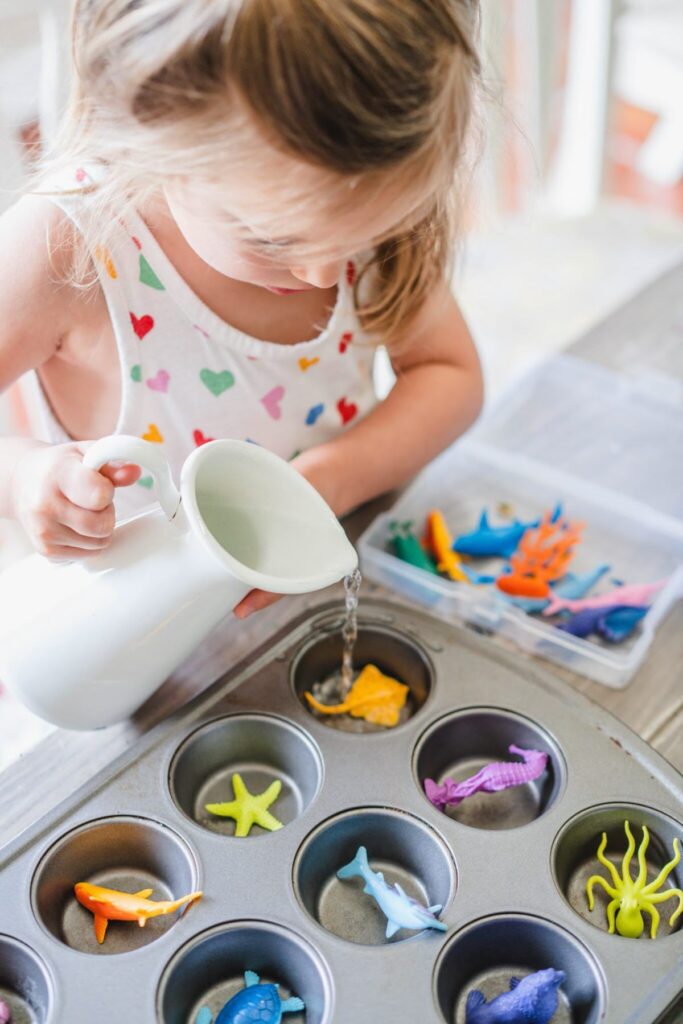
Photo credit: @ Rooted Childhood
Among the most engaging sensory activities for nursery children, a treasure rescue activity encourages children to explore, solve simple problems, and strengthen the small muscles in their hands.
Instead of simply finding hidden objects, children learn to observe, investigate, and think about different ways to retrieve them.
Learning Objective
Develop fine motor control, problem-solving skills, and concentration by encouraging children to safely rescue hidden objects.
Materials
- A shallow container or tray
- Dry rice, oats, or shredded paper
- Large plastic animals, toy vehicles, or chunky building blocks
- Child-safe tongs, large tweezers, or a spoon
Setup Time
10 minutes
Supervision Level
Close adult supervision. Make sure all hidden objects are large enough to avoid choking hazards and suitable for nursery-age children.
How to Do It
Hide the toys beneath the sensory filler and invite the child to search for them using their hands, tongs, or a spoon. Encourage them to describe what they find and talk about where each object was hidden.
Support learning by asking questions such as:
- “Which object did you find first?”
- “Can you rescue it without using your fingers?”
- “How many toys are still hidden?”
- “Which tool works best?”
Allow children to experiment with different methods rather than showing them the quickest solution.
Skills Developed
- Fine motor skills
- Hand strength
- Problem-solving
- Counting and sorting
- Concentration
7. Colour Hunt Basket
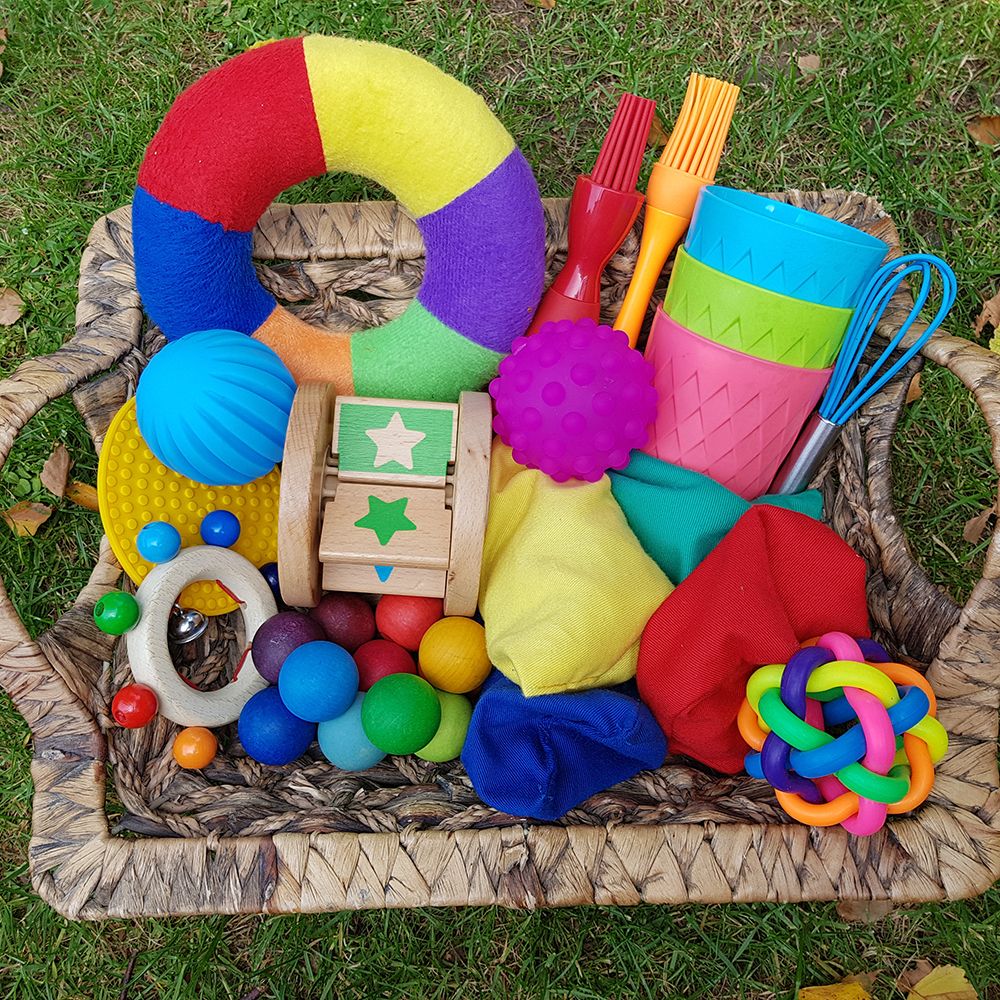
Photo credit: @ TTS Resources
A colour hunt is one of those sensory activities for nursery children that easily fits into everyday routines while helping children become more aware of the colours around them.
It encourages careful observation and gives children opportunities to compare, sort, and talk about what they discover.
Learning Objective
Help children recognise, identify, and sort colours while encouraging observation and language development.
Materials
- A small basket or container
- Everyday household items in different colours, such as toy blocks, fabric pieces, plastic cups, wooden spoons, or large bottle lids
Setup Time
5 minutes
Supervision Level
Adult supervision is recommended to ensure all items are safe and appropriate for nursery-age children.
How to Do It
Choose one colour and invite the child to search for matching objects around the room or outdoor play area. As they collect each item, encourage them to place it in the basket and describe what they have found. You can repeat the activity with a different colour or ask the child to sort the collected objects into groups.
Keep the conversation going with questions like:
- “Can you find something that’s the same colour?”
- “Which colour did you collect the most?”
- “Do any objects have more than one colour?”
- “What other things can you see in this colour?”
These simple discussions help children connect colour recognition with everyday experiences.
Skills Developed
- Colour recognition
- Visual discrimination
- Observation skills
- Sorting and classifying
- Vocabulary and communication
Why Repeating the Same Activity Can Be Better Than Constantly Creating New Ones
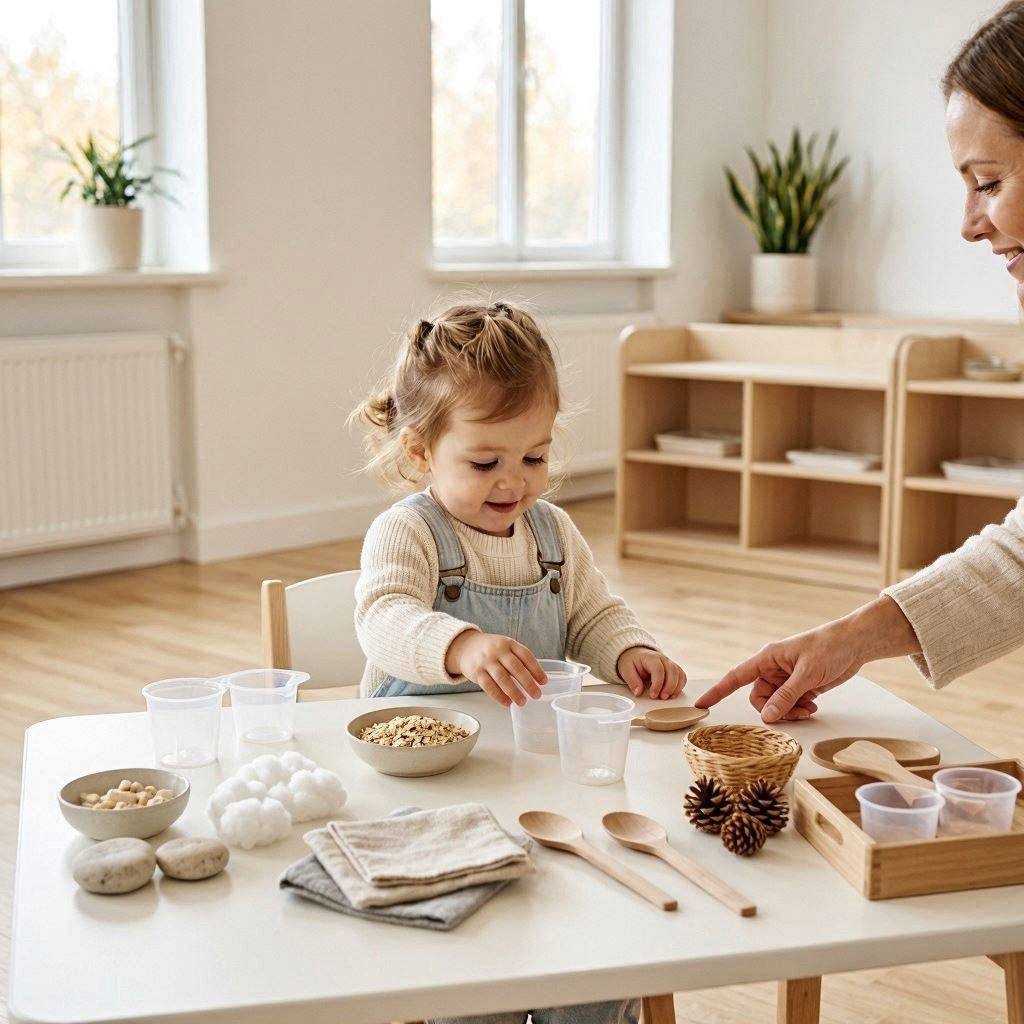
It’s easy to think children need a brand-new activity every day to stay interested, but that’s rarely how early learning works.
Young children often learn best by repeating familiar experiences because each time they play, they notice something new or try a different approach.
Repetition gives children the chance to practise skills without feeling rushed. They become more confident using their hands, solving simple problems, and making decisions on their own.
Familiar activities also free up mental energy, allowing children to focus on exploring, asking questions, and building new connections instead of figuring out unfamiliar instructions.
Repeating an activity doesn’t mean it has to stay exactly the same. A small change, such as using a different material, asking new questions, or introducing a simple challenge, can keep the experience interesting while continuing to strengthen the same skills.
Rather than measuring success by how many activities a child completes, focus on how deeply they engage with each one. Meaningful learning often comes from giving children the time and opportunity to explore, practise, and grow at their own pace.
Turn your backyard into a playful learning space with DIY Water Table for Kids That Creates the Cutest Backyard Playtime, an easy project that encourages sensory exploration, imaginative play, and hours of outdoor fun.
Adapting Sensory Activities for Different Nursery Ages and Abilities
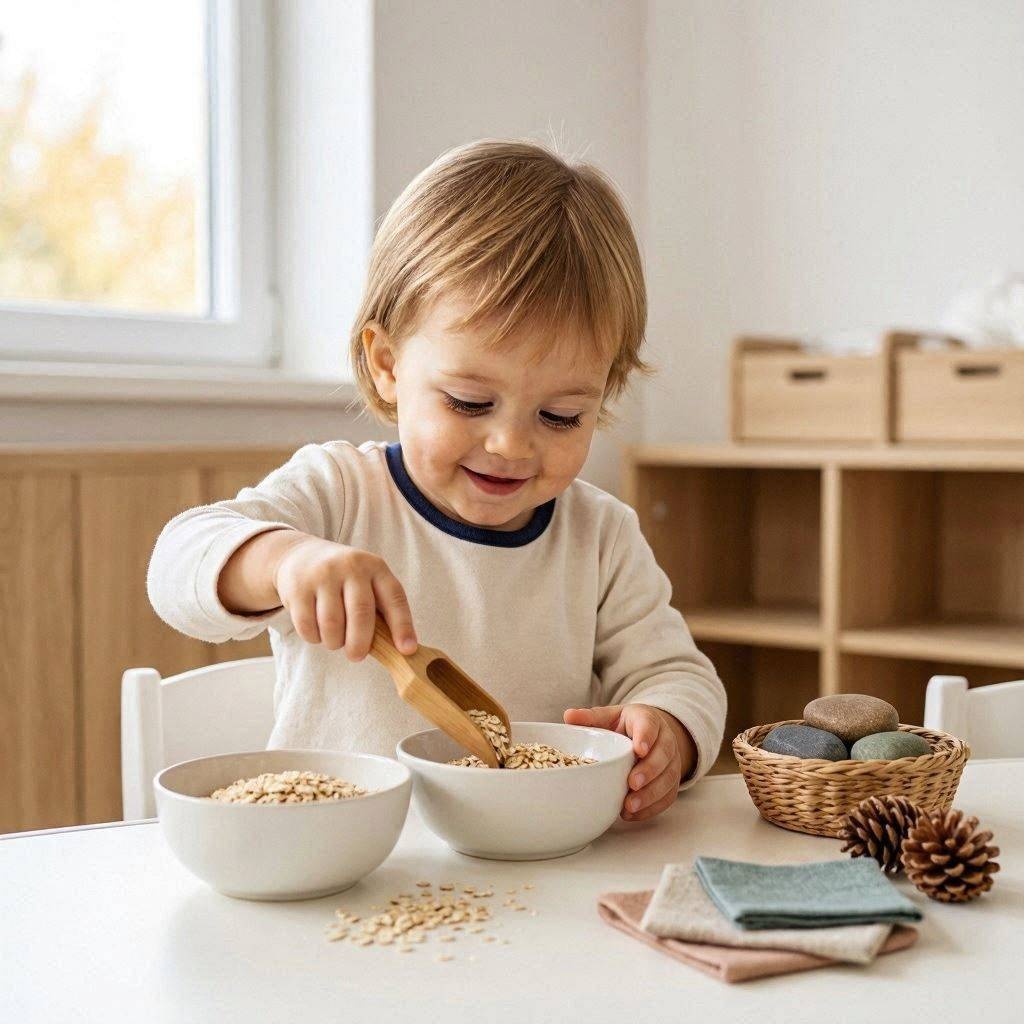
The best sensory activities for nursery children are flexible enough to grow with each child. Nursery children develop at different rates, so it’s perfectly normal for one child to be ready for a challenge while another needs a simpler approach.
The goal is to encourage exploration, not to compare progress.
-
Simplify Activities When Needed
If a child seems overwhelmed, reduce the number of materials or break the activity into smaller steps. Simple instructions and fewer choices can help children feel more confident and stay engaged.
-
Increase the Challenge Gradually
As confidence grows, make small adjustments instead of introducing a completely new activity. You might encourage sorting by two characteristics instead of one, use slightly larger collections of objects, or ask open-ended questions that encourage thinking and observation.
-
Offer Meaningful Choices
Giving children simple choices, such as selecting which materials to explore or deciding how to sort objects, helps build confidence and encourages independent thinking without making the activity feel overwhelming.
-
Respect Individual Sensory Preferences
Not every child enjoys the same textures, sounds, or sensations. Some may happily explore sand or water, while others prefer dry materials or smooth objects. Offering alternatives allows children to participate comfortably while still benefiting from the learning experience.
-
Encourage, Don’t Force
The most effective learning happens when children feel safe to explore at their own pace. Invite them to observe first, join in when they’re ready, and celebrate their curiosity rather than expecting immediate participation.
Adapting sensory activities for nursery children in these simple ways creates a more positive learning experience, helping every child explore, discover, and build confidence according to their own stage of development.
Conclusion
Supporting early learning doesn’t have to be complicated or expensive. The most meaningful sensory activities for nursery children often begin with everyday objects that encourage curiosity, exploration, and conversation.
What matters most isn’t having the perfect setup, it’s giving children regular opportunities to learn through hands-on experiences that match their stage of development.
Start with one simple activity, observe what captures your child’s interest, and build from there. Small, consistent moments of play can have a lasting impact on confidence, communication, and early learning.
Which activity are you excited to try first? Share your favourite in the comments, and save this guide so you’ll always have simple sensory play ideas ready whenever you need them.